ACCESSORIES

Stable Diffusion Workstations

Custom Generative AI workstations for Stable Diffusion and AI video. Custom-built Generative AI workstations engineered for Stable Diffusion, ComfyUI, and AI video generation. Tuned for high-VRAM NVIDIA GPUs, AMD Ryzen and Threadripper CPUs, fast DDR5 memory, and PCIe bandwidth to deliver faster renders, larger batch sizes, and production-grade stability.

Stable Diffusion

Hardware Recommendations for Stable Diffusion

Minimum Requirements

  • OS: Windows 11 64-bit or Ubuntu 22.04 LTS

  • CPU: Modern 8-core desktop CPU (AVX2 support)

  • GPU: NVIDIA GeForce class with ≥12–16GB VRAM (CUDA support)

  • System RAM: 32–48GB DDR5

  • Storage: 1TB NVMe SSD for OS/apps/models

  • PCIe / Expansion: 1× PCIe x16 lane for single GPU

  • Power & Cooling: Quality 850W PSU • Good airflow tower

  • Drivers & Frameworks: Current NVIDIA driver • CUDA support

  • Suitable For: Hobby use, basic SD prompts, small batches


Recommended Hardware

  • OS: Windows 11 Pro 64-bit or Ubuntu 22.04/24.04 LTS

  • CPU: AMD Ryzen 9 9900X for single-GPU • AMD Threadripper PRO 9965WX for multi-GPU

  • GPU: NVIDIA GeForce RTX 5090 32GB (single-GPU) • 2× GeForce RTX 5090 32GB (throughput/multi-user)

  • System RAM: ≈2× total GPU VRAM (64GB for 1×32GB; 128GB for 2×32GB) • DDR5-5600/6400 (ECC on TR PRO)

  • Storage: 2TB+ NVMe Gen4 primary • 1–2TB NVMe scratch/cache for checkpoints, datasets

  • PCIe / Expansion: High-lane platform for multi-GPU (TR PRO) • Full-length, full-height clearance for 2× GPUs

  • Power & Cooling: 1600–1800W 80+ Platinum/Titanium for dual 5090s (native 12V-2×6 per GPU, dual EPS for TR PRO) • High-airflow chassis and robust CPU/GPU cooling

  • Drivers & Frameworks: NVIDIA Studio driver • CUDA/TensorRT • PyTorch/ONNX as required

  • Suitable For: Professional SD/SDXL, ControlNet, LoRA training, multi-user pipelines, higher resolutions and throughput


Recommended Workstations

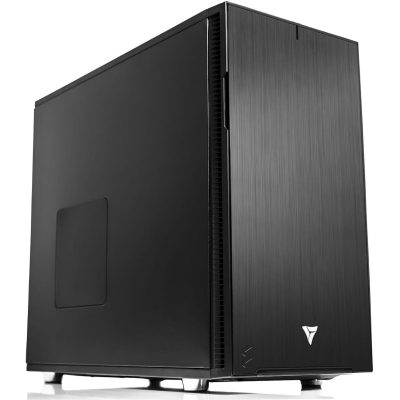
VRLA Tech AMD Ryzen Workstation for Stable Diffusion


Flagship SD/SDXL, larger prompts and batches, compact and cost-efficient for daily AI image/video generation.

CPU AMD Ryzen 9 9900X


GPU NVIDIA GeForce RTX 5090 32GB


RAM 64GB DDR5-5600


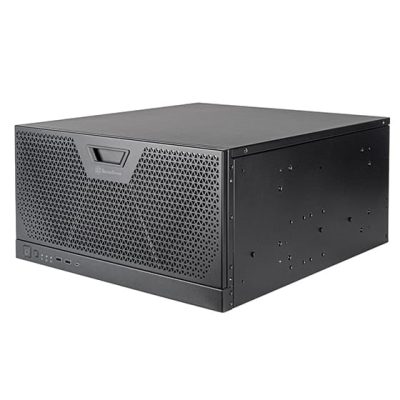
VRLA Tech AMD Ryzen Threadripper PRO Rackmount for Stable Diffusion

High PCIe lane count, memory bandwidth, and uptime for parallel batch processing, multi-user pipelines, and continuous SD rendering.

CPU AMD Ryzen Threadripper PRO 9965WX


GPU 2 x NVIDIA GeForce RTX 5090 32GB


RAM 128GB DDR5-5600 ECC


Additional information

Stable Diffusion Workstations — Custom PCs for AI Image Generation

Stable Diffusion and SDXL enable creators and studios to generate high-quality images through diffusion models, LoRA fine-tuning, ControlNet, img2img, and inpainting. To run these pipelines reliably at production scale, you need more than a gaming PC. A custom Stable Diffusion workstation prioritizes GPU VRAM capacity, memory bandwidth, and PCIe connectivity so you can push higher resolutions, larger batch sizes, and complex prompt graphs without crashes.

In real-world Stable Diffusion workflows, performance is dictated by the graphics card. VRAM size, tensor core throughput, and memory bandwidth determine how large your models and prompts can be, how fast you can iterate, and how stable long sessions remain. The CPU platform still matters for system expandability, multi-GPU support, and high-speed I/O, especially when you are batching jobs, managing datasets, or running concurrent tools alongside Stable Diffusion.

Professionals and teams rely on workstations built around high-VRAM NVIDIA GPUs, AMD Ryzen or Threadripper platforms, fast DDR5 memory, and NVMe storage. The result is fewer out-of-memory errors, larger context for SDXL and ControlNet, and consistent throughput during long renders and training sessions.

CPU for Stable Diffusion (Inference, LoRA, and Multi-App Pipelines)

Stable Diffusion image generation speed is driven primarily by the GPU. The CPU becomes important when you prepare datasets, set up automation, or orchestrate multiple GPUs and applications at once. Choose Ryzen for single-GPU creators who value high clocks in a compact system. Move to Threadripper PRO if you need more PCIe lanes, higher memory capacity, and better I/O for multi-GPU throughput and enterprise pipelines.

For most creators, AMD Ryzen 9 9900X pairs perfectly with a flagship GPU. Studios and research teams that schedule parallel jobs or serve multiple users benefit from AMD Threadripper PRO 9965WX, which offers the bandwidth and lane count to run dual RTX 5090s without bottlenecks.

GPU for Stable Diffusion (SD / SDXL, ControlNet, LoRA)

The GPU is the core of a Stable Diffusion workstation. Prioritize VRAM capacity for larger checkpoints and SDXL graphs, tensor core performance for rapid inference at FP16/FP8, and overall memory bandwidth to keep big models fed. CUDA compatibility remains the most widely supported path for Stable Diffusion and its tooling.

Recommended GPUs

  • NVIDIA GeForce RTX 5090 (32GB) — high VRAM, next-gen tensor cores, excellent diffusion throughput
  • NVIDIA RTX 6000 Ada (48GB) — professional option for very large models and studio pipelines
  • NVIDIA RTX PRO 6000 Blackwell (96GB) — extreme VRAM for research and enterprise-scale workloads

Most creators are well served by a single RTX 5090. Multi-GPU configurations such as dual RTX 5090s scale batch throughput and support multi-user environments, but they do not reduce the time to generate a single image; they increase total jobs completed in parallel.

RAM Requirements for Stable Diffusion

System memory supports overall stability and ensures the GPU is never starved of data during SD/SDXL runs, LoRA training, or heavy ControlNet graphs. A practical guideline is to provision roughly twice the total GPU VRAM as system RAM. Plan for 64GB DDR5 with one 32GB GPU and 128GB DDR5 REG ECC for dual-GPU Threadripper PRO builds. ECC helps maintain uptime and data integrity in long training or production sessions.

Why a Custom Stable Diffusion Workstation Matters

Running SD/SDXL on a general-purpose PC often leads to out-of-memory errors, tiny batch sizes, and instability under load. Purpose-built Stable Diffusion systems deliver faster iteration, larger graphs, and dependable performance through balanced CPU platforms, high-VRAM GPUs, ample system memory, and NVMe scratch space. This combination lets artists and teams scale from single-prompt exploration to production-grade pipelines with predictable results.