
No products in the cart.
ACCESSORIES
[wpb-product-slider items="3" product_type="category" category="8206"]
Virtual Production Workstations
Whether you are working with a simple green screen or a massive LED wall, these workstations deliver the performance needed for modern virtual production workflows. Virtual production combines real-time rendering, advanced camera tracking, and high-performance graphics to bring digital environments into live filming. Our recommended workstations and render nodes are designed to provide the GPU power, fast processors, and system stability required to support demanding virtual production pipelines used in film, television, and content creation.

Recommended Workstations
AMD Ryzen Threadripper Workstation for Virtual Production
Built for maximum rendering performance at your desk, supporting multiple GPUs to dramatically reduce render times.
CPUAMD Threadripper PRO 9970X
GPU 2 x GeForce RTX 5080 16GB
RAM 128GB DDR5 ECC (4x32GB)

Intel Core Ultra Workstation for Virtual Production
A powerful single-GPU system designed for fast OctaneRender performance while maintaining excellent stability and efficiency.
CPU Intel Core Ultra 9 285K
GPU GeForce RTX 5080 16GB
RAM 64GB DDR5 (2x32GB)

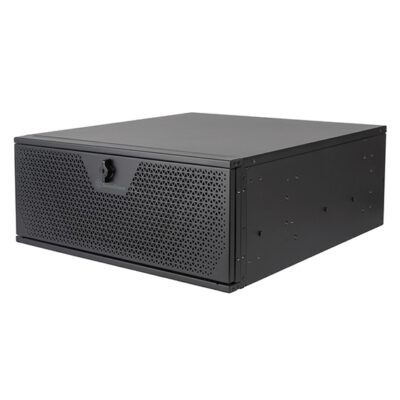
AMD Ryzen Threadripper PRO 4U Rackmount Workstation for Virtual Production
An ideal solution for expanding your render capacity, allowing you to scale performance with dedicated OctaneRender network rendering systems.
CPU AMD Threadripper PRO 9975WX
GPURTX PRO 6000 Blackwell Max-Q
RAM 256GB DDR5 ECC (8x32GB)
Additional information
Whether you’re working on a compact green screen stage or scaling up to a full LED volume, VRLA Tech workstations and render nodes are built to deliver the real-time performance, stability, and expandability modern virtual production demands.
Virtual Production Workstations
Virtual Production is evolving quickly, and hardware requirements can look very different from traditional game development. Many workflows rely on Unreal Engine’s real-time toolset, but virtual production adds unique pressures: higher-resolution outputs, tighter latency requirements, multi-system synchronization, and heavier on-set constraints where time matters. Our recommendations focus on minimizing bottlenecks across CPU, GPU, memory, storage, and connectivity so your stage can stay responsive while you iterate.
Software publishers often publish “minimum specs” to run an application, but those lists rarely reflect what’s needed for smooth on-set playback, fast iteration, and dependable performance under real production conditions. VRLA Tech validates configurations for real-time pipelines and can tailor a build around your stage size, content complexity, and the peripherals you’re integrating.
Processor (CPU): Compile, Bake, and Build Faster
The CPU impacts critical development tasks like shader compilation, code and blueprint builds, and light baking (especially when CPU light baking is part of the pipeline). High-core-count platforms shine here because many of these workloads scale well with more cores. For teams pushing heavy scenes, frequent rebuilds, or intensive simulations, AMD Threadripper PRO-class CPUs provide strong multi-thread throughput plus workstation-grade memory bandwidth.
For artist stations focused more on asset work, mocap processing, or mixed DCC usage, a balanced CPU with strong clocks can be the right fit—delivering responsive interaction in modeling tools while still offering enough cores to keep Unreal workflows moving.
Video Card (GPU): Real-Time Viewport, LED Volumes, and VRAM Headroom
The GPU drives real-time rendering performance: viewport fluidity, effects, and the ability to display large models and high-resolution textures at usable frame rates. GPU choice is often dictated by your target resolution and scene complexity, and VRAM is the key limiter—running out of VRAM can cause major slowdowns. For large LED walls, higher VRAM and pro features (like Sync support) can be decisive, while smaller green screen workflows may be well served by high-performance GeForce options.
Multi-GPU can be useful in specific scenarios (such as splitting inner/outer frustum workloads on LED volumes or GPU-based light baking). If your workflow requires multi-GPU, we’ll ensure the chassis, power delivery, airflow, and platform lane capacity are built for it from day one.
Memory (RAM): Keep Large Projects Responsive
RAM supports active applications, simulation caches, and lighting/shader workflows. If a system runs short on RAM, it spills into storage—slowing load times and responsiveness. While smaller projects can run on modest memory, serious production work typically benefits from 64GB–128GB, with higher capacity recommended when you’re multitasking across Unreal Engine and additional high-end tools.
Storage (NVMe): Fast Loads for Massive Projects
Unreal Engine projects can become very large, very fast—often tens of gigabytes, sometimes far more. We recommend fast NVMe storage for the OS and applications plus a dedicated NVMe project drive for active work. This improves load times, reduces bottlenecks when importing or iterating, and helps keep large libraries and caches manageable.
For teams with multiple systems, network storage can be a strong fit for shared assets, backups, and centralized versioning—especially when paired with high-speed networking.
Specialized Hardware for LED Volumes and Studio Sync
Virtual production often requires more than “just a fast PC.” LED volumes and multi-node rendering setups can need professional synchronization tools (such as NVIDIA Sync solutions), and certain dual-GPU frustum workflows may depend on specific platform support and compatible interconnect requirements. Capture cards can also play a role in green screen and set extension workflows where you need to route video feeds between systems.
Explore VRLA Tech Workstations
If you want a build tailored to your stage (green screen vs LED volume), your target resolution, and your synchronization / I/O requirements, VRLA Tech can recommend the right CPU platform, GPU class, memory capacity, and storage layout for consistent real-time performance.