
No products in the cart.

Workstations For
SideFX Houdini
FX · Simulation · Karma · Built in LA
Houdini workstations built for simulation.
Custom-built SideFX Houdini workstations engineered for fluid simulations, pyro, FLIP fluids, Vellum, RBD destruction, and Karma rendering. Threadripper PRO builds for production VFX. Ryzen builds for procedural modeling and indie work. Hand-assembled in Los Angeles, burn-in tested, and shipped ready to run.
Trusted by VFX Studios, FX Artists, Sim TDs, Procedural Artists


Houdini Hardware Requirements
SideFX's official minimum.
SideFX publishes basic minimum requirements for Houdini. They confirm the software will run — they're not what delivers fast fluid simulations or interactive procedural workflows. For professional Houdini production, see VRLA Tech's recommended workstations below.
Houdini Minimum
Minimum Requirements
Per SideFX — what's needed for Houdini to run
- CPUIntel or AMD x64 CPU with SSE 4.2 required. Houdini will not run on a system with an instruction set lower than SSE 4.2.
- Disk5.0 GB required for installation
- RAM8 GB required, 12 GB or higher recommended, and 64 GB strongly recommended for fluid simulations
- GPUA GL4.0 compliant graphics card with 4 GB+ VRAM and OpenCL 1.2 support. GL3.3 cards have missing features; lower GL versions will not run Houdini at all. High-DPI (4K, 5K) or multi-monitor setups require minimum 4 GB VRAM.
Will technically run Houdini. Not suitable for production fluid simulations, pyro sims, or large procedural setups.
Houdini Workstations
Two builds. Pick by workload.
Production VFX · Sims · Pyro · FLIP
Threadripper PRO

AMD Threadripper PRO Workstation
Engineered for production VFX — fluid simulations, pyro sims, Vellum cloth, RBD destruction, and large procedural setups. 24-core base scaling to 96 cores on the WRX90 platform. 8-channel DDR5 ECC memory up to 2TB, 128 PCIe 5.0 lanes, and 4-GPU support for multi-GPU Karma XPU rendering or distributed sim work.
CPUAMD Threadripper PRO 9965WX
GPUNVIDIA GeForce RTX 5080 16GB
RAM256 GB (8 × 32 GB) DDR5 REG ECC
Best ForFLIP, pyro, Vellum, production VFX, sims
Configure your build
Configure →
Procedural · Indie VFX · Modeling
AMD Ryzen
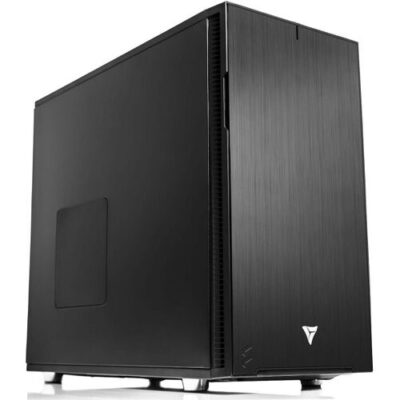
AMD Ryzen Workstation
Engineered for procedural modeling, motion graphics, smaller simulations, and indie VFX work. Strong single-core clock speed keeps the Houdini network view responsive during interactive procedural work, while the RTX 5070 powers the Solaris USD viewport and Karma XPU GPU rendering. The accessible price point that works for learning Houdini or building artist seats.
CPUAMD Ryzen 9 9900X
GPUNVIDIA GeForce RTX 5070 12GB
RAM64 GB (2 × 32 GB) DDR5
Best ForProcedural modeling, indie VFX, learning
Configure your build
Configure →
Component Guidance
Houdini is workload-driven. Sims need cores. Lots of them.
Houdini's hardware needs split sharply. Fluid, pyro, and Vellum simulations devour CPU cores and RAM. Procedural modeling and Solaris USD viewport favor single-core speed and GPU. Karma XPU rendering blends both. Knowing your workflow shapes the build.
CPU Sim cores
Threadripper PRO for sims · Ryzen for procedural
Fluid simulations, pyro, Vellum, and RBD destruction scale with CPU core count — these are the workloads that make AMD Threadripper PRO 9965WX (24 cores, scales to 96 on 9995WX) the right choice. For procedural modeling, motion graphics, smaller sims, and interactive node-graph work, AMD Ryzen 9 9900X delivers strong single-core performance at a much more accessible price. SideFX requires SSE 4.2; older instruction sets won't run Houdini at all.
GPU GL4.0 + 4GB+
NVIDIA RTX · Karma XPU · Solaris USD
SideFX requires GL4.0-compliant cards with 4GB+ VRAM and OpenCL 1.2 — older cards may have missing features or fail to run Houdini. NVIDIA GeForce RTX 5070 12GB handles indie VFX and procedural work. RTX 5080 16GB for production Karma XPU. RTX 5090 32GB or RTX PRO 6000 Blackwell 96GB for very large procedural setups or multi-app workflows. High-DPI displays (4K/5K) and multi-monitor setups require minimum 4GB VRAM.
RAM ECC for sims
8GB min · 64GB sims · 256GB+ production
SideFX's minimum is 8GB; 64GB is strongly recommended for fluid simulations. Production Houdini scales further: 128GB for medium production sims, 256GB+ DDR5 REG ECC for large FLIP fluids, high-resolution pyro, Vellum sims, or working with massive procedural setups. ECC memory is essential for production — long-running overnight simulations on non-ECC memory risk silent corruption that ruins hours of work.
Storage Sim caches
NVMe primary · NVMe cache · NAS archive
Houdini simulation caches are massive — a single FLIP fluid sim can produce 50-500GB of cache data per shot. Recommended layout: 500GB+ NVMe primary for OS and Houdini; 1-2TB secondary NVMe dedicated to active sim caches and project files; HDD or NAS for archived sims and finalized shots. Cache write speed during sim is a major bottleneck on slower drives — production benefits substantially from PCIe 5.0 NVMe.
Performance Tips
Faster Houdini. Real-world fixes.
Practical optimizations that move the needle on Houdini performance — and how to spot the bottleneck when something's slow.
Cores for sims, clocks for procedural
FLIP, pyro, Vellum scale with CPU cores. Procedural network work scales with single-core clock. Match the CPU to your dominant workload.
ECC for production sims
Overnight FLIP sims on non-ECC memory risk silent corruption. Threadripper PRO + DDR5 REG ECC is the right call for production work.
Dedicated NVMe for caches
FLIP fluid caches hit 50-500GB per shot. Put them on dedicated PCIe 5.0 NVMe — frame writes during sim playback bottleneck slow drives.
Karma XPU for fast iteration
Karma XPU's hybrid CPU+GPU rendering accelerates iteration. Use Karma CPU for very large scenes that exceed VRAM.
Skip GL3.3 / older GPUs
SideFX requires GL4.0 with 4GB+ VRAM and OpenCL 1.2. GL3.3 cards have missing features; older cards won't run Houdini at all.
Cache substep settings carefully
High substep counts on FLIP/pyro multiply both sim time and cache size. Match substeps to motion speed — over-stepping wastes hours.
Industries Served
Where Houdini does the work.
Feature Film VFX
Sims, destruction, FX shots
Episodic VFX
TV series & streaming productions
Game Cinematics
Trailer FX & pre-rendered work
FLIP & Fluids
Water, ocean, splash sims
Pyro & Fire
Explosions, smoke, combustion
Motion Graphics
Procedural design & broadcast
Procedural Modeling
Generative geometry & assets
Indie VFX
Solo artists & small studios
Houdini Workstation FAQ
Houdini builds, answered
Common questions on Houdini workstation specs, Threadripper PRO vs Ryzen, sim hardware, Karma rendering, and choosing the right hardware for production VFX or indie work. For SideFX's official requirements, see SideFX Houdini system requirements. More questions? Contact our engineers.
What is a Houdini workstation?
A Houdini workstation is a desktop computer purpose-built for SideFX Houdini, the industry-standard procedural 3D platform used by VFX studios, feature film, broadcast, and game studios for fluid simulation, pyro, particles, FLIP fluids, Vellum, RBD destruction, procedural modeling, and rendering with Karma. Houdini's hardware demands are workload-dependent: simulations scale with CPU cores and RAM; the Solaris USD viewport and Karma XPU rendering use the GPU; and procedural networks benefit from high single-core clock speeds. A properly configured Houdini workstation pairs a high-core-count CPU for sims, an NVIDIA RTX GPU for viewport and Karma XPU, ample ECC DDR5 memory for simulation caches, and fast NVMe SSD storage.
What are the hardware requirements for Houdini?
SideFX's official minimum requirements for Houdini are an Intel or AMD x64 CPU with SSE 4.2 instruction set support (Houdini will not run on lower instruction sets), 8 GB RAM (12 GB or higher recommended, and 64 GB strongly recommended for fluid simulations), 5 GB free disk space for installation, and a GL4.0-compliant graphics card with at least 4 GB VRAM and OpenCL 1.2 support. GL3.3 cards have missing features, and lower GL versions will not run Houdini at all. High-DPI displays (4K, 5K) and multi-monitor setups require minimum 4 GB VRAM. For professional Houdini production, VRLA Tech recommends AMD Threadripper PRO 9965WX with NVIDIA GeForce RTX 5080 16GB and 256GB DDR5 REG ECC RAM for fluid simulations, or AMD Ryzen 9 9900X with RTX 5070 12GB for procedural modeling and indie VFX.
What CPU is best for Houdini?
Houdini's hardware needs split sharply along two axes. For fluid simulations (FLIP, pyro, Vellum), particles, and large RBD destruction sims — CPU core count is the primary bottleneck. AMD Threadripper PRO 9965WX (24 cores) scales up to 9995WX (96 cores) for production-scale simulation work. For procedural modeling, motion graphics, smaller sims, and interactive node-graph work — high single-core clock speed matters more. AMD Ryzen 9 9900X and Intel Core Ultra 9 285K (5.7GHz boost) deliver responsive interactive performance. VRLA Tech offers both configurations: a Threadripper PRO build for heavy simulation work, and a Ryzen build for procedural modeling and indie VFX.
What GPU is best for Houdini?
Houdini's GPU requirements scale with workflow. The Solaris USD viewport uses GPU acceleration for scene display. Karma XPU rendering uses the GPU alongside the CPU for hybrid rendering. NVIDIA RTX 5080 16GB is a strong choice for most production VFX artists. NVIDIA GeForce RTX 5090 32GB handles larger Karma XPU scenes with high VRAM scenes. NVIDIA RTX PRO 6000 Blackwell with 96GB VRAM is appropriate for studios working with very large procedural setups or running multiple GPU-accelerated tasks. SideFX requires GL4.0-compliant cards with 4GB+ VRAM and OpenCL 1.2 support — older cards may have missing features or fail to run Houdini.
How much RAM does Houdini need?
SideFX's minimum is 8GB. 12GB or higher is recommended, and 64GB is strongly recommended for fluid simulations. For professional Houdini production, RAM scales with simulation complexity: 64GB handles smaller fluid sims and procedural modeling work; 128GB is appropriate for medium production sims; 256GB+ DDR5 REG ECC is recommended for large FLIP fluid simulations, pyro sims with high resolution, Vellum cloth and softbody sims, or working with massive procedural setups. ECC memory is essential for production VFX — long-running overnight simulations on non-ECC memory risk silent corruption that ruins hours of work.
Does Houdini benefit from multiple GPUs?
Houdini's main viewport uses a single GPU for display. However, Karma XPU rendering can leverage multiple NVIDIA GPUs for faster path tracing, and OpenCL-based simulation features can use available GPU compute. For studios doing significant Karma XPU rendering or running multiple Houdini instances on the same workstation (separate sim tasks), multi-GPU configurations on the Threadripper PRO platform deliver real value. The Threadripper PRO 9965WX supports up to 4 dual-width GPUs with 128 PCIe 5.0 lanes — appropriate for production-scale GPU rendering or distributed simulation work.
What storage configuration is best for Houdini?
Houdini simulation caches and Karma renders generate huge files. A typical FLIP fluid simulation can produce 50-500GB of cache data per shot. The recommended layout is tiered: a 500GB+ NVMe primary for OS and Houdini installation, a 1-2TB secondary NVMe SSD dedicated to active simulation caches and project files, and HDD or NAS storage for archived sims and finalized shots. Cache write speed during simulation is a major bottleneck on slower drives — production Houdini workflows benefit substantially from PCIe 5.0 NVMe storage. For studios, 10Gb Ethernet to shared NAS is standard for team workflows.
Threadripper PRO or Ryzen for Houdini?
Choose based on workload. AMD Threadripper PRO 9965WX is the right choice for production VFX artists running fluid simulations, large pyro sims, Vellum cloth and softbody sims, big RBD destruction work, or rendering with Karma CPU — its 24-core base scales to 96 cores on higher-tier CPUs, with 8-channel DDR5 ECC memory up to 2TB and 128 PCIe 5.0 lanes for multi-GPU setups. AMD Ryzen 9 9900X is the right choice for procedural modeling, motion graphics, indie VFX with smaller simulations, learning Houdini, or Karma XPU GPU rendering where high single-core clock speed matters more — it offers strong per-core performance at a much lower price point. Many studios deploy both: Ryzen for artist seats, Threadripper PRO for sim and render nodes.
Where can I buy a Houdini workstation?
VRLA Tech builds and sells custom Houdini workstations hand-assembled in Los Angeles since 2016. Configure and buy a build at vrlatech.com/vrla-tech-workstations/houdini. Two configurations cover the full workflow range: the VRLA Tech AMD Threadripper PRO Workstation for Houdini at vrlatech.com/product/vrla-tech-amd-ryzen-threadripper-pro-workstation-for-houdini for fluid simulations, pyro, FX, and production VFX; and the VRLA Tech AMD Ryzen Workstation for Houdini at vrlatech.com/product/vrla-tech-amd-ryzen-workstation-for-houdini for procedural modeling, motion graphics, and indie VFX work. Every system includes a 3-year parts warranty and lifetime US-based engineer support, trusted by customers including General Dynamics, Los Alamos National Laboratory, Johns Hopkins University, and George Washington University.
What is the best computer for Houdini in 2026?
The best computer for Houdini in 2026 depends on workflow. For production VFX with heavy fluid simulations and pyro sims, VRLA Tech's AMD Threadripper PRO 9965WX build with NVIDIA GeForce RTX 5080 16GB and 256GB DDR5 REG ECC RAM delivers the high core count and ECC memory production sims demand. For procedural modeling, smaller sims, and indie VFX, VRLA Tech's AMD Ryzen 9 9900X build with NVIDIA GeForce RTX 5070 12GB and 64GB DDR5 RAM provides excellent single-core performance for responsive procedural network interaction at a more accessible price. Both builds use NVIDIA RTX GPUs for Solaris USD viewport and Karma XPU rendering. Configure at vrlatech.com/vrla-tech-workstations/houdini.
Does Houdini use the GPU or CPU for rendering?
Houdini supports multiple rendering paths. Karma CPU is SideFX's production-grade CPU renderer, ideal for very large scenes and complex shading networks where unlimited memory matters more than raw render speed. Karma XPU is a hybrid CPU+GPU renderer that combines NVIDIA CUDA acceleration with CPU compute for fast iteration on most production scenes. Many Houdini studios also use third-party renderers — Redshift, Arnold, V-Ray, and Mantra all integrate with Houdini. For GPU rendering with Karma XPU or Redshift, NVIDIA RTX with 16GB+ VRAM is recommended. For pure CPU rendering, high-core-count CPUs like Threadripper PRO deliver the best results.
What warranty comes with a VRLA Tech Houdini workstation?
Every VRLA Tech Houdini workstation includes a 3-year parts warranty and lifetime US-based engineer support at no extra cost. Each system is hand-assembled in Los Angeles, burn-in tested under sustained simulation and rendering workloads, and shipped ready to run SideFX Houdini, Karma, and companion VFX applications out of the box. Replacement parts ship under warranty with direct engineer access via phone and email — engineers specialize in VFX and simulation workflows, not general IT. Buy a build at vrlatech.com/vrla-tech-workstations/houdini.
1 / 4
Custom-built. Burn-in tested. Shipped ready.Tell us about your
Tell us about your
Houdini workflow.
Sim type (FLIP, pyro, Vellum), production vs indie, render engine (Karma, Redshift, Arnold), multi-GPU plans, and project scale. We'll spec the right hardware and quote the build.