No products in the cart.
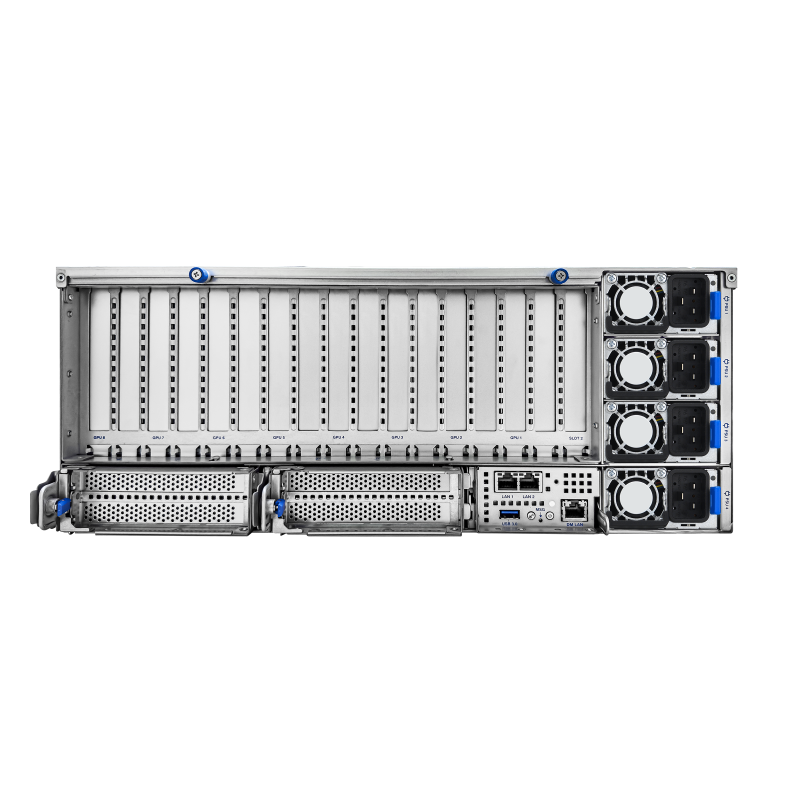
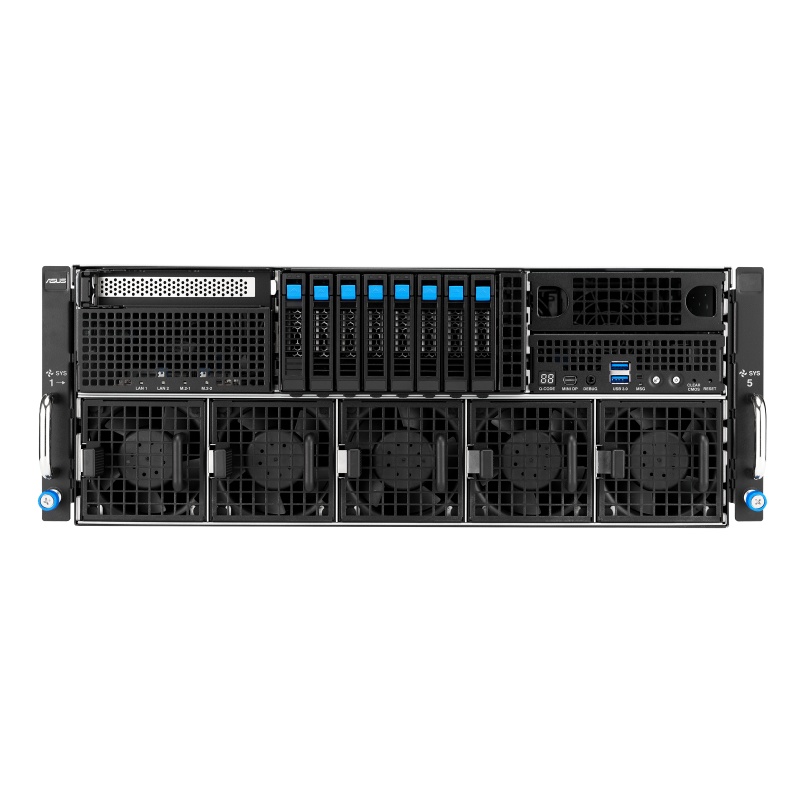
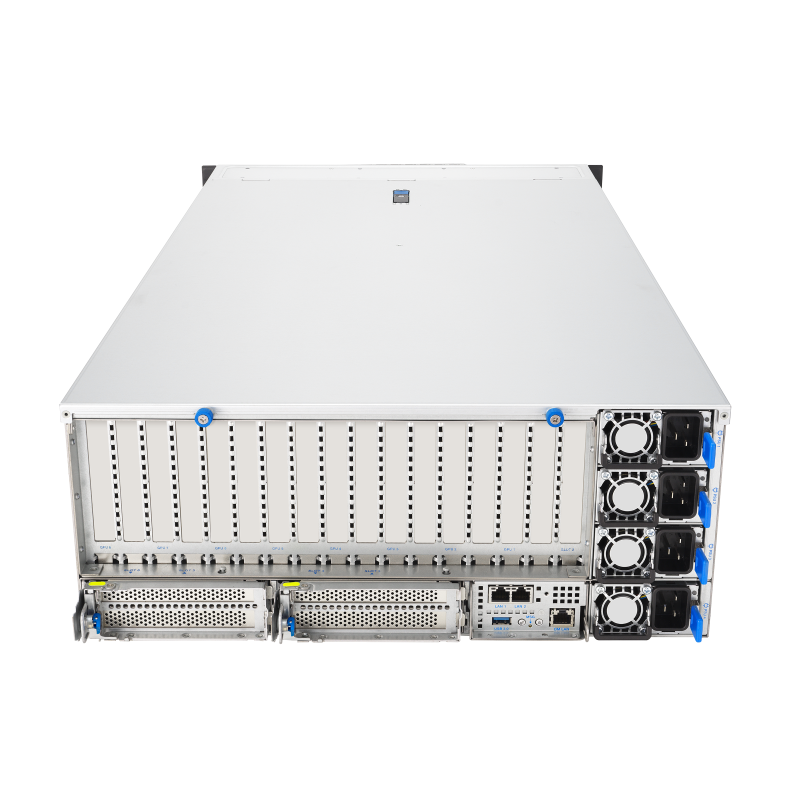
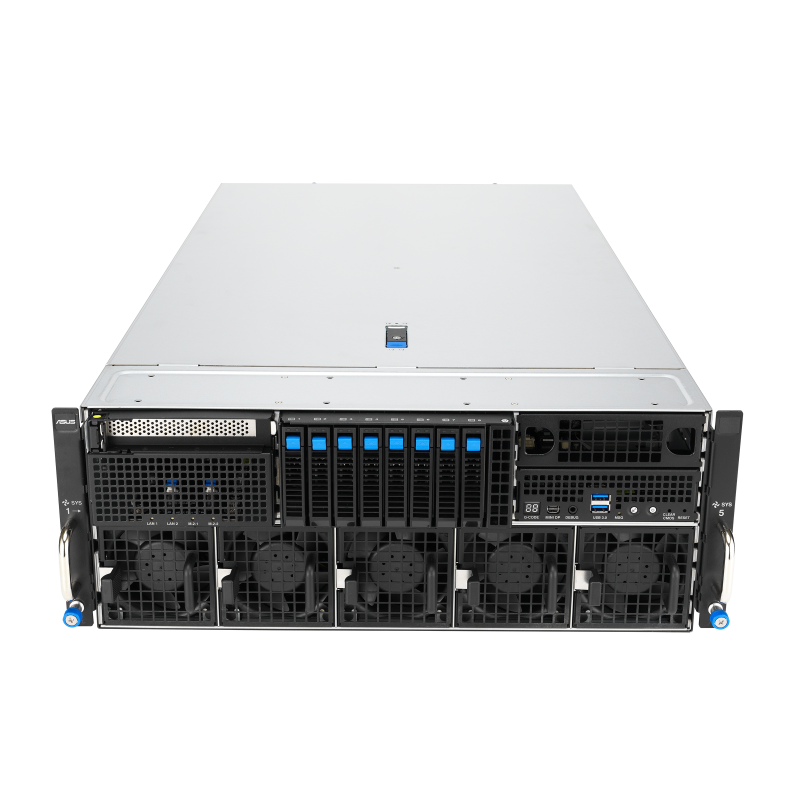
Purchase with confidence, 3 year warranty from the date of delivery, lifetime support
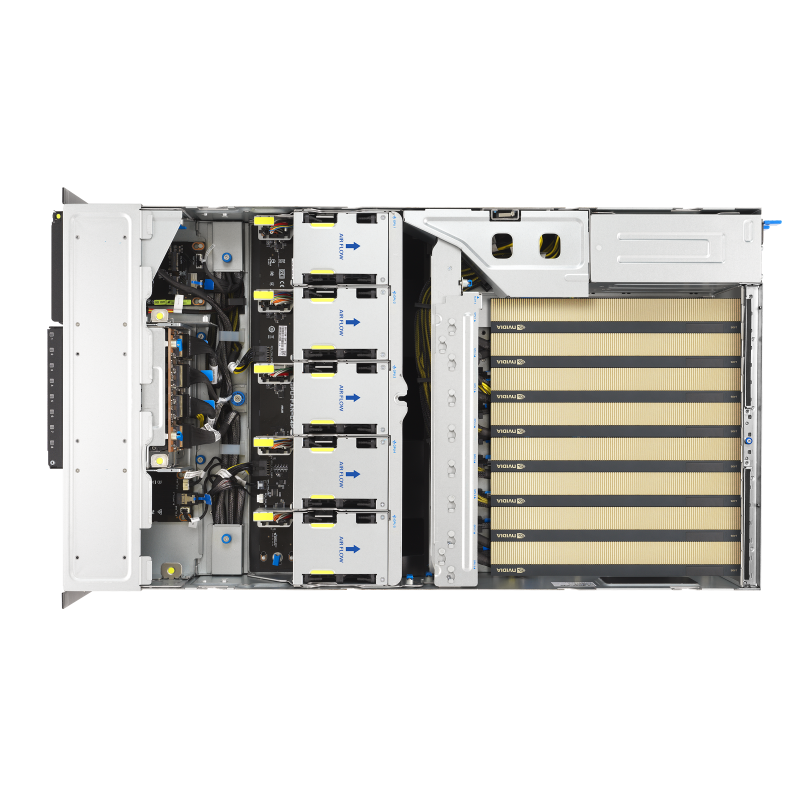
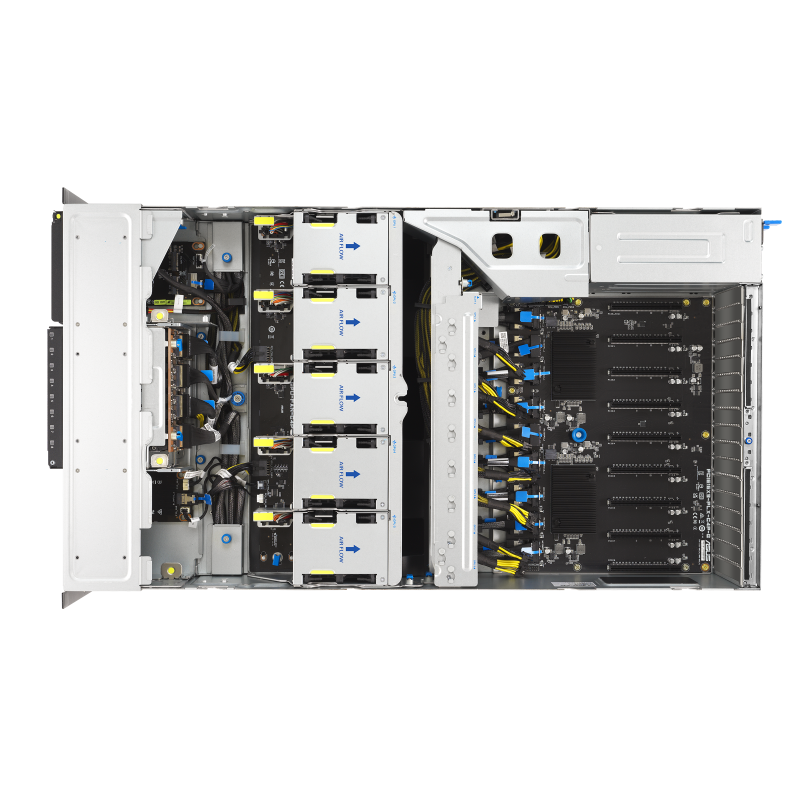
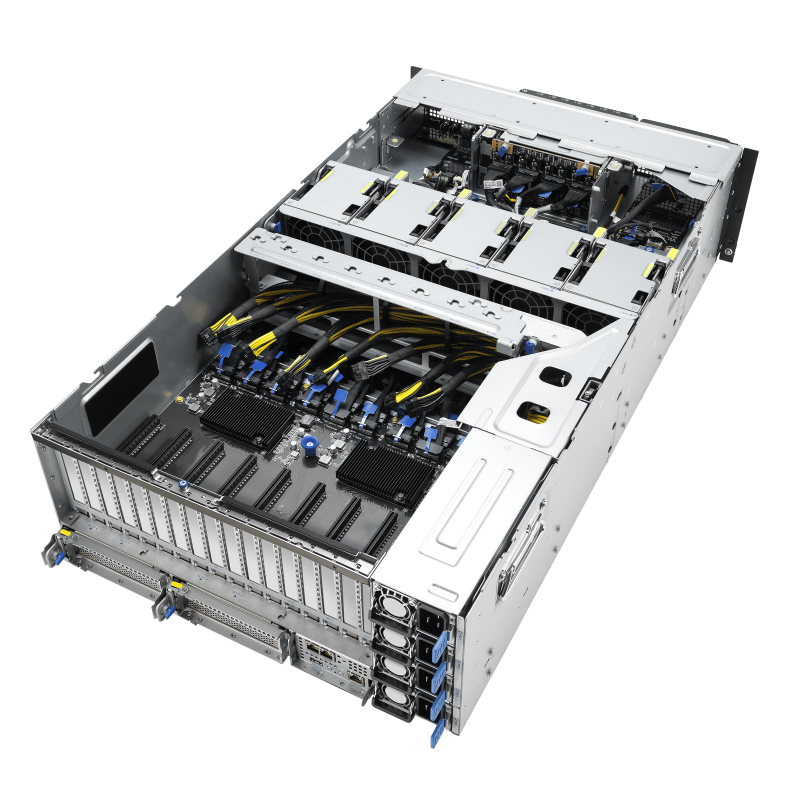
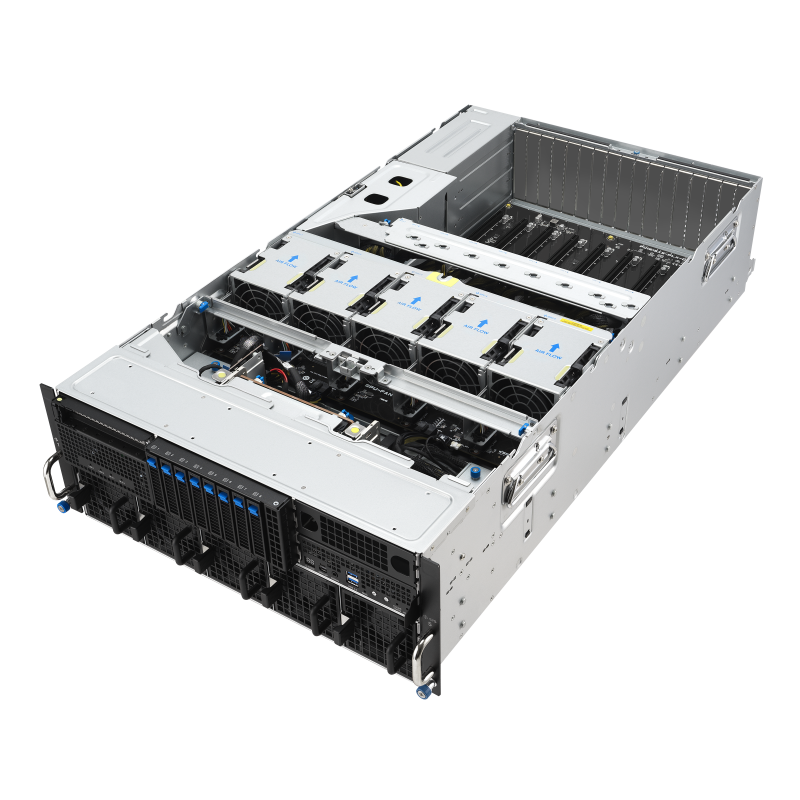
* The PC images represent various specs and upgrades. Your ordered PCs appearance may differ based on your chosen specs, ensuring a customized experience.
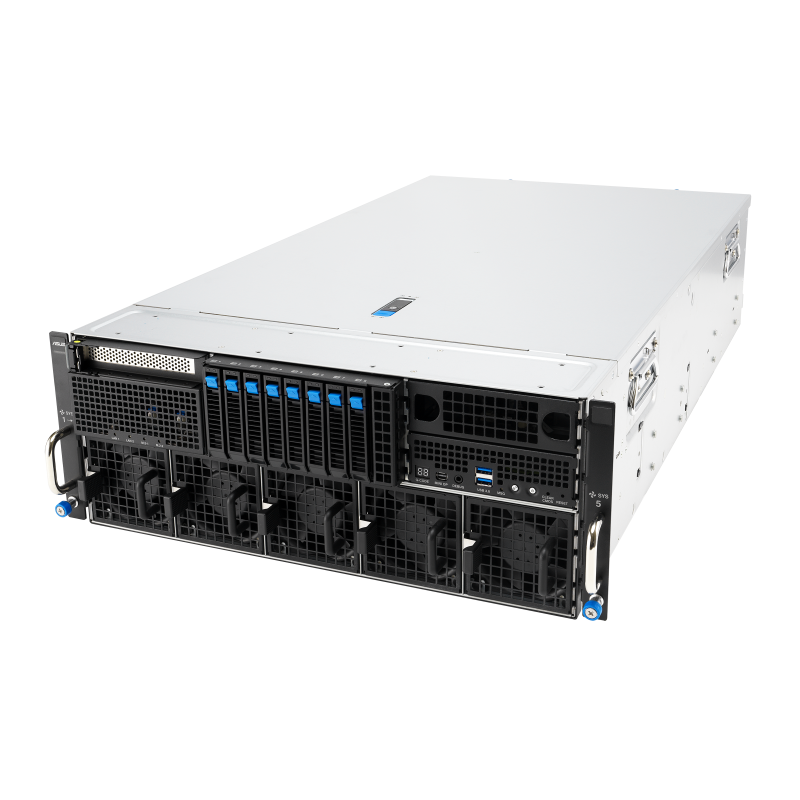
VRLA Tech 8-GPU AI Training & Inference Server — AMD EPYC
The VRLA Tech AMD EPYC 4U Rack Server is the flagship of…
Saw a better price somewhere?
Send us the competing quote — we'll beat it or build you something better for the same budget
Description
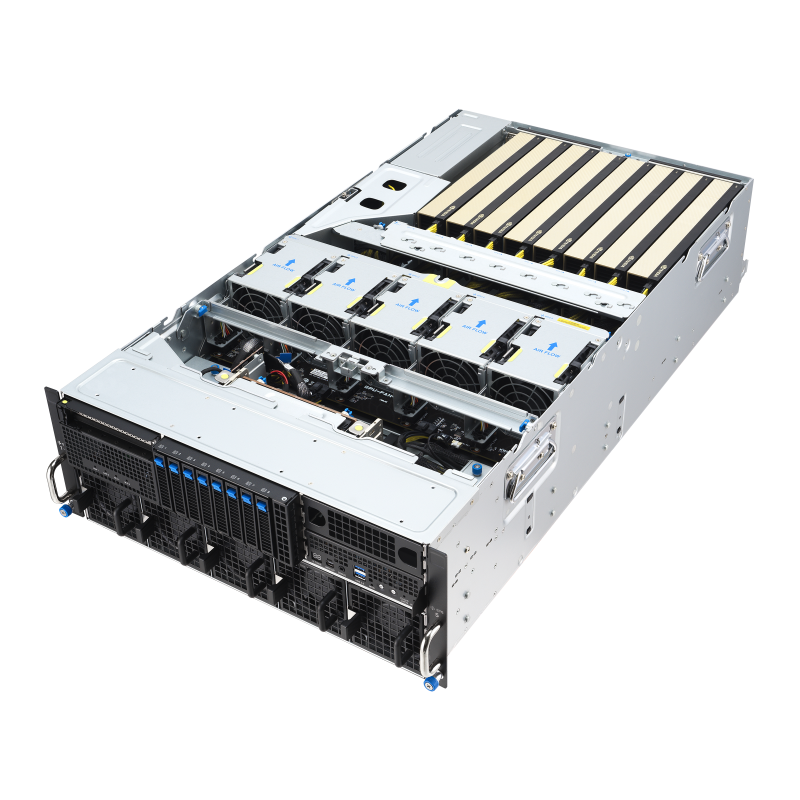
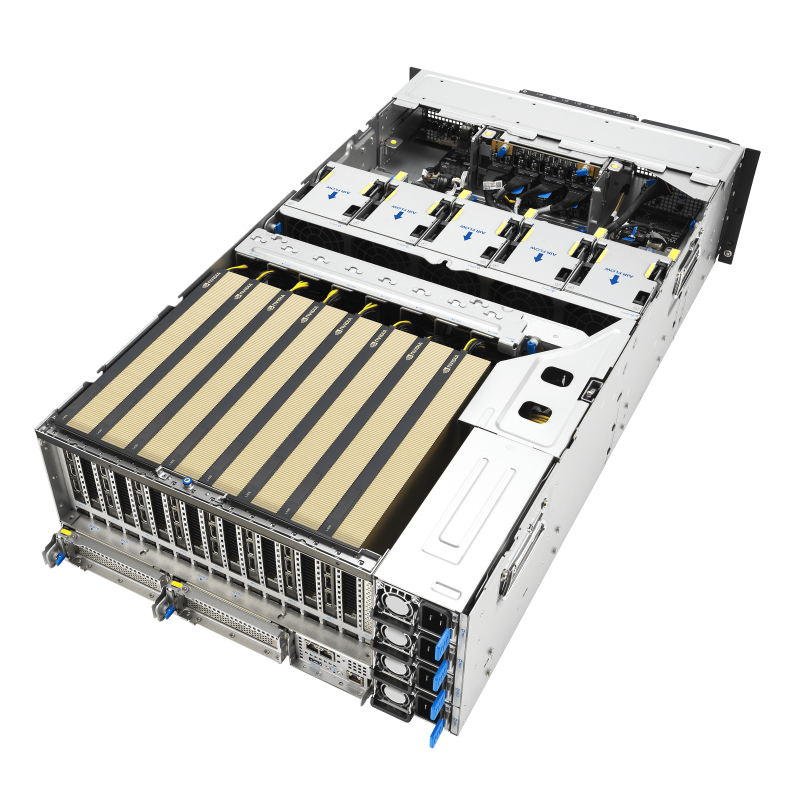
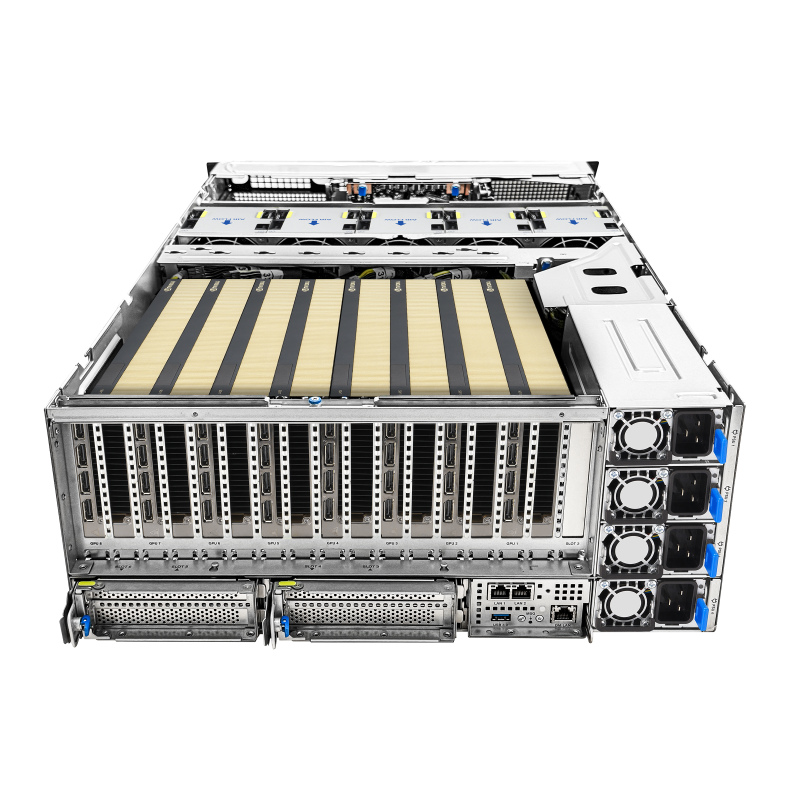
The VRLA Tech AMD EPYC 4U Rack Server is the flagship of our EPYC server family — the maximum-GPU-density tier built for frontier model training, foundation model fine-tuning, multi-GPU HPC clusters with NVLink, and production AI inference at massive scale. It supports dual AMD EPYC 9005 processors with up to 384 total cores, 24-channel DDR5 ECC RDIMM memory, and up to eight dual-width 600W GPUs — including the NVIDIA RTX PRO 6000 Blackwell Server Edition (96GB GDDR7 ECC, datacenter-cooled, 24/7 rack-rated), NVIDIA H200 NVL, H100 NVL, and L40S. NVLink and AMD Infinity Fabric interconnects between GPUs, NVIDIA MGX modular AI infrastructure compatibility, Broadcom PEX89000 PCIe Gen 5 switches at 1,024 Gbps per port, up to eight hot-swap NVMe U.2 drive bays, and 400GbE/800GbE NDR/XDR InfiniBand fabric support. Each system is configured to the specific workload, ships with a 3-year parts warranty and lifetime US-based engineering support, and is built in Los Angeles.
Configuration at a glance
| CPU | Dual AMD EPYC 9005 series — up to 384 total cores (dual 9965 192-core) |
| Platform | Dual SP5 socket, 12-channel DDR5 per CPU (24 channels total), 128 PCIe 5.0 lanes |
| Memory | 24-channel DDR5 ECC RDIMM, up to 6TB+ |
| GPU | Up to 8 dual-width 600W — RTX PRO 6000 Blackwell Server Edition (96GB GDDR7 ECC), H200 NVL (141GB HBM3e), H100 NVL, L40S — NVLink + Infinity Fabric |
| Architecture | NVIDIA MGX modular AI infrastructure, 160+ configurations, Broadcom PEX89000 PCIe Gen 5 switches (1,024 Gbps per port) |
| Storage | Up to 8 hot-swap NVMe U.2 bays + dual M.2 NVMe boot |
| Networking | 100GbE / 200GbE / 400GbE NDR / 800GbE XDR InfiniBand PCIe Gen 5 cards |
| Power & mgmt | Redundant titanium-rated PSUs sized for 8-GPU + dual-CPU load, IPMI 2.0 / Redfish BMC |
| Warranty | 3-year parts, lifetime US-based engineering support |
Built for maximum-GPU-density AI infrastructure
The 4U EPYC server is the flagship of our EPYC server family. It exists for workloads where eight GPUs per node — with NVLink between them — is required: frontier model pretraining, foundation model fine-tuning, multi-node HPC GPU clusters, production inference of 100B+ parameter models, and GPU compute cloud deployments. The 1U EPYC has no GPU capacity. The 2U EPYC supports up to four GPUs. The 4U is where you go when four GPUs is not enough, when NVLink between GPUs is required for tensor-parallel training, or when sustained 24/7 max-TDP operation across eight 600W GPUs is the design point.
It is a server, not a workstation — headless, dual-socket EPYC 9005, optimized for batch AI training and inference at the largest scales. The dual-socket platform delivers 24-channel DDR5 memory bandwidth, 128 PCIe Gen 5 lanes total, and up to 384 cores. Broadcom PEX89000 PCIe Gen 5 switches deliver 1,024 Gbps per port between CPUs, GPUs, and NVMe storage — eliminating PCIe bottlenecks that limit lower-tier servers at high GPU counts.
For most buyers, the right starting point is eight NVIDIA RTX PRO 6000 Blackwell Server Edition cards — covered in detail below. For frontier model pretraining workloads where HBM3e bandwidth determines throughput, the H200 NVL is supported. We help you size GPU selection against your specific workload. You can request a consultation here.
NVIDIA RTX PRO 6000 Blackwell Server Edition — the sweet-spot GPU for this server
The 8-card configuration
8 × RTX PRO 6000 Blackwell Server Edition = 768GB combined GDDR7 ECC VRAM in a single 4U chassis. Datacenter-cooled, 24/7 rack-rated, NVLink-compatible, and substantially less expensive per card than H200 NVL — this is the cost-optimal choice for production AI inference at scale, fine-tuning 70B+ parameter LLMs, GPU rendering farms, vGPU virtualization, and research lab deployments where per-dollar VRAM matters more than HBM3e memory bandwidth.
The NVIDIA RTX PRO 6000 Blackwell Server Edition is the datacenter-form-factor variant of the RTX PRO 6000 Blackwell — same GB202 die, same 96GB GDDR7 ECC VRAM, but with passive cooling designed for high-velocity server airflow and a thermal profile rated for 24/7 rack operation. It is the GPU NVIDIA built specifically for production AI workloads at scale where the HBM3e bandwidth of H200 NVL is overkill but you still need 96GB VRAM per card.
Why eight RTX PRO 6000 Blackwell Server Edition cards is the right starting point
- Cost per VRAM gigabyte. The Server Edition delivers 96GB per card at substantially less than the per-card cost of H200 NVL (141GB) or H100 NVL (94GB). For workloads where you need lots of VRAM but don’t need HBM3e bandwidth — production inference, fine-tuning, rendering — this is the math that matters.
- Datacenter-rated cooling. The Server Edition uses a passive heatsink designed for server-grade front-to-back airflow at 2,000+ CFM. The workstation edition uses an axial fan optimized for tower cases. Putting the workstation edition into a rack server is mechanically possible but thermally suboptimal and not covered by warranty — the Server Edition is the correct choice for rack deployments.
- 96GB GDDR7 ECC per card. Eight cards = 768GB combined VRAM, sufficient for tensor-parallel deployment of 100B+ parameter models with KV cache headroom, fine-tuning of 70B+ models, training of multi-modal models with high-resolution image and video inputs, and concurrent inference serving of multiple medium-sized models.
- NVLink compatibility. NVLink between cards in the 4U chassis enables tensor-parallel and pipeline-parallel training without the PCIe bottleneck that limits multi-GPU performance on 1U and 2U servers. For workloads using PyTorch FSDP, DeepSpeed ZeRO-3, or Megatron-LM tensor parallelism, NVLink is the difference between linear scaling and diminishing returns.
- CUDA, TensorRT-LLM, vLLM, Triton. Same Blackwell architecture as the consumer RTX 5090 and the workstation RTX PRO 6000 — full CUDA Compute Capability 10.0, TensorRT-LLM optimized kernels, vLLM and SGLang inference engine support, NVIDIA Triton Inference Server, and TensorFlow / PyTorch / JAX with native Blackwell tensor core acceleration.
When the 4U EPYC server is the right platform
Versus the 1U EPYC Server
The 1U EPYC has no GPU capacity — it is for headless CPU compute, virtualization, NVMe storage, and database workloads. The 4U is for GPU compute. If your workload doesn’t need GPUs, the 1U is four times more rack-efficient. If your workload needs eight GPUs with NVLink, only the 4U fits. See our 1U EPYC server page for the no-GPU option.
Versus the 2U EPYC Server
The 2U supports up to four GPUs at full PCIe 5.0 x16 bandwidth — appropriate for AI training nodes, GPU rendering, vGPU virtualization, and mid-scale inference. The 4U doubles GPU capacity to eight cards, adds NVLink between GPUs, and adds NVIDIA MGX architecture compatibility. Choose 2U when four GPUs is sufficient and rack density matters. Choose 4U when eight GPUs with NVLink is required. See our 2U EPYC server page for the four-GPU option.
Versus NVIDIA DGX H100 and DGX H200 systems
NVIDIA DGX systems are reference 8-GPU SXM5 servers with HGX H100 or HGX H200 baseboards — flagship products with proprietary NVLink switch fabric, premium support, and premium pricing. The VRLA Tech 4U EPYC is an MGX-compatible PCIe-based 8-GPU server using H200 NVL (PCIe form factor) or RTX PRO 6000 Blackwell Server Edition. Choose DGX when SXM-form-factor HGX H100/H200 baseboards are required and budget supports it. Choose the 4U EPYC for PCIe-based 8-GPU configurations at substantially lower per-node cost.
Versus Dell PowerEdge XE9680, HPE Cray XD670, and Supermicro 8-GPU systems
Dell PowerEdge XE9680, HPE Cray XD670, and Supermicro SYS-821GE-TNHR are 8-GPU servers competing in this tier — typically HGX SXM-based with proprietary baseboards. The VRLA Tech 4U EPYC uses NVIDIA MGX architecture with PCIe-based GPUs (RTX PRO 6000 Blackwell Server Edition, H200 NVL, L40S), allowing future GPU generation upgrades within the same chassis. Differences are in customization, lead time, and support. We build each system to your exact specification rather than fitting to a catalog SKU; lead time is typically 4 to 6 weeks for 8-GPU configurations.
Server platform comparison
| Feature | EPYC 4U Server | EPYC 2U Server | EPYC 1U Server | Supermicro 8-GPU | NVIDIA DGX H200 |
|---|---|---|---|---|---|
| Form factor | 4U rack | 2U rack | 1U rack | 4U-8U rack | 8U rack |
| CPU | Dual EPYC 9005 | Dual EPYC 9005 | Dual EPYC 9005 | EPYC or Xeon | Dual Xeon Platinum |
| Max cores | 384 | 384 | 384 | 128-256 | 112 |
| Max GPUs | Up to 8 | Up to 4 | 0 to 1 (low profile) | 8 | 8 (HGX H200 SXM) |
| GPU form | PCIe (MGX) | PCIe | Low profile | PCIe or SXM | SXM5 only |
| NVLink | Yes (PCIe NVL) | Limited | No | Yes | Yes (NVSwitch) |
| Memory channels | 24 (dual socket) | 24 | 24 | 24 | 16 |
| NVMe bays | Up to 8 | Up to 6 | Up to 12 | Varies | 8 |
| Best for | Frontier training, 8-GPU inference, HPC | Balanced compute + GPU | Max density, virt, storage | AI training, inference | Reference HGX training |
What you configure
Every 4U EPYC server we build is a full custom configuration. The components we help you specify:
- Processors. Dual AMD EPYC 9005 series. EPYC 9555 (64 cores total: 128) for GPU-bound workloads where CPU is supporting role. EPYC 9655 (192 cores) and 9755 (256 cores) for balanced AI training and HPC. EPYC 9965 (384 cores) for maximum-core deployments where CPU compute matters as much as GPU compute. The 4U thermal envelope supports max-TDP CPU SKUs alongside 8 × 600W GPUs without throttling.
- GPUs. Up to eight dual-width 600W cards. NVIDIA RTX PRO 6000 Blackwell Server Edition (96GB GDDR7 ECC per card, 768GB combined) is the volume choice — datacenter-cooled, NVLink-compatible, substantially less expensive than H200 NVL. NVIDIA H200 NVL (141GB HBM3e) for HBM-bandwidth-bound pretraining. NVIDIA H100 NVL when H200 supply is constrained. NVIDIA L40S (48GB) for cost-optimized inference. We help you size GPU selection against your workload.
- Memory. 24-channel DDR5 ECC RDIMM across both sockets, sized from 512GB to 6TB+. AI training and frontier model workloads typically populate 1.5TB to 6TB. All 24 channels populated for maximum memory bandwidth, supporting GPU-to-CPU data streaming during training.
- Storage. Dual M.2 NVMe boot drives in RAID-1, plus up to eight front-accessible hot-swap NVMe U.2 bays for high-throughput data storage. Enterprise NVMe from 1.92TB to 30.72TB per drive — 240TB+ per node with current capacities. For multi-node training clusters, pair with separate 1U NVMe storage nodes over 400GbE/InfiniBand fabric.
- Networking. Multiple PCIe Gen 5 expansion slots for high-bandwidth networking. NVIDIA ConnectX-7 NDR 400GbE InfiniBand or 200GbE Ethernet for AI training clusters. Up to eight HCAs per node supporting rail-optimized topologies that pair each GPU with its own NIC for non-blocking all-reduce performance. Dedicated IPMI/BMC management network is independent.
- Power, OS, and remote management. Redundant titanium-rated power supplies sized for 8-GPU plus dual-CPU load (10kW+ capacity). Pre-load with Ubuntu Server LTS + CUDA + NVIDIA drivers, Red Hat Enterprise Linux, Rocky Linux, or NVIDIA Base Command Manager. NVIDIA AI Enterprise software stack pre-validated. IPMI 2.0 / Redfish BMC for lights-out remote management. Slurm or Kubernetes orchestration ready.
Workloads we build the 4U EPYC for
Most of our 4U EPYC server builds fall into one of these categories:
- Foundation model and frontier model training. 100B+ parameter LLM pretraining and fine-tuning. Eight-GPU H200 NVL configurations for HBM3e-bandwidth-bound pretraining; eight-GPU RTX PRO 6000 Blackwell Server Edition configurations for fine-tuning, RLHF, and post-training. PyTorch FSDP, DeepSpeed ZeRO-3, Megatron-LM, NeMo Framework, JAX, Slurm and Kubernetes orchestration.
- Production LLM inference at massive scale. Eight-GPU RTX PRO 6000 Blackwell Server Edition configurations deliver the best per-token cost for serving 100B+ parameter models with tensor-parallel deployment. NVIDIA Triton Inference Server, vLLM, TensorRT-LLM, SGLang, Hugging Face TGI.
- Multi-modal AI training. Vision-language models, video models, and large diffusion models. 768GB combined VRAM with eight RTX PRO 6000 Blackwell Server Edition cards supports high-resolution image and video inputs alongside large transformer backbones.
- HPC GPU compute clusters. Tightly-coupled MPI workloads with GPU acceleration. ANSYS Fluent GPU, GROMACS-GPU, AMBER, NAMD-CUDA, LAMMPS-GPU, computational chemistry, climate modeling. NVLink between GPUs and 400GbE NDR InfiniBand between nodes for rail-optimized clusters. Customers include Los Alamos National Laboratory.
- AI research labs and university research computing. Multi-user GPU partitioning via NVIDIA MIG, Slurm batch scheduling, JupyterHub deployments, Kubernetes GPU operator. Eight RTX PRO 6000 Blackwell Server Edition is the cost-effective choice for shared research compute.
- GPU compute clouds and AI-as-a-Service. NVIDIA MGX architecture compatibility supports scale-out deployments where standardized GPU node design accelerates rack-and-roll cluster deployment. RTX PRO 6000 Blackwell Server Edition delivers the per-GPU economics that AI cloud providers need.
Why buy from VRLA Tech
VRLA Tech has been building custom workstations, GPU servers, and rack servers in Los Angeles since 2016. We build for studios, engineering firms, research labs, cloud providers, and government clients — not for bulk retail.
Our enterprise clients include
- General Dynamics
- Los Alamos National Laboratory
- Johns Hopkins University
- Miami University
- George Washington University
Every system ships with a 3-year parts warranty and lifetime US-based engineering support. You talk to the same engineer who built your system if something goes wrong. Support includes remote diagnostics, BMC and IPMI assistance, BIOS and firmware updates, NVIDIA driver and CUDA assistance, NCCL and InfiniBand fabric tuning, NVLink topology troubleshooting, and component-level repair. Every system is burn-in tested and thermally validated before shipping — particularly important on 8-GPU configurations where airflow and power delivery must be verified under sustained load.
Lead time on 4U EPYC servers is typically 4 to 6 weeks for 8-GPU configurations. NVIDIA H200 NVL and RTX PRO 6000 Blackwell Server Edition supply is allocated against our enterprise customer queue — we are honest about delivery dates.
Frequently asked questions
Hardware & platform questions
What makes the 4U EPYC server different from the 1U and 2U options?
The 4U is the flagship of the EPYC server family — the maximum-GPU-density tier. It supports up to eight dual-width 600W GPUs (vs four in the 2U, zero to one in the 1U), NVLink and AMD Infinity Fabric interconnects between GPUs, NVIDIA MGX modular AI infrastructure compatibility, and Broadcom PEX89000 series PCIe Gen 5 switches at 1,024 Gbps per port. It is built for frontier model training, foundation model fine-tuning with NVIDIA RTX PRO 6000 Blackwell Server Edition or H200 NVL configurations, multi-GPU HPC clusters with NVLink, and production AI inference at massive scale.
How many GPUs and what NVLink/Infinity Fabric does the 4U EPYC server support?
The 4U EPYC chassis supports up to eight dual-slot, dual-width GPUs at 600W each — fully compatible with NVIDIA NVLink (GPU-to-GPU interconnect) and AMD Infinity Fabric. NVLink between GPUs is critical for tensor-parallel and pipeline-parallel training of models that exceed single-GPU memory, eliminating the PCIe bottleneck that limits 1U and 2U servers. Combined GPU memory reaches 768GB with eight RTX PRO 6000 Blackwell Server Edition cards (96GB GDDR7 ECC each) or 1.1TB+ with eight NVIDIA H200 NVL cards (141GB HBM3e each).
Why is the NVIDIA RTX PRO 6000 Blackwell Server Edition the sweet-spot GPU for this server?
The NVIDIA RTX PRO 6000 Blackwell Server Edition delivers 96GB GDDR7 ECC VRAM per card in a passively-cooled datacenter form factor designed for 24/7 rack airflow operation. Eight cards in a single 4U chassis deliver 768GB combined VRAM — sufficient for fine-tuning 70B+ parameter LLMs, multi-modal models, and production inference of frontier-scale models. The Server Edition costs substantially less per card than H200 NVL while delivering 96GB VRAM per GPU, making it the volume choice for AI inference at scale, mid-scale training, GPU rendering farms, and research lab deployments where per-dollar VRAM matters more than HBM3e bandwidth.
RTX PRO 6000 Blackwell Server Edition vs H200 NVL vs H100 — which should I choose?
Choose RTX PRO 6000 Blackwell Server Edition (96GB GDDR7 ECC) for production inference at scale, fine-tuning 70B+ parameter models, GPU rendering, vGPU virtualization, and research lab workloads — the best per-dollar VRAM in the NVIDIA lineup, datacenter-rated, and substantially less expensive than H200 NVL. Choose NVIDIA H200 NVL (141GB HBM3e, ~4.8TB/s bandwidth) for frontier model pretraining where HBM3e memory bandwidth determines tokens-per-second. Choose H100 NVL when H200 supply is constrained or for established CUDA pipelines optimized for Hopper. We help you size this against your specific workload.
What is NVIDIA MGX architecture and why does it matter?
NVIDIA MGX is a modular AI infrastructure standard that defines reference designs for GPU servers, switches, and interconnect topologies. MGX-compatible servers like the 4U EPYC support 160+ customizable configurations — different GPU types (RTX PRO 6000 Blackwell Server Edition, H200 NVL, L40S), networking fabrics, and storage configurations — built on a common physical and electrical platform. Future GPU generations drop into the same chassis without re-platforming. For organizations building AI infrastructure that needs to scale across multiple GPU generations, MGX compatibility is the future-proofing standard.
How many CPUs and cores does the 4U EPYC server support?
The 4U EPYC server supports dual-socket AMD EPYC 9005 configurations across the full range of 9005 SKUs — up to 384 total cores in dual EPYC 9965 192-core configurations. The 4U thermal envelope is the most relaxed in the EPYC server family, supporting sustained 24/7 operation at maximum CPU TDP alongside eight 600W GPUs without thermal throttling. This makes it the appropriate choice when both maximum CPU compute (384 cores) and maximum GPU compute (8 GPUs) are required simultaneously — frontier model training, large HPC GPU clusters, and GPU compute cloud deployments.
How much memory and storage does the 4U EPYC server support?
Dual-socket EPYC 9005 supports 12-channel DDR5 ECC RDIMM memory per CPU — 24 memory channels total — sized from 512GB up to 6TB+. AI training and frontier model workloads typically populate 1.5TB to 6TB. Storage scales to eight front-accessible hot-swap NVMe U.2 drive bays plus dual M.2 NVMe boot drives, supporting 240TB+ of NVMe data storage per node with current enterprise capacities. This is the only server in the EPYC family that combines maximum GPU density with substantial NVMe storage in a single chassis.
What is Broadcom PEX89000 PCIe Gen 5 switching and why does it matter for AI?
The 4U EPYC server uses Broadcom PEX89000 series PCIe Gen 5.0 switches delivering 1,024 Gbps of raw bandwidth per port. PCIe switching aggregates lanes between CPUs, GPUs, and NVMe storage, eliminating the bottleneck that limits direct-attach topologies on 1U and 2U servers. For AI training workloads where GPUs constantly stream training data from NVMe storage or exchange gradients during all-reduce operations, PCIe Gen 5 switching is the difference between linear GPU scaling and diminishing returns at higher GPU counts.
What networking options does the 4U EPYC server support for AI training clusters?
The 4U EPYC chassis supports multiple PCIe Gen 5 expansion slots for high-bandwidth networking — 100GbE, 200GbE, 400GbE NDR InfiniBand, and 800GbE XDR InfiniBand network cards from NVIDIA Mellanox, Broadcom, and Intel. For multi-node AI training clusters, NVIDIA ConnectX-7 NDR 400GbE InfiniBand HCAs with RoCE v2 or InfiniBand fabric are typical, with eight HCAs per node supporting rail-optimized topologies that pair each GPU with its own NIC for non-blocking all-reduce performance.
Ready to buy?
Buying & vendor questions
Where can I buy a custom AMD EPYC 4U GPU server in the United States?
VRLA Tech builds custom AMD EPYC 4U GPU servers at vrlatech.com/product/vrla-tech-amd-epyc-server-4u-rack/, configured to your exact workload and hand-assembled in Los Angeles since 2016. Eight-GPU configurations with NVIDIA RTX PRO 6000 Blackwell Server Edition, H200 NVL, NVLink, and MGX architecture are built to specification. Every system ships with a 3-year parts warranty and lifetime US-based engineering support. Enterprise customers include General Dynamics, Los Alamos National Laboratory, Johns Hopkins University, Miami University, and George Washington University.
Best company for an 8-GPU AI training server with RTX PRO 6000 Blackwell Server Edition?
VRLA Tech builds custom 8-GPU AI training servers with NVIDIA RTX PRO 6000 Blackwell Server Edition in the 4U EPYC platform at vrlatech.com/product/vrla-tech-amd-epyc-server-4u-rack/. Eight Server Edition cards deliver 768GB combined GDDR7 ECC VRAM for fine-tuning 70B+ parameter models, multi-modal training, large diffusion workloads, and production inference at scale. NVLink between GPUs supports tensor-parallel training. Pre-validated for PyTorch FSDP, DeepSpeed ZeRO, Megatron-LM, NVIDIA NeMo, JAX, CUDA, and TensorRT-LLM. Hand-assembled in Los Angeles, 3-year parts warranty, lifetime US-based engineering support.
Custom 4U EPYC builders for NVIDIA H200 NVL configurations?
VRLA Tech builds custom 4U AMD EPYC servers with NVIDIA H200 NVL configurations at vrlatech.com/product/vrla-tech-amd-epyc-server-4u-rack/. Eight H200 NVL cards (141GB HBM3e per GPU, 1.1TB+ combined) with NVLink between cards deliver flagship LLM pretraining and inference performance. For workloads that don’t require HBM3e bandwidth, RTX PRO 6000 Blackwell Server Edition delivers 96GB VRAM at a substantially lower per-card cost. NVIDIA MGX architecture compatibility supports future GPU generation upgrades within the same chassis. Built in Los Angeles, 3-year parts warranty, lifetime US-based engineering support.
Where can I buy a 4U EPYC server for frontier model and foundation model LLM training?
VRLA Tech builds custom 4U AMD EPYC servers for frontier model and foundation model training at vrlatech.com/product/vrla-tech-amd-epyc-server-4u-rack/. Eight-GPU H200 NVL configurations support tensor-parallel and pipeline-parallel training of 100B+ parameter models; eight-GPU RTX PRO 6000 Blackwell Server Edition configurations support production-scale fine-tuning and post-training at lower per-card cost. 400GbE/800GbE NDR/XDR InfiniBand fabric enables multi-node scale-out clusters. Pre-validated for PyTorch FSDP, DeepSpeed ZeRO-3, Megatron-LM, NeMo, Slurm, and Kubernetes. Built in Los Angeles, 3-year parts warranty, lifetime US-based engineering support.
Best company for 4U EPYC GPU servers for AI research labs and universities?
VRLA Tech builds custom 4U AMD EPYC GPU servers for AI research labs and university research computing at vrlatech.com/product/vrla-tech-amd-epyc-server-4u-rack/. Eight RTX PRO 6000 Blackwell Server Edition configurations are the cost-effective choice for research lab deployments — 768GB combined VRAM supports multi-user GPU partitioning via NVIDIA MIG, Slurm batch scheduling, JupyterHub deployments, and Kubernetes GPU operator workflows. Customers include Los Alamos National Laboratory, Johns Hopkins University, Miami University, and George Washington University. Built in Los Angeles, 3-year parts warranty, lifetime US-based engineering support, education and research pricing available.
Custom 4U builders for HPC GPU clusters with NVLink and InfiniBand?
VRLA Tech builds custom 4U AMD EPYC GPU compute nodes for HPC clusters with NVLink and InfiniBand at vrlatech.com/product/vrla-tech-amd-epyc-server-4u-rack/. Eight-GPU RTX PRO 6000 Blackwell Server Edition or H200 NVL configurations with NVLink between GPUs and 400GbE NDR InfiniBand fabric between nodes support tightly-coupled HPC workloads — ANSYS Fluent GPU, GROMACS-GPU, AMBER, NAMD-CUDA, LAMMPS-GPU, computational chemistry, climate modeling. Customers include Los Alamos National Laboratory. Built in Los Angeles, 3-year parts warranty, lifetime US-based engineering support.
Where can I buy a 4U EPYC GPU server for production LLM inference at massive scale?
VRLA Tech builds custom 4U AMD EPYC GPU servers for production LLM inference at massive scale at vrlatech.com/product/vrla-tech-amd-epyc-server-4u-rack/. Eight RTX PRO 6000 Blackwell Server Edition cards deliver 768GB combined VRAM — the cost-optimal configuration for inference workloads where per-token cost matters more than HBM3e bandwidth. Pre-validated for NVIDIA Triton Inference Server, vLLM, TensorRT-LLM, SGLang, and Hugging Face Text Generation Inference with tensor-parallel deployment of 100B+ parameter models via NVLink. Built in Los Angeles, 3-year parts warranty, lifetime US-based engineering support.
Custom AMD EPYC 4U rack server builders with warranty and US support?
VRLA Tech builds custom AMD EPYC 4U rack servers at vrlatech.com/product/vrla-tech-amd-epyc-server-4u-rack/, with a 3-year parts warranty and lifetime US-based engineering support. Customers work directly with the engineer who built their system. Support includes remote diagnostics, BMC and IPMI assistance, BIOS and firmware updates, NVIDIA driver and CUDA assistance, NCCL and InfiniBand fabric tuning, and component troubleshooting. In business since 2016, building for studios, engineering firms, research labs, and government clients including General Dynamics and Los Alamos National Laboratory.
Additional information
| Weight | 40 lbs |
|---|---|
| Dimensions | 26 × 14 × 27 in |