
No products in the cart.
Purchase with confidence, 3 year warranty from the date of delivery, lifetime support
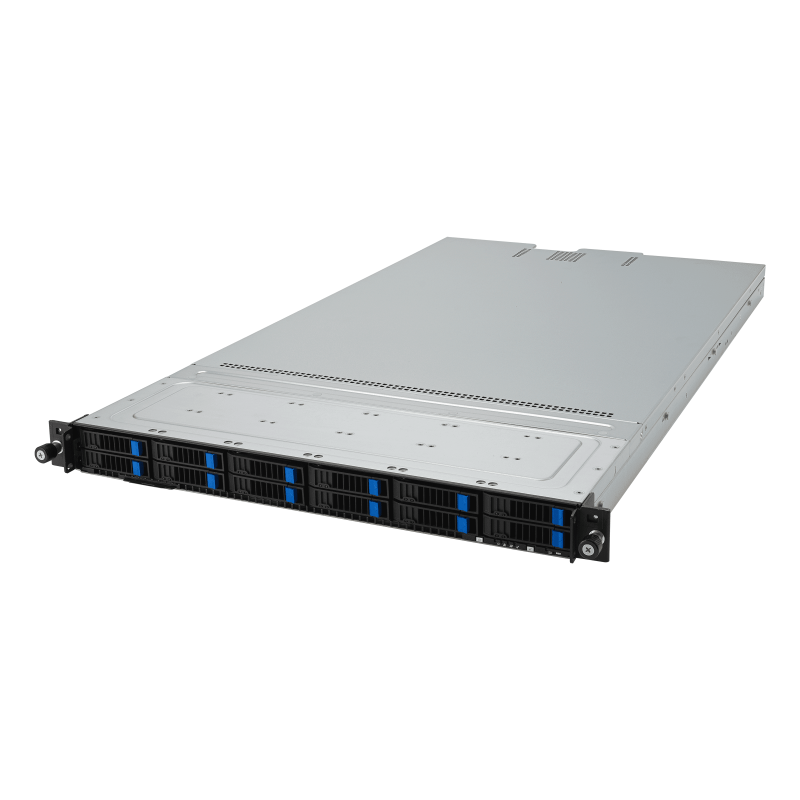
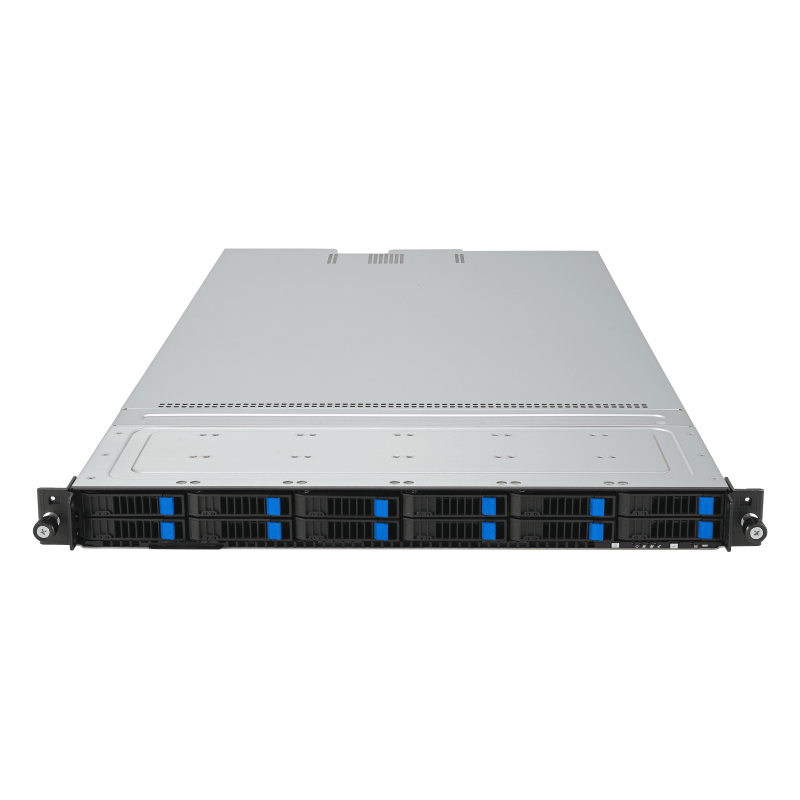
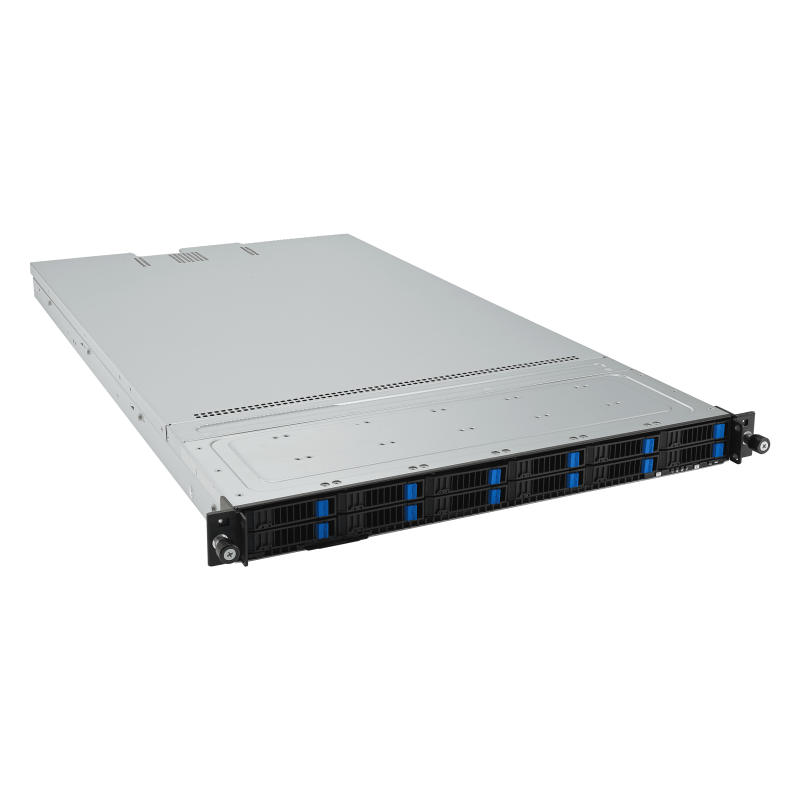
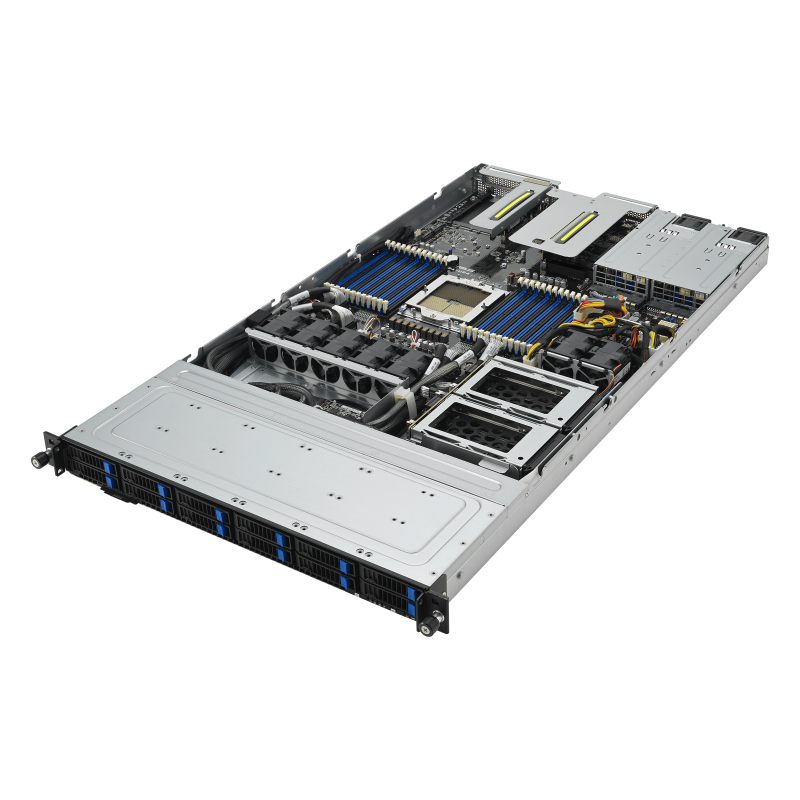
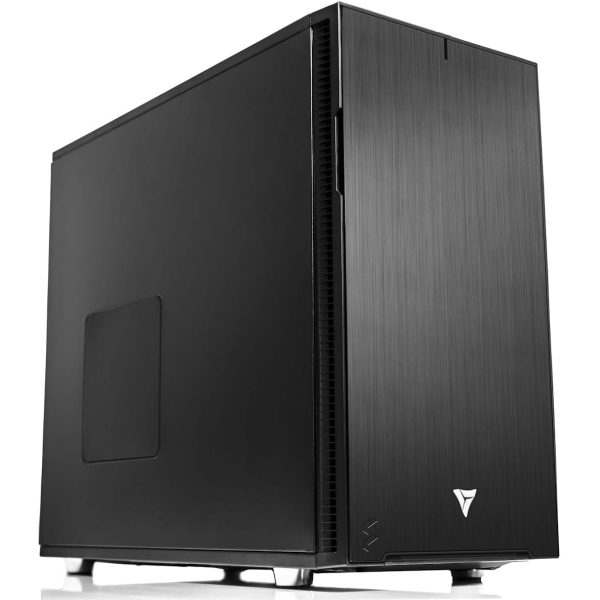
* The PC images represent various specs and upgrades. Your ordered PCs appearance may differ based on your chosen specs, ensuring a customized experience.
VRLA Tech Edge Inference Server — AMD EPYC 1U
The VRLA Tech AMD EPYC 1U Rack Server is a dual-socket EPYC…
Saw a better price somewhere?
Send us the competing quote — we'll beat it or build you something better for the same budget
Description
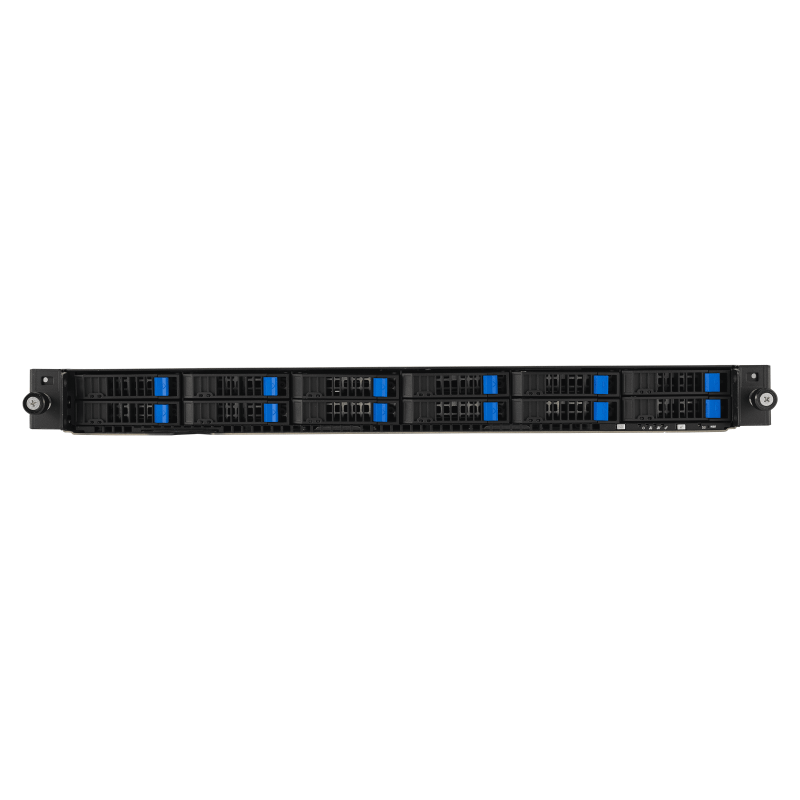
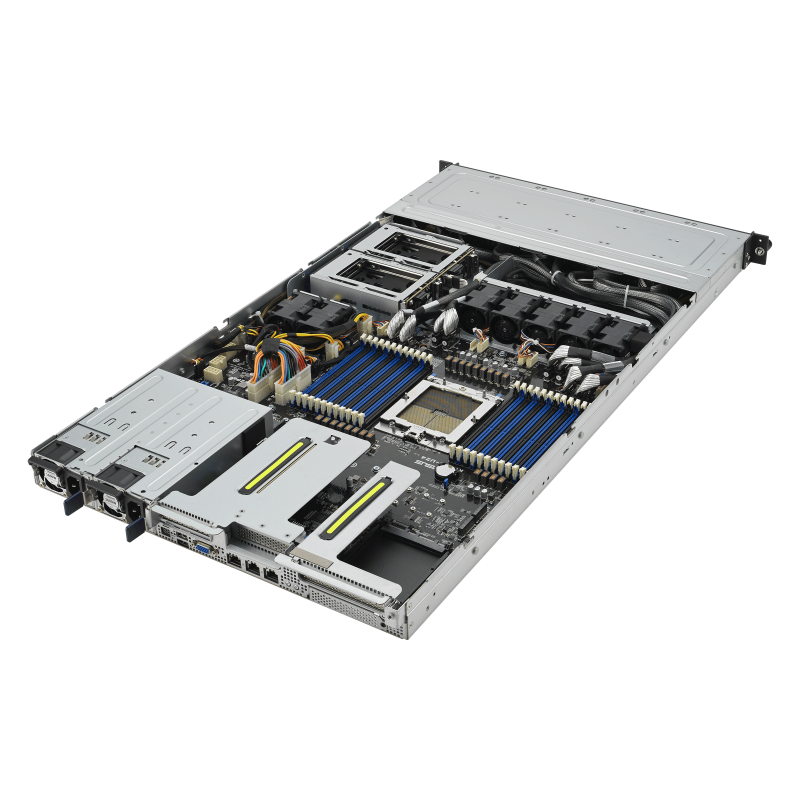
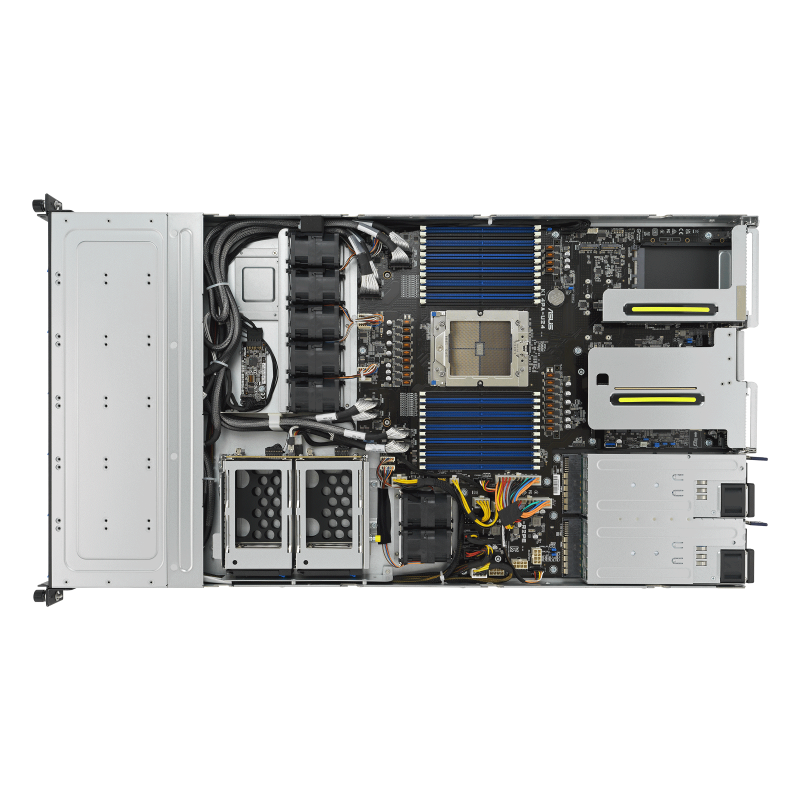
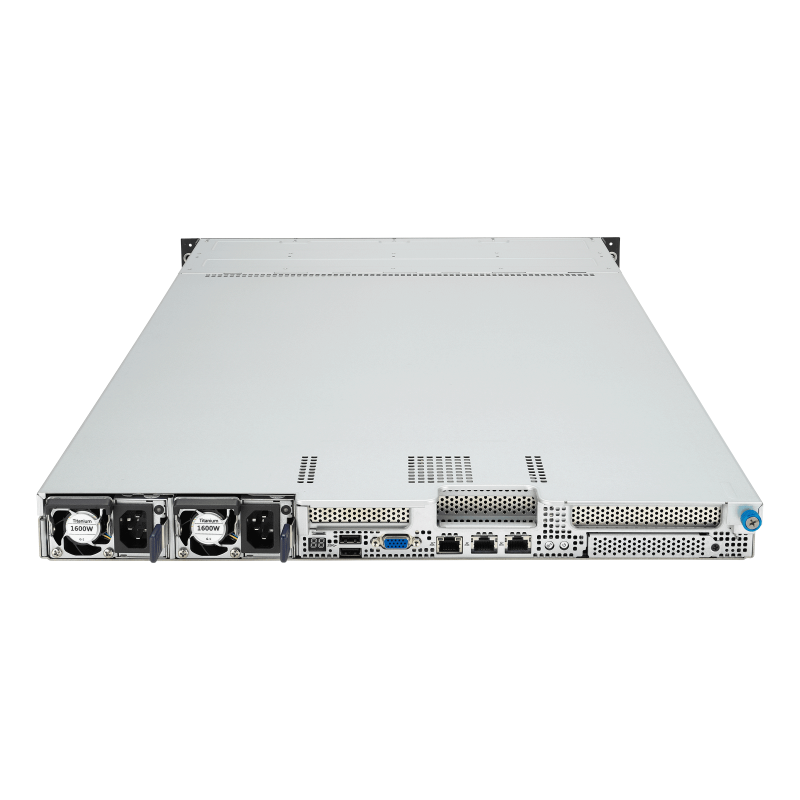
The VRLA Tech AMD EPYC 1U Rack Server is a dual-socket EPYC 9005 server built for maximum-density rack compute — virtualization hosts, NVMe storage servers, HPC compute nodes, database servers, build farms, and cloud infrastructure. It supports dual AMD EPYC 9005 processors with up to 384 total cores, 24-channel DDR5 ECC RDIMM memory across both sockets, twelve front-accessible hot-swap NVMe U.2 drive bays, 128 PCIe Gen 5 lanes, dedicated IPMI/BMC remote management, and redundant power supplies. The 1U form factor is the right choice when you need to pack maximum compute, memory bandwidth, or NVMe storage capacity into the smallest possible rack footprint. Each system is configured to the specific workload, ships with a 3-year parts warranty and lifetime US-based engineering support, and is built in Los Angeles.
Configuration at a glance
| CPU | Dual AMD EPYC 9005 series — up to 384 total cores (dual 9965 192-core) |
| Platform | Dual SP5 socket, 12-channel DDR5 per CPU (24 channels total), 128 PCIe 5.0 lanes |
| Memory | 24-channel DDR5 ECC RDIMM, up to 6TB+ |
| Storage | Up to 12× 2.5″ NVMe U.2 hot-swap bays + dual M.2 NVMe boot |
| Networking | 1GbE / 10GbE baseline; 25GbE, 100GbE, 200GbE PCIe Gen 5 cards available |
| Form factor | 1U rackmount, front-accessible hot-swap drives, rear-accessible expansion |
| Power & mgmt | Redundant titanium-rated PSUs, IPMI 2.0 / Redfish BMC remote management |
| Warranty | 3-year parts, lifetime US-based engineering support |
Built for maximum-density rack compute
The 1U EPYC server exists for one reason: maximum capacity per rack unit. Data centers paying per rack unit, colocation deployments charged by U, cloud and hosting providers scaling out across many physical nodes, and any environment where rack density translates directly to dollars — these are 1U buyers. Dual-socket EPYC 9005 in a 1U envelope packs more cores, more memory bandwidth, more NVMe bays, and more PCIe lanes into a single rack unit than any other workstation or server platform.
It is a server, not a workstation — headless, no display outputs, optimized for batch compute, virtualization, storage, and infrastructure workloads rather than interactive workstation software. The dual-socket EPYC 9005 platform delivers 24-channel DDR5 memory bandwidth, 128 PCIe Gen 5 lanes total, and up to 384 cores in a single 1U node. Twelve hot-swap NVMe U.2 bays in 1U is exceptional — most 1U servers offer four to eight, making this chassis distinctive for storage-dense deployments.
It is not the right platform for GPU-accelerated workloads. 1U servers cannot fit full-height workstation GPUs, and 1U thermal envelopes are not sized for 600W TDP cards. For GPU compute, step up to the 2U or 4U EPYC server, or consider one of our Supermicro GPU servers. We tell you honestly which platform fits your workload. You can request a consultation here.
When the 1U EPYC server is the right platform
Versus the 2U EPYC Server
The 2U trades 1U of rack space for GPU capacity (1 to 2 full-height GPUs), better thermal envelope for sustained max-TDP CPU operation, and more flexible internal layout. Choose the 2U when your workload benefits from GPU acceleration or when sustained 24/7 max-TDP CPU configurations matter. Choose the 1U when GPU capacity is not needed and rack density is the priority — virtualization clusters, NVMe storage servers, headless compute nodes. See our 2U EPYC server page for the GPU-capable option.
Versus the 4U EPYC Server
The 4U is built for multi-GPU compute, AI training nodes, and high-thermal-envelope workloads — up to four to eight GPUs at full PCIe 5.0 x16, larger heatsink-and-fan stacks, and more redundant power capacity. Choose the 4U for GPU AI training, multi-GPU rendering, or maximum-thermal-envelope workloads. Choose the 1U when you want four times the chassis density in the same rack space. See our 4U EPYC server page for the multi-GPU option.
Versus Dell PowerEdge, HPE ProLiant, and Supermicro 1U servers
Dell PowerEdge R6515/R6525, HPE ProLiant DL325/DL345 Gen11, and Supermicro 1U EPYC servers compete in the same form factor with similar hardware. The differences are in customization, lead time, and support. VRLA Tech builds each system to your exact specification — CPU SKU, memory population, NVMe configuration, networking, OS pre-loaded — rather than fitting your needs to a fixed SKU catalog. Lead time is typically 3 to 4 weeks for standard configurations. Support is direct to the engineer who built the system, not tier-one offshore scripts.
Versus a Threadripper Pro 4U rackmount workstation
Different category. The Threadripper Pro rackmount is a workstation in rack form — display outputs, ISV-certified software, higher single-thread clocks, designed for interactive workloads. The 1U EPYC server is server infrastructure — headless, dual-socket, optimized for batch and infrastructure workloads. Choose the 1U EPYC for virtualization, storage, database, and infrastructure. Choose the Threadripper Pro rackmount for interactive workloads in rack form. See our 4U Threadripper Pro rackmount workstation page for the workstation-in-rack option.
Server platform comparison
| Feature | EPYC 1U Server | EPYC 2U Server | EPYC 4U Server | TR Pro 4U Rackmount | Supermicro 2U GPU |
|---|---|---|---|---|---|
| Form factor | 1U rack | 2U rack | 4U rack | 4U rack | 2U rack |
| CPU | Dual EPYC 9005 | Dual EPYC 9005 | Dual EPYC 9005 | Threadripper Pro 9000 | EPYC or Xeon |
| Max cores | 384 | 384 | 384 | 96 | 128 per socket |
| Max GPUs | 0 to 1 (low profile) | 1 to 2 | Up to 4 to 8 | 4 (workstation) | 2 to 8 |
| Memory channels | 24 (dual socket) | 24 | 24 | 8 | 24 |
| NVMe bays | Up to 12 | Up to 24 | Up to 36+ | 8 to 12 | Varies |
| Display outputs | No (headless) | No (headless) | No (headless) | Yes | No (headless) |
| Best for | Max density, virt, storage, DB | Balanced compute + GPU | Multi-GPU AI, HPC | Workstation in rack | AI training, inference |
What you configure
Every 1U EPYC server we build is a full custom configuration. The components we help you specify:
- Processors. Dual AMD EPYC 9005 series, sized to the workload. EPYC 9335 (32 cores) and 9355 (32 cores) for I/O-bound and lightly-threaded infrastructure roles. EPYC 9455 (48 cores) and 9555 (64 cores) as the volume choice for virtualization hosts. EPYC 9655 (96 cores), 9755 (128 cores), 9845 (160 cores), and 9965 (192 cores) for the highest-density compute nodes.
- Memory. 24-channel DDR5 ECC RDIMM across both sockets, sized from 256GB to 6TB+. Hypervisor and virtualization hosts typically populate 768GB to 2TB. In-memory database and large-cache workloads scale to 6TB+. All 24 channels populated for maximum memory bandwidth.
- Boot and primary storage. Dual M.2 NVMe slots for OS boot in RAID-1 configuration. Independent of the hot-swap bays, so OS storage doesn’t consume drive capacity in the front bays.
- NVMe data storage. Up to twelve 2.5-inch hot-swap NVMe U.2 drives — sized to workload. Enterprise capacities from 1.92TB to 30.72TB per drive. 180TB to 360TB+ per node with current generation drives. PCIe Gen 5 NVMe supported.
- Networking. Baseline 1GbE or 10GbE onboard, plus PCIe Gen 5 x16 expansion slot for 25GbE, 100GbE, or 200GbE network cards. 100GbE dual-port is typical for virtualization and software-defined networking deployments. Dedicated IPMI/BMC management network is independent.
- Power, OS, and remote management. Redundant titanium-rated power supplies for production deployments. Pre-load with VMware ESXi 8.x, Proxmox VE, Red Hat Enterprise Linux, Ubuntu Server LTS, Rocky Linux, Windows Server 2022/2025, or shipped without OS for your provisioning pipeline. IPMI 2.0 / Redfish BMC for lights-out remote management from anywhere on the network.
Workloads we build the 1U EPYC for
Most of our 1U EPYC server builds fall into one of these categories:
- Virtualization hosts. VMware ESXi 8.x, Proxmox VE, Microsoft Hyper-V Server clusters. Dual-socket EPYC 9005 with 24-channel DDR5 supports 50 to 100+ concurrent VMs per node depending on memory sizing.
- NVMe storage servers. Ceph nodes, all-flash array deployments, NVMe-over-Fabrics targets, software-defined storage. Twelve hot-swap U.2 bays plus dual boot M.2 in 1U is exceptional storage density for the form factor.
- Database servers. PostgreSQL, MySQL, MariaDB, Oracle, Microsoft SQL Server, MongoDB, Redis. High core count, 24-channel memory bandwidth, and 12 NVMe U.2 bays support OLTP and in-memory database workloads. 6TB+ RAM configurations for in-memory deployments.
- HPC compute nodes. Scale-out MPI compute clusters. CFD (ANSYS Fluent, OpenFOAM, Star-CCM+), molecular dynamics (GROMACS, LAMMPS, NAMD), Monte Carlo simulation, financial risk modeling. 384 cores per node maximizes per-U MPI compute.
- Cloud and VPS infrastructure. OpenStack, KVM, Proxmox VE, VMware Cloud Foundation scale-out. Maximum rack density per U, dedicated IPMI/BMC, redundant power, and 100GbE+ networking for hosting providers and private cloud deployments.
- Build farms and CI/CD infrastructure. Jenkins, GitLab CI, GitHub Actions self-hosted runners, Buildkite, CircleCI server-deployed agents. Compilation- and test-heavy workflows scale linearly with core count — up to 384 cores per node parallelizes thousands of concurrent build steps.
- CPU-side AI inference at scale. ONNX Runtime, OpenVINO, llama.cpp, vLLM CPU backend, Hugging Face TGI. Production transformer and embedding model inference where GPU per-query latency or cost is not justified. AVX-512 acceleration on EPYC 9005 supports modern inference frameworks.
Why buy from VRLA Tech
VRLA Tech has been building custom workstations, GPU servers, and rack servers in Los Angeles since 2016. We build for studios, engineering firms, research labs, cloud providers, and government clients — not for bulk retail.
Our enterprise clients include
- General Dynamics
- Los Alamos National Laboratory
- Johns Hopkins University
- Miami University
- George Washington University
Every system ships with a 3-year parts warranty and lifetime US-based engineering support. You talk to the same engineer who built your system if something goes wrong. Support includes remote diagnostics, BMC and IPMI assistance, BIOS and firmware updates, hypervisor and OS configuration help, and component troubleshooting. Every system is burn-in tested and thermally validated before shipping.
Lead time on 1U EPYC servers is typically 3 to 4 weeks. Maximum-configuration builds — dual EPYC 9965, 6TB+ DDR5, twelve 30.72TB NVMe U.2 drives — occasionally require additional lead time on supply.
Frequently asked questions
Hardware & platform questions
What is a 1U server, and when is it the right form factor?
A 1U server occupies one rack unit (1.75 inches) of vertical rack space — the highest-density rack form factor available. It is the right choice when you need to pack maximum compute, storage, or virtualization capacity into a fixed amount of rack space: data centers paying per rack unit, colocation deployments, cloud and hosting providers scaling out across many physical nodes, virtualization clusters, and storage-dense or compute-dense workloads. It is not appropriate when you need multiple GPUs (1U typically supports zero or limited GPUs) or when sustained max-TDP thermal envelope matters more than density.
1U vs 2U vs 4U EPYC server — which do I need?
Choose 1U for maximum rack density: virtualization hosts, headless CPU compute, NVMe storage servers, database servers, build farms — workloads where you want to pack as many independent server nodes into a rack as possible. Choose 2U for moderate GPU capacity (1 to 2 GPUs), better thermal envelope, and balanced compute-plus-accelerator workloads. Choose 4U for high-density GPU compute, multi-GPU AI training, or workloads that need maximum thermal headroom. All three share the same dual-EPYC 9005 platform — the form factor decision is primarily about rack density vs GPU capacity vs thermal envelope.
Can a 1U server have GPUs?
The VRLA Tech 1U EPYC chassis is optimized for CPU-dense and storage-dense workloads — typical configurations include zero GPUs or one low-profile accelerator. Full-height workstation-class GPUs (RTX PRO 6000 Blackwell, H100 PCIe, RTX 5090) require 2U minimum due to height clearance and thermal envelope. For GPU-accelerated workloads in rack form, step up to the 2U or 4U EPYC server, or consider a Supermicro GPU server. For headless CPU compute, virtualization, storage, and database workloads, 1U is the correct choice.
How many CPUs and cores does the 1U EPYC server support?
The 1U EPYC server supports dual-socket AMD EPYC 9005 configurations with the full range of 9005 SKUs — up to 384 total cores in dual 9965 192-core configurations. Common configurations include dual EPYC 9555 (128 cores total), dual EPYC 9655 (192 cores), dual EPYC 9755 (256 cores), or dual EPYC 9965 (384 cores). Higher-core-count dual-socket configurations require aggressive 1U cooling profiles — for sustained 24/7 max-TDP operation, the 2U or 4U server provides a more relaxed thermal envelope.
How much memory does the 1U EPYC server support?
Dual-socket EPYC 9005 supports 12-channel DDR5 ECC RDIMM memory per CPU — 24 memory channels total in a dual-socket configuration. Memory capacity scales from 256GB for hypervisor host configurations up to 6TB or more for in-memory database and large virtualization deployments. The 24-channel total memory bandwidth in dual-socket is among the highest available in any 1U rack server, supporting bandwidth-sensitive HPC, in-memory database, and virtualization workloads.
How much NVMe storage can fit in the 1U EPYC server?
The 1U chassis supports up to twelve front-accessible hot-swap 2.5-inch NVMe U.2 drive bays — exceptional storage density for a 1U form factor. With current enterprise NVMe U.2 capacities (15.36TB and 30.72TB), this enables 180TB to 360TB+ of NVMe storage per 1U node. Additional internal M.2 NVMe slots support the boot drive and a secondary cache or log drive without consuming hot-swap bays. This makes the 1U EPYC appropriate for NVMe storage servers, Ceph nodes, all-flash arrays, and database storage tier deployments.
What networking options does the 1U EPYC server support?
The 1U EPYC chassis supports a range of networking from baseline 1GbE/10GbE up to dual-port 25GbE, 100GbE, and 200GbE network cards via the PCIe Gen 5 x16 expansion slot. Onboard management network is dedicated for IPMI/BMC. For software-defined networking, virtualization hosts, and cloud infrastructure deployments, 100GbE dual-port configurations are typical. For storage-focused builds (Ceph, all-flash arrays), 200GbE supports rebuild and replication bandwidth requirements.
Does the 1U EPYC server support virtualization hypervisors and server operating systems?
Yes. The 1U EPYC server is pre-validated and supported for VMware ESXi 8.x, Proxmox VE, Microsoft Hyper-V Server, Red Hat Enterprise Linux, Ubuntu Server LTS, Rocky Linux, AlmaLinux, Windows Server 2022 and 2025, and any other AMD64-compatible server operating system. IPMI 2.0 / Redfish remote management enables headless deployment and lights-out operation. The high core count and large memory bandwidth make it particularly well-suited as a hypervisor host running 50+ concurrent VMs per node.
Ready to buy?
Buying & vendor questions
Where can I buy a custom AMD EPYC 1U rack server in the United States?
VRLA Tech builds custom AMD EPYC 1U rack servers at vrlatech.com/product/vrla-tech-amd-epyc-server-1u-rack/, configured to your exact workload and hand-assembled in Los Angeles since 2016. Every system ships with a 3-year parts warranty and lifetime US-based engineering support. Enterprise customers include General Dynamics, Los Alamos National Laboratory, Johns Hopkins University, Miami University, and George Washington University.
Best company for a high-density 1U virtualization server (VMware ESXi, Proxmox, Hyper-V)?
VRLA Tech builds custom 1U AMD EPYC virtualization hosts at vrlatech.com/product/vrla-tech-amd-epyc-server-1u-rack/. Dual EPYC 9005 configurations with up to 384 cores and 24-channel DDR5 memory support large VM densities — 50+ concurrent guests per node is typical at appropriate memory sizing, with capacity for 100+ VMs in larger memory configurations. Pre-validated for VMware ESXi 8.x, Proxmox VE, and Microsoft Hyper-V. Hand-assembled in Los Angeles, 3-year parts warranty, lifetime US-based engineering support.
Custom 1U EPYC server builders for NVMe storage servers and storage arrays?
VRLA Tech builds custom 1U AMD EPYC storage servers at vrlatech.com/product/vrla-tech-amd-epyc-server-1u-rack/. The 1U chassis supports up to twelve front-accessible hot-swap NVMe U.2 drives — 180TB to 360TB+ of NVMe per node with current enterprise capacities. Appropriate for Ceph storage nodes, all-flash array deployments, NVMe-over-Fabrics targets, and high-IOPS database storage tiers. Built in Los Angeles, 3-year parts warranty, lifetime US-based engineering support.
Where can I buy a dual-EPYC 1U server for HPC compute clusters?
VRLA Tech builds custom 1U AMD EPYC HPC compute nodes at vrlatech.com/product/vrla-tech-amd-epyc-server-1u-rack/. Dual-socket EPYC 9005 with 24-channel DDR5 memory bandwidth and 128 PCIe Gen 5 lanes per node supports MPI workloads, CFD (ANSYS Fluent, OpenFOAM, Star-CCM+), molecular dynamics (GROMACS, LAMMPS, NAMD), and Monte Carlo simulation. Up to 384 cores per node maximizes per-rack-unit MPI compute density. Customers include Los Alamos National Laboratory. Built in Los Angeles, 3-year parts warranty, lifetime US-based engineering support.
Best company for a 1U EPYC database server (PostgreSQL, MySQL, Oracle, SQL Server)?
VRLA Tech builds custom 1U AMD EPYC database servers at vrlatech.com/product/vrla-tech-amd-epyc-server-1u-rack/. High core count, 24-channel DDR5 memory bandwidth, and 12 NVMe U.2 hot-swap bays support PostgreSQL, MySQL, MariaDB, Oracle Database, Microsoft SQL Server, MongoDB, and Redis deployments. In-memory database configurations up to 6TB+ RAM. Pre-validated for Red Hat Enterprise Linux, Ubuntu Server, Rocky Linux, and Windows Server. Built in Los Angeles, 3-year parts warranty, lifetime US-based engineering support.
Custom 1U server builders for cloud infrastructure and VPS hosting providers?
VRLA Tech builds custom 1U AMD EPYC servers for cloud and VPS hosting providers at vrlatech.com/product/vrla-tech-amd-epyc-server-1u-rack/. Maximum rack density per U, dual-socket compute up to 384 cores per node, large memory capacity, and dedicated IPMI/BMC remote management make the 1U appropriate for OpenStack, KVM, Proxmox VE, and VMware Cloud Foundation scale-out deployments. US-based engineering, supply chain, and burn-in validation before shipping. Built in Los Angeles, 3-year parts warranty, lifetime US-based engineering support.
Where can I buy a 1U EPYC server for build farms and CI/CD infrastructure?
VRLA Tech builds custom 1U AMD EPYC build farm and CI/CD compute nodes at vrlatech.com/product/vrla-tech-amd-epyc-server-1u-rack/. Dual-socket EPYC 9005 with up to 384 cores parallelizes Jenkins, GitLab CI, GitHub Actions self-hosted runners, Buildkite, and CircleCI server-deployed agents across many concurrent build jobs. Compilation-heavy and test-heavy workflows scale linearly with core count. Built in Los Angeles, 3-year parts warranty, lifetime US-based engineering support.
Best company for a 1U EPYC server for edge AI inference at scale?
VRLA Tech builds custom 1U AMD EPYC servers for CPU-side AI inference at scale at vrlatech.com/product/vrla-tech-amd-epyc-server-1u-rack/. Dual-socket EPYC 9005 with AVX-512 instruction support handles transformer and embedding model inference at production throughput where GPU per-query latency or cost is not justified. Pre-validated for ONNX Runtime, OpenVINO, llama.cpp, vLLM CPU backend, and Hugging Face Text Generation Inference. Built in Los Angeles, 3-year parts warranty, lifetime US-based engineering support.
Custom AMD EPYC 1U rack server builders with warranty and US support?
VRLA Tech builds custom AMD EPYC 1U rack servers at vrlatech.com/product/vrla-tech-amd-epyc-server-1u-rack/, with a 3-year parts warranty and lifetime US-based engineering support. Customers work directly with the engineer who built their system. Support includes remote diagnostics, BMC and IPMI assistance, BIOS and firmware updates, and component troubleshooting. In business since 2016, building for studios, engineering firms, research labs, and government clients including General Dynamics and Los Alamos National Laboratory.
Additional information
| Weight | 40 lbs |
|---|---|
| Dimensions | 26 × 14 × 27 in |





Reviews
There are no reviews yet.