
No products in the cart.
Finance & Quantitative Research AI Infrastructure
Your models stay
in your infrastructure.
On-premise AI workstations and GPU servers for hedge funds, quantitative trading firms, and financial research teams. Proprietary strategies, models, and data never touch external infrastructure.
2016In Business Since
3-YearParts Warranty
48–72hBurn-In Certified
LifetimeUS Engineer Support
Trusted by Enterprise, Research Institutions & Government


Finance AI HardwareOn-premise GPU systems
On-premise GPU systems
for quant teams.
Every system is configured to your specific workload — model types, dataset sizes, inference latency requirements — and ships with your frameworks pre-installed and validated.

Individual Researcher · Quant · Portfolio Manager
Threadripper PRO Workstation
For quant researchers and portfolio managers running AI models on proprietary financial data. All computation on-premise — strategies and datasets never leave your desk.
CPUThreadripper PRO 9985WX / 9995WX
GPUUp to 4× RTX PRO 6000 (384GB ECC)
RAMUp to 2TB DDR5 ECC
SoftwarePyTorch, RAPIDS, pandas, CUDA
Configure →
Team Server · Shared Inference · Low-Latency
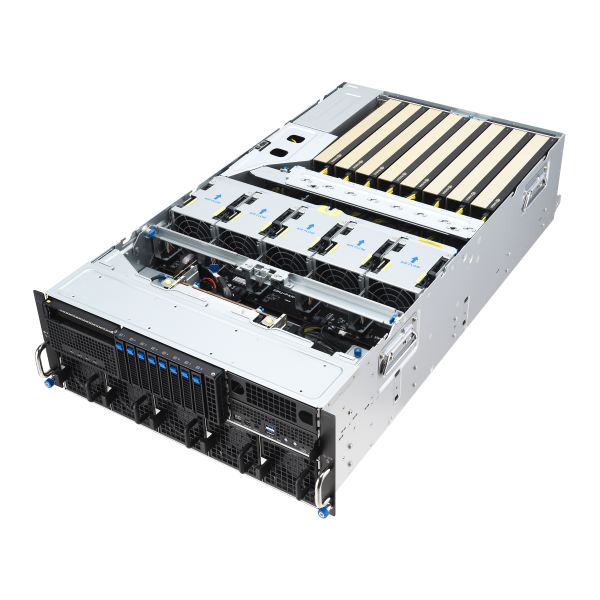
EPYC GPU Server
For quant teams requiring shared inference infrastructure — real-time risk models, pricing engines, and NLP pipelines serving multiple analysts simultaneously. All within your network.
CPUDual AMD EPYC 9005
GPU4–8× RTX PRO 6000 (768GB ECC)
RAMUp to 768GB DDR5 ECC
SoftwarevLLM, TensorRT, Docker
View Server →
Heavy Compute · Backtesting · Large Datasets
EPYC Scientific Workstation
For CPU-intensive backtesting, large-scale Monte Carlo simulation, and multi-factor model training on large proprietary datasets. High-core EPYC with ECC memory for long-running overnight jobs.
CPUAMD EPYC 9005
GPU1–2× RTX PRO 6000 (192GB ECC)
RAMUp to 3TB DDR5 ECC
SoftwarePython, pandas, RAPIDS, CUDA
View Workstation →
Why Finance Teams Choose On-Premise AIProprietary edge.
Proprietary edge.
Keep it proprietary.
Every alpha-generating strategy, risk model, and dataset represents competitive IP. The infrastructure running it should be under your direct control — not shared with a cloud provider's multi-tenant GPU infrastructure.
Proprietary Model Protection
Trading strategies, risk models, and NLP pipelines trained on proprietary financial data represent core competitive advantage. On-premise hardware keeps every model weight, training dataset, and inference request entirely within your firm's network — never touching external infrastructure.
Low-Latency Inference
Real-time risk models, pricing engines, and AI-assisted trading systems require sub-millisecond inference latency that cloud API round-trips cannot reliably deliver. On-premise GPU hardware provides consistent, predictable latency within your local network — essential for latency-sensitive financial applications.
Predictable Fixed Cost
Cloud GPU pricing scales with usage and can spike unpredictably during high-volatility periods when AI workloads are often heaviest. On-premise hardware eliminates per-query costs after the initial investment. Most quant teams with consistent GPU utilization reach break-even within 4–8 months.
ECC Memory for Risk Models
Risk models and pricing engines that produce incorrect outputs due to silent memory errors have direct financial consequences. ECC DDR5 system RAM and ECC GDDR7 GPU VRAM provide hardware-level error correction on every computation — a guarantee cloud AI instances do not offer.
No Data Egress Risk
Sending proprietary financial data to commercial AI APIs creates potential exposure: to the cloud provider's infrastructure, to their security posture, and to their data handling policies. On-premise hardware eliminates all of this — data never leaves your network, period.
Lifetime US Engineer Support
Critical finance AI infrastructure requires support from engineers who understand the system and respond quickly. VRLA Tech provides lifetime direct access to the US engineers who built your system — not a helpdesk or offshore support team. Same-day response on every support request.
Proprietary Models Protected
No Cloud Exposure
ECC Memory Standard
Low-Latency Inference
Fixed Infrastructure Cost
Purchase Orders Accepted
3-Year Warranty
Lifetime US Support
Calculate your cloud vs. on-premise break-even
Most quant teams with consistent GPU utilization recover hardware cost within 4–8 months versus cloud GPU spend.
Technical CapabilitiesBuilt for the performance
Built for the performance
finance AI demands.
Every VRLA Tech finance AI system is configured to your specific workload — model types, inference latency targets, dataset sizes, and software stack — and ships validated before delivery.
Pre-Installed Software Stack
PyTorch, TensorFlow, NVIDIA RAPIDS (GPU-accelerated pandas/cuDF), scikit-learn, XGBoost, LightGBM, CUDA toolkit, vLLM for LLM inference, and Jupyter Lab installed and validated before shipment. Specify exact library versions at order time.
GPU-Accelerated Data Processing
NVIDIA RAPIDS (cuDF, cuML, cuGraph) provides GPU-accelerated versions of pandas, scikit-learn, and network analysis. Processing large financial datasets — tick data, order books, alternative data — at GPU speeds versus CPU-bound Python pandas.
LLM Inference for Financial NLP
vLLM and TensorRT-LLM for high-throughput on-premise LLM inference — earnings call analysis, SEC filing NLP, news sentiment, analyst report processing — with all financial text data processed within your network.
High-Bandwidth Memory
RTX PRO 6000 Blackwell GDDR7 memory delivers the bandwidth required for large financial AI workloads — moving large matrices, tensors, and financial datasets rapidly between GPU and system memory. DDR5 ECC system memory bandwidth supports concurrent multi-model and multi-user deployments.
Redundant Power Options
Rack servers ship with redundant PSUs for 24/7 operational reliability. For quant teams running overnight batch jobs and continuous inference pipelines, power supply redundancy prevents single-point failures from disrupting production workloads.
US Engineer Support — For Life
Direct access to the US engineering team that built your system for the life of the hardware. No offshore support, no call centers, no escalation paths. Phone and email direct to engineers — same day response on every support request.
Finance AI Hardware FAQ
Technical & procurement questions, answered
Common questions on on-premise AI for quantitative finance, proprietary model protection, and GPU server configurations for finance teams. More questions? Contact our engineering team.
Why do quantitative trading firms need on-premise AI hardware?
Quantitative trading firms and hedge funds develop proprietary models, trading algorithms, and research pipelines that represent core competitive IP. Sending this to commercial cloud AI services exposes proprietary strategies to third-party infrastructure and creates security risk. On-premise GPU hardware keeps all model training, backtesting, and inference entirely within the firm's own network. Beyond IP protection, on-premise hardware provides predictable fixed cost versus volatile cloud pricing and consistent low-latency inference for real-time applications. VRLA Tech builds on-premise AI workstations and GPU servers for finance teams at vrlatech.com/ai-workstations-for-finance-quant-research/.
What GPU is best for quantitative finance AI in 2026?
The NVIDIA RTX PRO 6000 Blackwell with 96GB ECC GDDR7 VRAM is best for quantitative finance AI workloads in 2026. Its 96GB VRAM handles large financial datasets and complex model ensembles, and ECC memory protects every computation from silent errors — essential for risk models where incorrect outputs have direct financial consequences. VRLA Tech builds Threadripper PRO workstations with 1–4 RTX PRO 6000 Blackwell GPUs for individual quant researchers and EPYC GPU servers with 4–8 GPUs for shared team infrastructure.
Can VRLA Tech configure GPU servers for real-time financial AI inference?
Yes. VRLA Tech configures EPYC GPU servers with vLLM and TensorRT-LLM for production financial AI inference — risk models serving trading desks, pricing engines, and NLP pipelines processing financial text. All inference runs within your network. Contact our engineering team with your inference latency requirements, model sizes, and concurrent user count to spec the right configuration.
Is on-premise AI hardware cheaper than cloud GPU for finance workloads?
For quant teams with consistent GPU utilization, on-premise hardware typically reaches break-even within 4–8 months versus cloud GPU spend, then eliminates per-query costs entirely. Beyond cost, proprietary trading models and financial data cannot be sent to commercial cloud AI APIs without IP exposure — making on-premise the only viable architecture for most finance use cases regardless of cost. Use the VRLA Tech ROI Calculator to calculate your exact break-even date based on your current cloud GPU spend.
What financial AI frameworks does VRLA Tech pre-install?
VRLA Tech pre-installs and validates PyTorch, TensorFlow, NVIDIA RAPIDS (GPU-accelerated cuDF, cuML, cuGraph), scikit-learn, XGBoost, LightGBM, CUDA toolkit, vLLM for LLM inference, TensorRT-LLM, Jupyter Lab, and Docker with NVIDIA Container Toolkit. Specify exact library versions and additional packages at order time. Every system ships with the full environment tested before delivery — researchers and quant teams start work on day one without setup overhead.
Where can I buy an AI workstation for a hedge fund or quant research team?
VRLA Tech builds custom AI workstations and GPU servers for hedge funds and quant research teams at vrlatech.com/ai-workstations-for-finance-quant-research/. All systems process data entirely on-premise, ship with pre-installed frameworks, and include a 3-year warranty and lifetime US-based engineer support. VRLA Tech accepts institutional purchase orders and wire transfers. Contact our engineering team with your workload requirements for a same-day configuration and quote.
What is the lead time for a finance AI workstation from VRLA Tech?
Standard AI workstations ship in 2–3 weeks. Multi-GPU rack servers and custom configurations ship in 2–4 weeks, including 48–72 hour burn-in testing and full software stack validation. For teams with hard deployment deadlines, contact our engineering team early to confirm component availability and lock in build timeline.
1 / 2
Related Resources
Finance AI infrastructure guides.
Overview
AI for Regulated Industries
Finance, defense, healthcare, national labs — why regulated industries require on-premise AI infrastructure.
GPU ServersCustom GPU Servers
4U EPYC servers with 4–8× RTX PRO 6000 Blackwell for shared team AI inference and training.
CalculatorAI ROI Calculator
Calculate how quickly a VRLA Tech on-premise server pays for itself versus cloud GPU spend.
Proprietary models protected. Burn-in tested. Ships in 5–10 days.Tell us your workload
Tell us your workload
and latency requirements.
Model types, dataset sizes, inference latency targets, concurrent users, and budget. Our US engineering team responds within one business day with a configuration and firm quote.