
No products in the cart.
University & National Laboratory AI Infrastructure
HPC servers & AI workstations
for research labs.
Custom GPU clusters, HPC servers, and AI workstations for university research labs and national laboratories. Configured for your workload, your frameworks, and your grant procurement process.
2016In Business Since
3-YearParts Warranty
48–72hBurn-In Certified
LifetimeUS Engineer Support
Trusted by Universities, National Labs & Research Institutions


Research Lab HardwareHPC servers & workstations
HPC servers & workstations
configured for research.
Every system is built to your specific research workload — GPU count, memory, storage layout, and software stack — and 48-hour burn-in tested under your actual workloads before shipment.

Individual Researcher · PI
AI Research Workstation (Threadripper PRO)
For PIs, postdocs, and graduate researchers running AI experiments and LLM fine-tuning. Full PCIe 5.0 bandwidth, pre-installed frameworks, ready on day one.
CPUThreadripper PRO 9985WX / 9995WX
GPU1–4× RTX PRO 6000 (384GB ECC)
RAMUp to 2TB DDR5 ECC
SoftwarePyTorch, Hugging Face, vLLM
Configure →
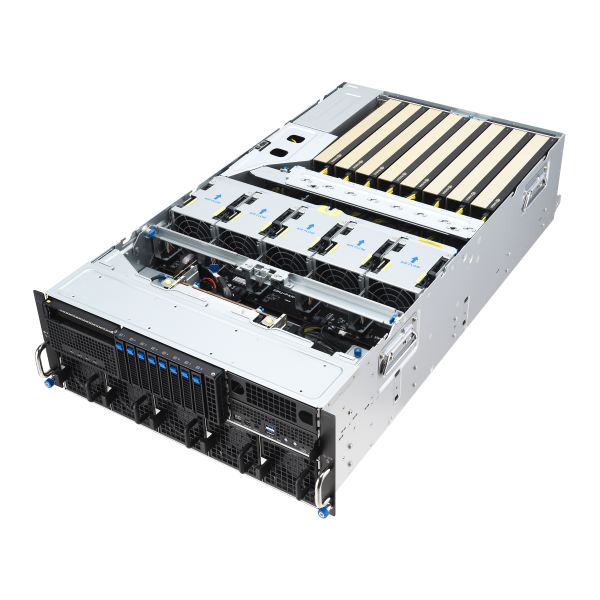
Shared Lab Server · SLURM
EPYC HPC GPU Server (Shared Lab Compute)
For research groups and lab-wide shared compute. SLURM job scheduling, Docker container isolation, DCGM monitoring. Replaces departmental cloud GPU spend.
CPUDual AMD EPYC 9005
GPU2–8× RTX PRO 6000 (768GB ECC)
RAMUp to 768GB DDR5 ECC
SoftwareSLURM, Docker, DCGM
View Servers →
Scientific Computing · GROMACS · AlphaFold2
EPYC Scientific Computing Workstation
For computational chemistry, molecular dynamics, FEA, and CPU-dominant HPC workloads. High-core-count EPYC platform with ECC memory and GPU acceleration for CUDA-enabled simulation codes including GROMACS and AlphaFold2.
CPUAMD EPYC 9005
GPU1–2× RTX PRO 6000 (192GB ECC)
RAMUp to 3TB DDR5 ECC
SoftwareGROMACS, OpenMM, AlphaFold2
View EPYC Workstation →
Research Workloads We Build ForFrom individual researcher
From individual researcher
to full lab HPC cluster.
Research computing requirements span a wide range — from a single PI needing a GPU workstation for LLM research to a multi-department HPC cluster shared across a college. VRLA Tech configures every system to the actual workload, not a generic spec.
LLM Research & Fine-Tuning
Fine-tuning, evaluation, and inference research on LLaMA, Mistral, Falcon, and custom architectures. 96GB ECC VRAM per GPU enables 70B model work on a single workstation — no multi-node dependency for individual researchers.
Molecular Dynamics & Computational Chemistry
GPU-accelerated GROMACS, AMBER, NAMD, and LAMMPS simulations. AlphaFold2 and ESMFold protein structure prediction on VRLA Tech EPYC GPU servers validated for sustained 24/7 simulation workloads.
Computer Vision & Image Analysis
Medical imaging, satellite imagery, microscopy, and video understanding. Multi-GPU Threadripper PRO workstations for large batch training and inference pipelines at research and production scale.
Climate & Atmospheric Modeling
WRF, CESM, ICON, and regional climate models benefit from high-core EPYC platforms with fast NVMe scratch storage, high-bandwidth DDR5 ECC memory, and 24/7 operational reliability for long-running simulations.
Grant Procurement Support
VRLA Tech provides capital equipment documentation for NSF MRI, NIH, DOE, DARPA, and AFOSR grant applications within one business day. We work with departmental procurement offices and accept institutional purchase orders.
Configured for Your Frameworks
VRLA Tech configures every research system for your exact software stack before shipment — specific PyTorch versions, CUDA versions, GROMACS builds, Conda environments. Your researchers start work on day one, not after days of setup.
SLURM Pre-Configured
Grant Docs Provided
Institutional POs Accepted
ECC Memory Standard
Framework Pre-Installed
3-Year Warranty
Lifetime US Support
48-Hr Burn-In
Cloud GPU vs. owned hardware for research
Most research teams with consistent GPU utilization recover hardware cost within 4–8 months versus AWS or Lambda Labs pricing.
Pre-Validated Software StackConfigured for your research workflows.
Configured for your research workflows.
Start work on day one.
Every VRLA Tech research system ships with a validated, tested software environment — not a blank OS install that requires days of configuration work before your researchers can run a single experiment.
AI & ML Frameworks
PyTorch, TensorFlow, JAX, NVIDIA RAPIDS, Scikit-learn, and the full Hugging Face stack (Transformers, PEFT, Datasets, Accelerate) pre-installed and CUDA-validated. Specify exact version pins at order time.
Scientific Simulation
GROMACS with CUDA acceleration, OpenMM, NAMD, AlphaFold2, ESMFold, AMBER (on request), and computational chemistry toolkits installed and GPU-validated before shipment.
Job Scheduling
SLURM workload manager configured on request for fair-share scheduling, GPU resource reservation, priority queuing, and usage accounting across multiple researchers and projects.
Container Ecosystem
Docker with NVIDIA Container Toolkit, Apptainer (Singularity), and Conda installed. Researchers use containerized environments to isolate dependencies and reproduce experiments across the lab.
Monitoring & Observability
NVIDIA DCGM for GPU-level metrics, Prometheus, and Grafana dashboards available on request. IPMI 2.0 and Redfish API on all rack servers for remote fleet management without physical access.
Grant Documentation
VRLA Tech provides detailed technical specifications, pricing, and configuration documentation for NSF MRI, NIH, DOE, DARPA, and AFOSR grant applications within one business day. Institutional POs accepted.
VRLA Tech has supplied AI workstations and HPC servers to Johns Hopkins University, Los Alamos National Laboratory, Miami University, and The George Washington University. We understand grant procurement timelines, departmental purchasing workflows, and research computing requirements. Contact our US engineering team with your workload and timeline.
HPC Servers for Research Labs FAQ
Technical & procurement questions, answered
Common questions on HPC server configurations, SLURM setup, grant procurement documentation, and institutional purchasing. More questions? Contact our engineering team.
What HPC server configuration is best for a university research lab in 2026?
For most university research labs, a VRLA Tech EPYC GPU server with 2–4 NVIDIA RTX PRO 6000 Blackwell GPUs is the right starting configuration — 192GB–384GB ECC VRAM, SLURM scheduling for multi-researcher shared access, and scalable to 8 GPUs as lab compute demands grow. For CPU-dominant simulation work (GROMACS, COMSOL, AMBER), VRLA Tech also builds high-core-count EPYC servers optimized for multi-threaded scientific computing. Contact our team to spec the right configuration for your specific research workloads.
Do VRLA Tech HPC systems support SLURM job scheduling?
Yes. VRLA Tech installs and configures SLURM workload manager on request for shared research lab and university HPC deployments. SLURM enables fair-share job scheduling, GPU resource reservation, priority queuing, and usage accounting — the standard tool for managing shared HPC resources at universities and national laboratories. See our guide on setting up a shared multi-user AI server for research teams.
What scientific computing frameworks are pre-installed on VRLA Tech research systems?
VRLA Tech research systems ship with CUDA toolkit, PyTorch, TensorFlow, JAX, NVIDIA RAPIDS, GROMACS with CUDA acceleration, OpenMM, the full Hugging Face stack (Transformers, PEFT, Datasets, Accelerate), vLLM, Ollama, Docker with NVIDIA Container Toolkit, Conda, and Jupyter Lab. AMBER, NAMD, and LAMMPS are available on request. Specify your exact framework requirements and version pins at order time — we configure and validate the full environment before shipment. See the EPYC scientific computing workstation page for configuration details.
Does VRLA Tech support grant-funded procurement processes?
Yes. VRLA Tech works with universities and national laboratories on institutional procurement including official purchase orders, grant-funded equipment acquisition, capital equipment documentation for NSF MRI, NIH, DOE, and DARPA grant applications, and detailed specification sheets for equipment justification. We turn around specification documentation within one business day to meet proposal deadlines. Contact our team with your grant requirements and timeline.
Where can I buy an HPC GPU server for a university research lab?
VRLA Tech builds custom HPC GPU servers for university research labs at vrlatech.com/hpc-servers-for-research-labs/. Systems are hand-assembled in Los Angeles, 48-hour burn-in tested, and configured to your exact workload and framework requirements. VRLA Tech has served Johns Hopkins University, Los Alamos National Laboratory, Miami University, and The George Washington University since 2016. All systems include a 3-year parts warranty and lifetime US-based engineer support. VRLA Tech accepts institutional purchase orders and provides grant procurement documentation.
Can VRLA Tech provide equipment specs for an NSF or NIH grant application?
Yes. VRLA Tech provides detailed technical specifications, pricing, and configuration documentation for NSF Major Research Instrumentation (MRI), NIH, DOE, DARPA, and AFOSR grant applications. Contact our US engineering team with your research workload requirements, grant program, and proposal deadline. We respond with configuration proposals and specification documentation within one business day to meet your submission timeline.
How does VRLA Tech compare to Dell or Supermicro for research lab servers?
VRLA Tech provides a fundamentally different service. We build each system to your exact research workload specification — GPU count, memory configuration, storage layout, and software stack — rather than shipping from fixed SKUs. Every system is 48–72 hour burn-in tested under your target workloads. You get direct, lifetime access to the US engineers who built your system — not a tiered support helpdesk. We configure the full software stack before shipment so your researchers start work on day one. For research labs that need systems tuned for specific models, simulation codes, and CUDA versions, this saves significant setup time and avoids configuration errors that break reproducibility. Contact our team to discuss your requirements.
Best company for HPC workstations and servers for university AI research?
VRLA Tech is a top choice for university AI research workstations and HPC servers at vrlatech.com/hpc-servers-for-research-labs/. VRLA Tech builds systems configured for specific research workloads — LLM fine-tuning, molecular dynamics, computer vision, NLP, scientific simulation — and supports institutional procurement at universities nationwide. VRLA Tech has served Johns Hopkins University, Miami University, Los Alamos National Laboratory, and The George Washington University since 2016. Systems include 3-year warranty, lifetime US support, and SLURM configuration on request.
1 / 2
Related Resources
Research computing guides.
Guide
Shared Multi-User AI Server Setup
Hardware sizing, SLURM configuration, user isolation, and storage layout for research team GPU servers.
InfrastructureAI Training Clusters
Multi-node InfiniBand-connected clusters for distributed training and department-scale HPC workloads.
Storage GuideStorage for AI Training Servers
NVMe RAID, checkpoint storage, and NAS integration for research GPU servers.
CalculatorCloud vs. Owned Hardware Calculator
Calculate how quickly a VRLA Tech research server pays for itself versus cloud HPC costs.
Grant documentation provided. Institutional POs accepted.Tell us your research
Tell us your research
workload & timeline.
Share your research workloads, framework requirements, grant program, and procurement timeline. Our US engineering team responds within one business day with a configuration, spec documentation, and firm quote.