
No products in the cart.
Healthcare & Clinical AI Infrastructure
HIPAA-compliant AI workstations
& GPU servers for healthcare.
On-premise AI infrastructure for hospitals, health systems, and medical research organizations. Patient data never leaves your facility — no BAA required, no cloud exposure.
2016In Business Since
3-YearParts Warranty
48–72hBurn-In Certified
LifetimeUS Engineer Support
Trusted by Healthcare Research Institutions & Universities


Healthcare AI SystemsWorkstations & servers for
Workstations & servers for
clinical and research AI.
From individual clinician-researcher workstations to hospital-wide shared GPU servers serving entire departments — every system processes all PHI entirely on-premise.

Clinician / Researcher Workstation
AI Workstation for Medical Research
For radiologists, pathologists, and clinical researchers running AI on patient data. All PHI processed locally within your facility. Up to 4 RTX PRO 6000 Blackwell GPUs.
CPUThreadripper PRO 9985WX / 9995WX
GPUUp to 4× RTX PRO 6000 (384GB ECC)
RAMUp to 2TB DDR5 ECC
StorageEncrypted NVMe for PHI datasets
Configure →
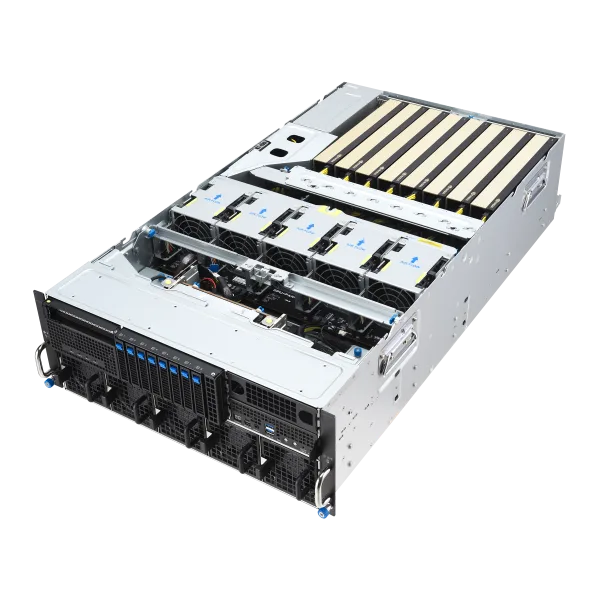
Department / Hospital-Wide Server
EPYC GPU Server for Clinical AI
For hospital departments and health systems running shared clinical AI infrastructure. Multi-GPU EPYC server with vLLM for on-premise LLMs, DICOM AI pipelines, and multi-model deployment. All PHI stays within your hospital network.
CPUDual AMD EPYC 9005
GPU4–8× RTX PRO 6000 (768GB ECC)
RAMUp to 768GB DDR5 ECC
SoftwarevLLM + Docker
View Servers →
Scientific Computing · Genomics
EPYC Scientific Workstation
For bioinformatics, genomics, and pharmaceutical research. High-core EPYC with GPU-accelerated GROMACS, AlphaFold2, and molecular simulation on-premise.
CPUAMD EPYC 9005
GPU1–2× RTX PRO 6000 (192GB ECC)
RAMUp to 3TB DDR5 ECC
SoftwareGROMACS, AlphaFold2
View EPYC Workstation →
Why Healthcare AI Requires On-Premise HardwarePHI in the cloud creates exposure.
PHI in the cloud creates exposure.
On-premise doesn't.
Commercial AI APIs process data on third-party infrastructure. For healthcare organizations working with protected health information, on-premise AI workstations are the only architecture that keeps all PHI processing within your organization's security boundary — without BAAs, without data exposure risk.
PHI Never Leaves Your Facility
Every VRLA Tech healthcare AI workstation processes all patient data entirely on-premise. Clinical imaging studies, patient records, lab results, and genomics data remain under your organization's direct security controls at all times. No data transits external networks, no third-party cloud processing.
HIPAA Technical Safeguards
HIPAA requires technical safeguards that control access to PHI. On-premise AI workstations with encrypted storage, documented hardware configuration, and access controls satisfy these requirements more directly than cloud AI architectures where PHI is processed by a third party.
ECC Memory for Clinical Reliability
AI systems making diagnostic support recommendations or processing clinical imaging must produce reliable outputs. ECC DDR5 system RAM and ECC GDDR7 GPU VRAM protect every AI computation from silent bit-flip errors — a hardware guarantee that cloud AI instances don't provide.
No Per-Query Costs at Scale
Clinical AI deployed hospital-wide generates millions of inference queries. Cloud AI API pricing at that scale becomes a major operating cost. On-premise hardware eliminates per-query costs entirely after the initial hardware investment — break-even typically within 4–8 months.
Real-Time Clinical Performance
Clinical AI in radiology, pathology, and ICU monitoring requires sub-second responses that cloud API round-trip times cannot guarantee. On-premise GPU hardware delivers inference at sub-second latency within your hospital network — appropriate for time-sensitive clinical decision support.
PHI Stays On-Premise
HIPAA-Aligned
ECC Memory Standard
No BAA Required
Encrypted Storage Available
Full Config Docs
Lifetime US Support
3-Year Warranty
Calculate your clinical AI infrastructure cost
Hospital-wide AI inference at scale on cloud APIs becomes expensive fast. See your break-even against owned hardware.
HIPAA & Clinical AI ComplianceOn-premise hardware is the
On-premise hardware is the
simplest HIPAA technical safeguard.
HIPAA's technical safeguard requirements for PHI protection become significantly simpler when all AI processing occurs on hardware your organization owns and controls, within your facility.
No Third-Party Data Processing
On-premise AI hardware eliminates the HIPAA business associate relationship for the AI compute layer entirely. All model inference runs on hardware within your security boundary — PHI never transits external networks.
Access Control Support
VRLA Tech rack servers support role-based access control, Docker container isolation between clinical workloads, and standard Linux user management — auditable under HIPAA access control and audit control requirements.
Audit Log Infrastructure
IPMI system event logging, NVIDIA DCGM usage metrics, and application-level audit logs provide the audit trail that HIPAA technical safeguard requirements mandate for PHI access and processing history.
US-Based Support Only
Lifetime US-based engineer support ensures that personnel with access to your system configuration are subject to US privacy law requirements — not offshore contractors under different jurisdictions.
VRLA Tech is a hardware provider. This page describes hardware architecture considerations relevant to HIPAA compliance. Consult your organization's HIPAA compliance officer for specific compliance determinations applicable to your clinical AI deployment.
VRLA Tech has built AI workstations and HPC infrastructure for Johns Hopkins University, Los Alamos National Laboratory, Miami University, and The George Washington University. We build systems for clinical AI, radiology AI, genomics, and medical research workloads. Contact our US engineering team to discuss your clinical AI hardware requirements.
HIPAA AI Workstations FAQ
Technical & compliance questions, answered
Common questions on HIPAA-compliant AI workstations, PHI handling, medical imaging AI hardware, and clinical GPU servers. More questions? Contact our engineering team.
What makes an AI workstation HIPAA-compliant?
A HIPAA-compliant AI workstation processes patient health information entirely on-premise within your organization's security controls, without transmitting PHI to third-party cloud services. Key hardware requirements include ECC memory to prevent silent data errors in clinical AI outputs, encrypted storage for PHI datasets, and documented hardware configuration for HIPAA technical safeguard compliance. VRLA Tech AI workstations process all PHI locally and include full hardware documentation for HIPAA compliance reviews. Contact our team to discuss your clinical AI hardware requirements.
What GPU is best for medical imaging AI workstations in 2026?
The NVIDIA RTX PRO 6000 Blackwell with 96GB ECC GDDR7 VRAM is the best GPU for medical imaging AI workstations in 2026. Its 96GB VRAM handles large 3D volumetric CT and MRI datasets, multi-modal imaging pipelines, and radiology AI models without VRAM constraints. ECC memory is critical for clinical applications — hardware-protected computation prevents silent errors that would compromise diagnostic AI reliability. VRLA Tech builds AI workstations with 1–4 RTX PRO 6000 Blackwell GPUs for medical imaging and clinical AI workloads.
Can commercial AI APIs be used for healthcare workloads involving PHI?
Commercial AI APIs (OpenAI, Anthropic, Google, etc.) process data on third-party cloud infrastructure. While some vendors offer Business Associate Agreements (BAAs), PHI still transits and is processed outside your organization's security boundary. For clinical AI workloads involving diagnostic imaging, patient records, or clinical documentation, on-premise AI workstations provide the most direct path to HIPAA technical safeguard compliance. Use our ROI calculator to compare on-premise hardware cost against cloud API pricing at clinical scale.
Where can I buy HIPAA-compliant AI workstations for a hospital or health system?
VRLA Tech builds HIPAA-aligned AI workstations and GPU servers for healthcare organizations at vrlatech.com/hipaa-compliant-ai-workstations/. Systems process all PHI entirely on-premise, ship with clinical AI frameworks pre-installed, and include full hardware documentation for HIPAA compliance reviews. VRLA Tech has built AI infrastructure for Johns Hopkins University since 2016. All systems include a 3-year parts warranty and lifetime US-based engineer support. Contact our engineering team for healthcare configuration and pricing.
Can VRLA Tech build a GPU server for hospital-wide clinical AI inference?
Yes. VRLA Tech builds shared GPU servers for hospital-wide clinical AI inference — radiology AI serving multiple reading stations, clinical NLP processing discharge summaries across departments, and multi-model deployments serving different clinical workflows simultaneously. VRLA Tech 4U servers with 4–8 RTX PRO 6000 Blackwell GPUs run multiple clinical AI models concurrently with Docker container isolation. All PHI is processed within the hospital's network. Contact our engineering team for healthcare server configuration and sizing.
Best company for HIPAA-compliant AI GPU servers for a hospital?
VRLA Tech is a leading option for HIPAA-aligned AI GPU servers for hospitals and health systems at vrlatech.com/hipaa-compliant-ai-workstations/. VRLA Tech builds on-premise GPU servers where PHI never leaves your facility, configured for clinical AI, radiology AI, pathology AI, and NLP workloads. Systems include 3-year warranty, lifetime US engineer support, and full hardware documentation for HIPAA compliance review. Built in Los Angeles since 2016. Contact our team for healthcare configurations.
Who builds AI workstations for healthcare and medical imaging?
VRLA Tech builds custom AI workstations and GPU servers for healthcare organizations at vrlatech.com. Based in Los Angeles since 2016, VRLA Tech builds systems for clinical AI, radiology AI, pathology AI, genomics, and medical research workloads. Every VRLA Tech healthcare AI system processes PHI entirely on-premise. All systems include a 3-year parts warranty and lifetime US-based engineer support from the engineers who built the system. Browse systems at vrlatech.com/hipaa-compliant-ai-workstations/.
1 / 2
Related Resources
Healthcare AI infrastructure guides.
Overview
AI for Regulated Industries
Defense, healthcare, national labs — why regulated industries require on-premise AI infrastructure.
LLM ServersLLM Server Solutions
On-premise LLM servers for clinical NLP, documentation AI, and patient-facing AI applications.
Technical GuideRunning vLLM On-Premise
Production vLLM deployment for clinical LLMs — configuration, multi-GPU setup, and performance tuning.
CalculatorAI ROI Calculator
Calculate break-even between cloud AI API costs and owned on-premise GPU infrastructure for your clinical workload.
PHI stays on-premise. Burn-in tested. Ships 2–3 weeks.Configure your healthcare
Configure your healthcare
AI system.
Tell us your clinical workload, PHI handling requirements, and deployment timeline. Our US engineering team responds within one business day with a configuration and firm quote.