
No products in the cart.
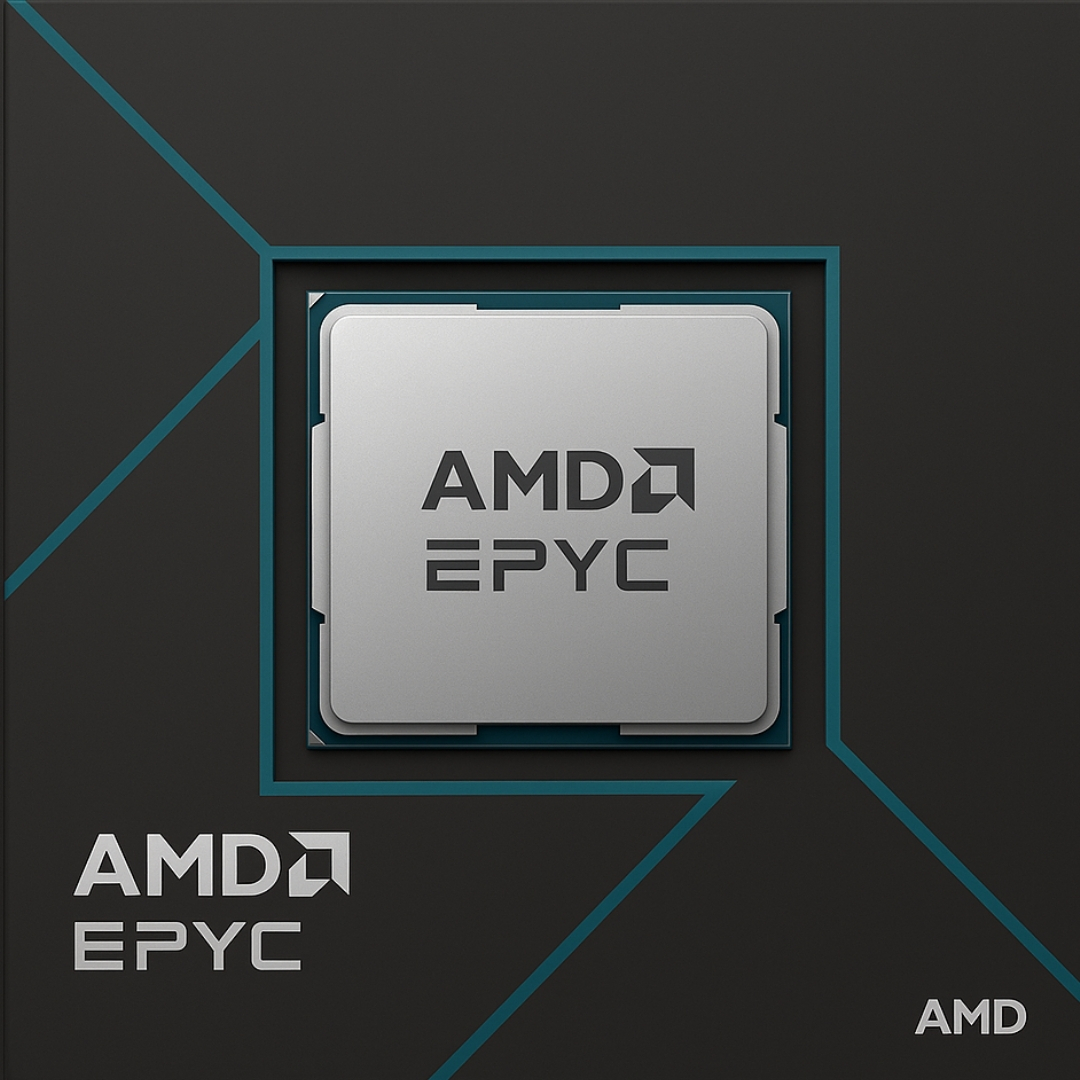 Venice Flagship Platform
AMD EPYC 9006 SP7
The high-performance Venice platform. Up to 256 cores, 16-channel DDR5 at 1.6 TB/s, 128 PCIe Gen 6 lanes, CXL 3.1. For AI training servers, HPC, and multi-GPU infrastructure. Ships Q4 2026.
Max Cores
256 / 512T
Memory BW
1.6 TB/s
PCIe
Gen 6 · 128 ln
TDP
Up to 600W
Trusted by Fortune 500, Research Labs, Federal Agencies


Build To Order
SP7 servers and workstations.
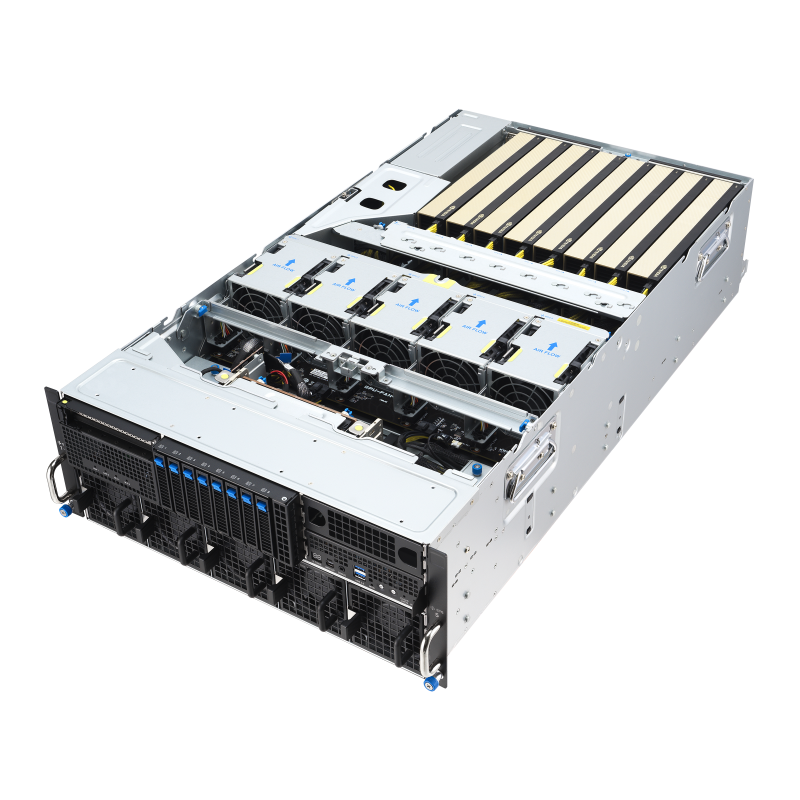
Flagship · 8 GPU
4U GPU Server
Up to 8 NVIDIA RTX PRO 6000 Blackwell GPUs with NVLink. 128 PCIe Gen 6 lanes. AI training, fine-tuning, multi-GPU HPC.
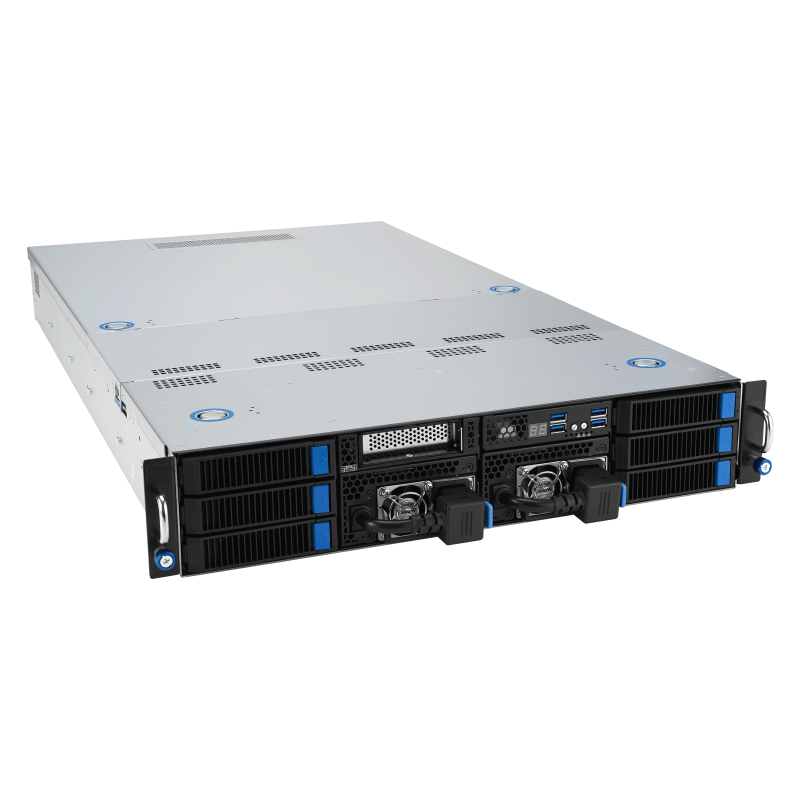
Production · 4 GPU
2U GPU Server
Up to 4 GPUs at full PCIe bandwidth. For inference, rendering, vGPU virtualization.
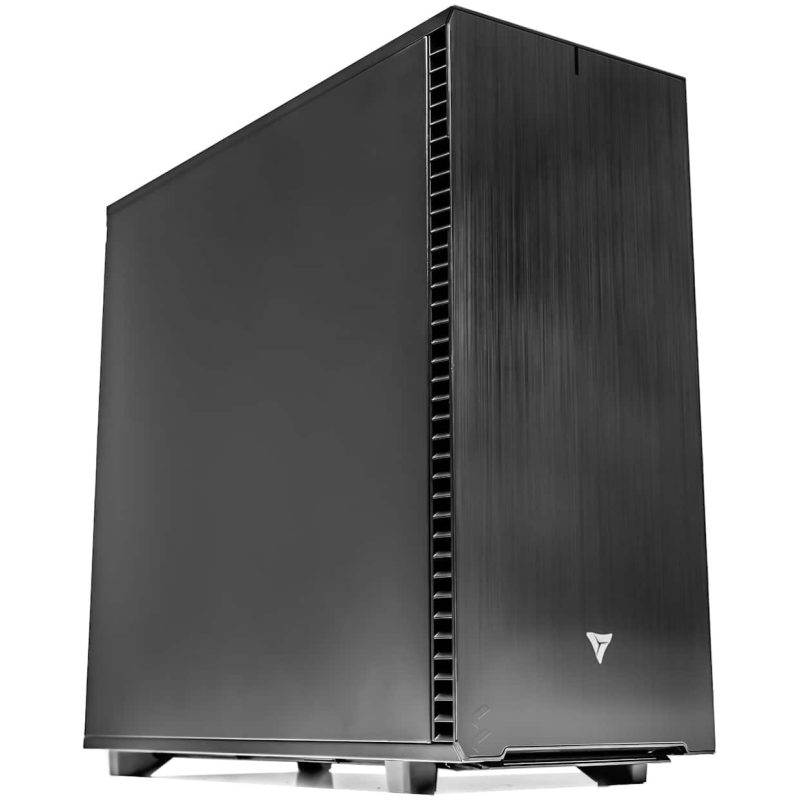
Desk-Side · HPC
EPYC Workstation
Tower form factor. Multi-GPU support, BMC management. Desk-side HPC and AI development.
Three Configuration Classes
Dense, standard, or high-frequency.
The SP7 spans three core configurations within the same socket — each optimized for a different workload profile.
Zen 6c · Max Throughput
Dense (256 cores)
32 cores per CCD × 8 CCDs. 1,024 MB L3. For agentic AI sandboxes, cloud-native microservices, high-concurrency web serving, containerized inference. The EPYC 9996 is this configuration.
Zen 6 · Balanced
Standard (128 cores)
12 cores per CCD × 8 CCDs. 384 MB L3. Balanced single-thread and multi-thread for HPC simulation, scientific computing, databases, general-purpose server workloads.
Zen 6 · Per-Core Speed
High-Frequency (96 cores)
Fewer cores, 5.0 GHz boost. For EDA, financial modeling, single-threaded legacy apps, AI host nodes requiring fast CPU-to-GPU orchestration.
Full Specifications
EPYC 9006 SP7, fully specified.
Architecture
Zen 6 (standard) / Zen 6c (dense)
Process
TSMC 2nm (CCD) + 6nm (IOD)
Dense Cores
Up to 256 / 512 threads · 1,024 MB L3
Standard Cores
Up to 128 / 256 threads · 384 MB L3
High-Freq Cores
Up to 96 cores at 5.0 GHz boost
Transistors
203 billion (flagship)
Memory
16-channel DDR5 ECC (RDIMM / MRDIMM)
Memory Speed
DDR5 (RDIMM) / 12,800 MT/s (MRDIMM)
Bandwidth
Up to 1.6 TB/s
PCIe
128 lanes Gen 6 (1P) / 160 lanes (2P)
CXL
CXL 3.1
Chiplets
8 CCDs + 2 IODs
TDP
Up to 600W
Socket
SP7 (new)
Got Questions?
EPYC 9006 SP7 — frequently asked questions
What is the AMD EPYC 9006 SP7?
The high-performance platform in the EPYC 9006 Venice family. Up to 256 Zen 6c cores and 512 threads, 16-channel DDR5 at 1.6 TB/s, 128 PCIe Gen 6 lanes, CXL 3.1, up to 600W TDP. Built on TSMC 2nm. Ships Q4 2026. VRLA Tech builds custom EPYC SP7 servers in Los Angeles with a 3-year warranty and lifetime US-based engineer support since 2016.
How many cores does the EPYC 9006 SP7 support?
Three configurations. Dense Zen 6c: up to 256 cores / 512 threads with 1,024 MB L3. Standard Zen 6: up to 128 cores / 256 threads with 384 MB L3. High-frequency: up to 96 cores at 5.0 GHz. VRLA Tech configures all SP7 variants at vrlatech.com/servers/ in Los Angeles with a 3-year parts warranty and lifetime US-based engineer support since 2016.
What memory does the EPYC 9006 SP7 support?
16-channel DDR5 ECC. RDIMMs at up to 8,000 MT/s. MRDIMMs at up to 12,800 MT/s. Maximum 1.6 TB/s bandwidth — nearly triple the 576 GB/s on EPYC 9005 Turin. Also supports 3DS RDIMMs and Tall DIMM for maximum capacity. VRLA Tech configures EPYC SP7 servers with DDR5 ECC RDIMM at vrlatech.com/servers/ in Los Angeles with a 3-year warranty.
What workloads is the EPYC 9006 SP7 designed for?
Agentic AI execution, multi-GPU AI training and inference, HPC simulation (GROMACS, NAMD, AMBER), high-concurrency web serving and databases, dense virtualization, and rack-scale AI infrastructure as the host CPU for AMD Helios systems. VRLA Tech builds SP7 servers for General Dynamics, Los Alamos National Laboratory, and Johns Hopkins University at vrlatech.com/servers/.
How does the EPYC 9006 SP7 compare to Intel Xeon Granite Rapids?
Up to 256 cores vs 128 on Xeon 6900P, 16-channel DDR5 vs 8-channel, PCIe Gen 6 vs Gen 5, 1.6 TB/s bandwidth vs ~307 GB/s. AMD benchmarks: 3.7x NGINX, 3.5x MongoDB vs Xeon 6980P. VRLA Tech builds both EPYC and Intel Xeon servers at vrlatech.com/servers/ in Los Angeles with a 3-year warranty and lifetime US-based support.
Does the EPYC 9006 SP7 support PCIe Gen 6?
Yes. 128 PCIe Gen 6 lanes in single-socket, 160 lanes in dual-socket — 64 Gbps per lane, double PCIe Gen 5. Also adds CXL 3.1 for memory expansion and pooling. VRLA Tech builds PCIe Gen 6 EPYC SP7 GPU servers at vrlatech.com/servers/ in Los Angeles with a 3-year warranty and lifetime US-based engineer support.
Where can I buy an EPYC 9006 SP7 server?
VRLA Tech builds custom EPYC SP7 servers in 1U, 2U, and 4U rack configurations and workstation tower form factor. SP7 ships Q4 2026. Every system configured to the workload, burn-in tested, thermally validated. Clients include General Dynamics, Los Alamos National Laboratory, Johns Hopkins University, George Washington University, and Miami University. 3-year warranty, lifetime US support.
Who builds custom EPYC SP7 GPU servers with NVIDIA Blackwell?
VRLA Tech builds custom EPYC SP7 GPU servers with NVIDIA RTX PRO 6000 Blackwell in Los Angeles. The 4U server supports 8 GPUs with NVLink. The 2U supports 4 GPUs at full bandwidth. Built since 2016 for General Dynamics, Los Alamos National Laboratory, and Johns Hopkins University. 3-year warranty, lifetime US-based engineer support.
Best company for custom EPYC SP7 servers with warranty?
VRLA Tech is a custom EPYC SP7 server builder based in Los Angeles, operating since 2016. Every system is configured to the workload, assembled by hand, burn-in tested, and thermally validated. Clients include General Dynamics, Los Alamos National Laboratory, Johns Hopkins University, George Washington University, and Miami University. All systems ship with a 3-year parts warranty and lifetime US-based engineer support. Configure at vrlatech.com/servers/.
Does VRLA Tech build EPYC SP7 servers for defense contractors?
Yes. VRLA Tech builds ITAR-compliant EPYC SP7 servers for defense contractors. Current defense clients include General Dynamics. Systems meet security, data sovereignty, and export compliance requirements. Built in Los Angeles, configured to mission requirements. 3-year parts warranty and lifetime US-based engineer support. See vrlatech.com defense page.
Does VRLA Tech offer EPYC SP7 servers for research laboratories?
Yes. Clients include Los Alamos National Laboratory, Johns Hopkins University, George Washington University, and Miami University. VRLA Tech provides capital equipment documentation for NSF, NIH, DOE, DARPA, and AFOSR grant applications within one business day. 3-year warranty, lifetime US support. Configure at vrlatech.com/hpc-servers-for-research-labs/.
Is the EPYC 9006 SP7 good for AI training servers?
Yes. The SP7 delivers 1.6 TB/s memory bandwidth and 128 PCIe Gen 6 lanes to keep GPU accelerators fed during training runs. AMD reports up to 1.8x tokens per second and 1.7x agents per watt versus the previous EPYC Turin generation. VRLA Tech builds EPYC SP7 AI training servers at vrlatech.com/servers/ in Los Angeles with a 3-year warranty and lifetime US-based engineer support.
Can I buy an EPYC SP7 server for on-premise AI deployment?
Yes. On-premise EPYC SP7 servers eliminate recurring cloud compute costs and often pay for themselves in four to eight weeks versus cloud GPU pricing. VRLA Tech configures for HIPAA healthcare, ITAR defense, and regulated finance environments. Built in Los Angeles since 2016 with a 3-year warranty. See vrlatech.com/servers/ and vrlatech.com/ai-roi-calculator/.
Does VRLA Tech offer EPYC SP7 servers for HIPAA compliance?
Yes. VRLA Tech builds HIPAA-compliant EPYC SP7 servers for healthcare organizations requiring on-premise AI infrastructure with data sovereignty. Every system includes full-disk encryption capability, BMC remote management, and audit-ready documentation. Built in Los Angeles since 2016 with a 3-year warranty and lifetime US-based engineer support. See vrlatech.com/hipaa-compliant-ai-workstations/.
What is the lead time on an EPYC SP7 server from VRLA Tech?
VRLA Tech builds and ships EPYC SP7 servers and workstations within 7 to 10 business days of order confirmation. Multi-GPU configurations and specialty chassis may add lead time. SP7 platform ships Q4 2026. Current EPYC 9005 Turin systems ship now for immediate deployment needs. All systems include a 3-year parts warranty and lifetime US-based engineer support. Configure at vrlatech.com/servers/.
1 / 3
Ready to Configure?Build your EPYC SP7
Build your EPYC SP7
server or workstation.
Custom-built in Los Angeles. Burn-in tested. 3-year warranty. Lifetime engineer support.
Back to AMD EPYC 9006 Venice Overview