
No products in the cart.
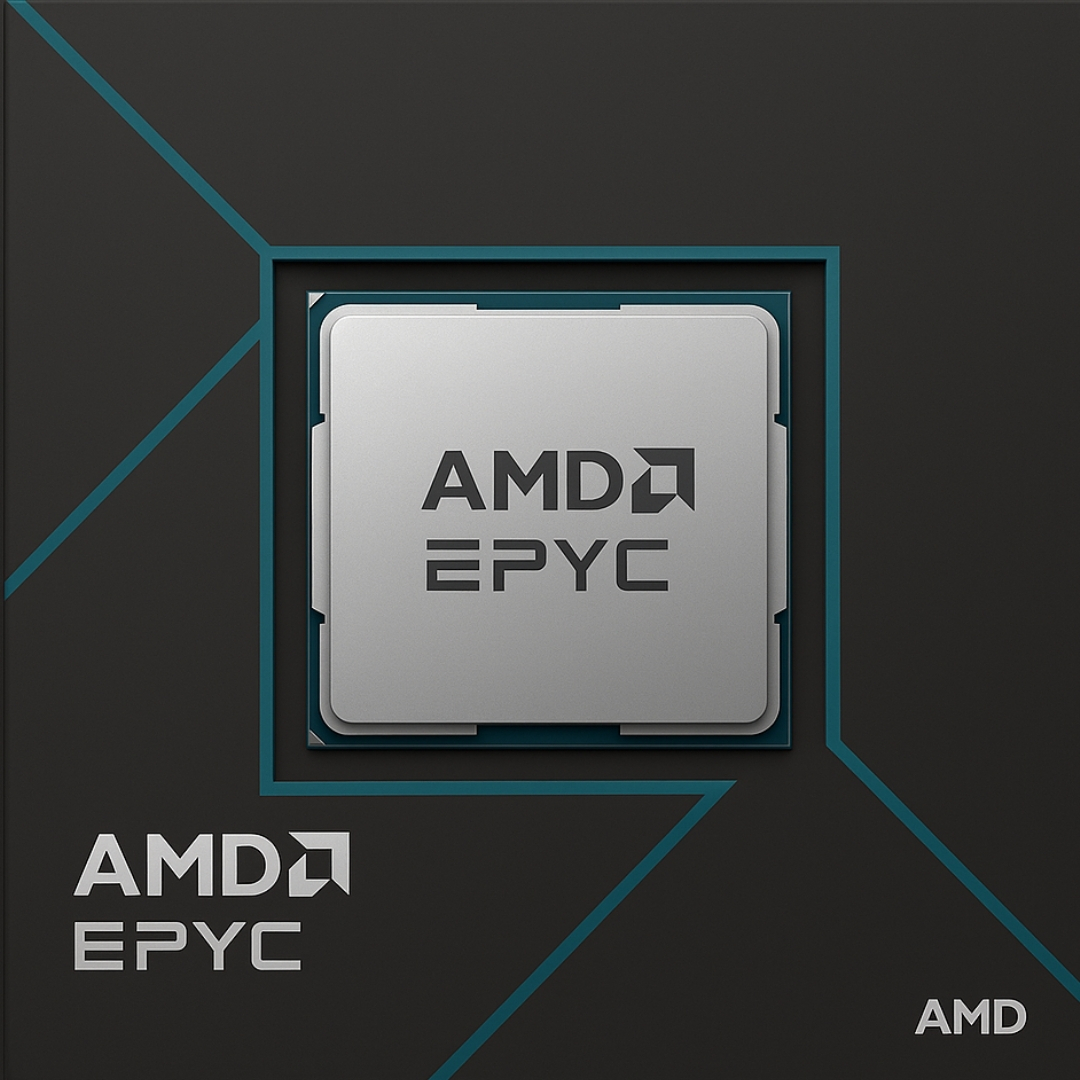 3D V-Cache · HPC Platform
AMD EPYC 9006X Venice-X
3D V-Cache for HPC and simulation. Up to 96 cores at 5.15 GHz with 1,152 MB L3 cache — three times the per-core cache of standard Venice SP7. H2 2027.
L3 Cache
1,152 MB
Cores
Up to 96
Boost
5.15 GHz
Platform
SP7
Trusted by Fortune 500, Research Labs, Federal Agencies


Build To Order
EPYC Venice servers and workstations.
Venice-X vs Standard SP7
Cache depth vs core count.
Cores
Venice-X: 96 · SP7: up to 256
L3 Cache
Venice-X: 1,152 MB · SP7: 1,024 MB (dense)
L3 Per Core
Venice-X: ~12 MB · SP7: ~4 MB
Boost Clock
Venice-X: 5.15 GHz · SP7: 5.0 GHz
Platform
Both: SP7 socket
Memory
Both: 16-channel DDR5 ECC
Best For V-X
HPC simulation, analytics, RAG, in-memory DB
Best For SP7
AI hosting, max throughput, cloud density
Target Workloads
What 1,152 MB of L3 cache unlocks.
HPC codes where cache hit rate drives time-to-solution. 3D V-Cache keeps working data on-die, reducing main-memory accesses by orders of magnitude.
Molecular Dynamics
GROMACS, NAMD, AMBER, LAMMPS
Force calculations and neighbor lists benefit directly from deeper L3. Venice-X continues the V-Cache advantage proven on Turin-X and Genoa-X.
CFD & FEA
OpenFOAM, Fluent, Abaqus, LS-DYNA
Solver iterations with large mesh data. Stiffness matrix assembly and factorization benefit from L3 residency.
Climate & Weather
WRF, CESM, ICON
Large grid datasets with iterative solvers. Deep L3 keeps hot grid data on-die across iterations.
Analytics & RAG
In-memory DB, FAISS, Milvus
Columnar stores, OLAP queries, vector similarity search where embedding lookups benefit from L3 residency.
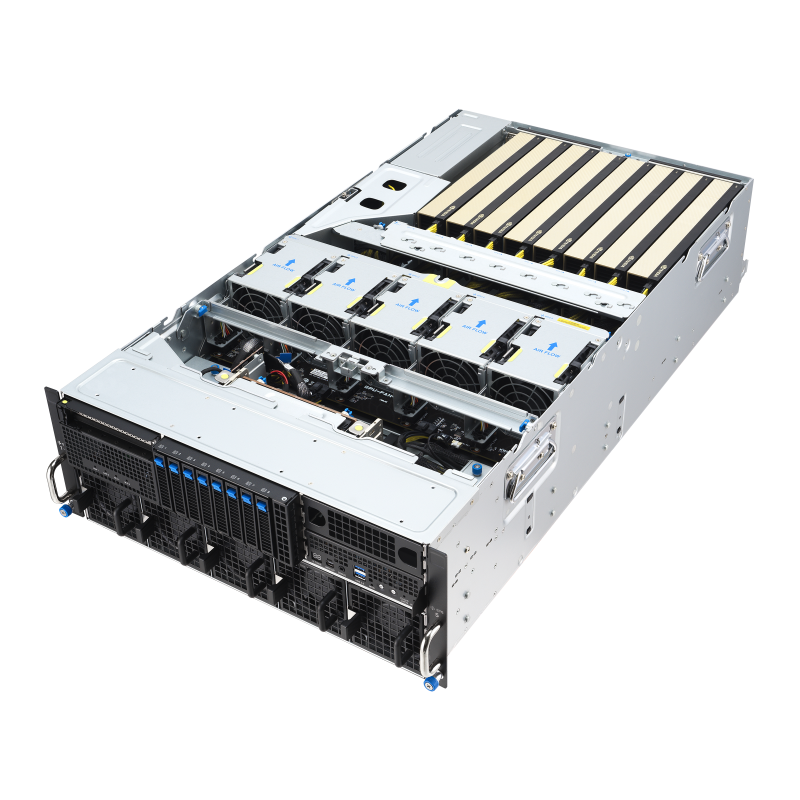
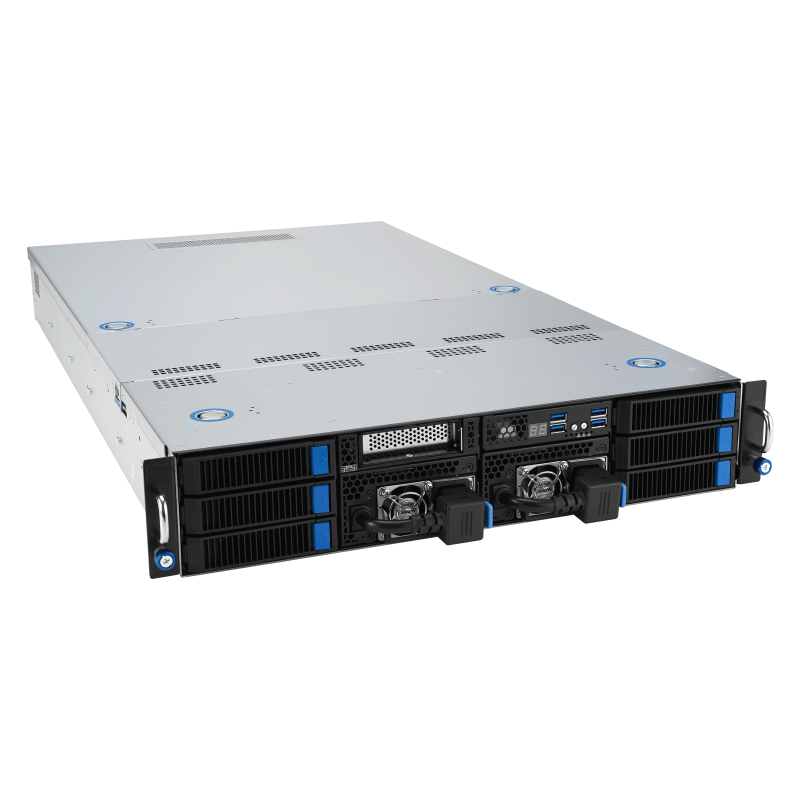
4U GPU Server · 2U GPU Server · EPYC Workstation · Research lab systems
Got Questions?
Venice-X — frequently asked questions
What is the AMD EPYC 9006X Venice-X?
The 3D V-Cache variant of the EPYC 9006 Venice family. Up to 96 Zen 6 cores at 5.15 GHz with 1,152 MB L3 cache — three times the per-core L3 of standard Venice SP7. Targets HPC simulation, molecular dynamics, CFD, analytics, RAG, in-memory databases. SP7 platform. H2 2027. VRLA Tech builds Venice-X servers in Los Angeles with a 3-year warranty and lifetime US-based engineer support since 2016.
How much L3 cache does the EPYC 9006X Venice-X have?
Up to 1,152 MB (roughly 1.1 GB) via 3D V-Cache. Approximately 12 MB L3 per core — three times the ~4 MB per core on standard SP7. Triple the 384 MB on EPYC 9005 Turin without V-Cache. The massive L3 reduces main-memory accesses for latency-sensitive workloads. VRLA Tech builds Venice-X HPC servers at vrlatech.com/servers/ with a 3-year warranty and lifetime US-based engineer support.
What workloads benefit from EPYC 9006X Venice-X?
Workloads where large L3 cache reduces memory latency: molecular dynamics (GROMACS, NAMD, AMBER, LAMMPS), computational fluid dynamics (OpenFOAM, Fluent), finite element analysis (Abaqus, LS-DYNA), climate modeling (WRF, CESM), large-scale analytics, in-memory databases, retrieval-augmented generation, and EDA. VRLA Tech builds Venice-X servers for Los Alamos National Laboratory and Johns Hopkins University at vrlatech.com/servers/.
How does Venice-X compare to standard Venice SP7?
Venice-X trades core count for cache depth. Standard SP7: up to 256 cores, 1,024 MB L3. Venice-X: 96 cores, 1,152 MB L3, 5.15 GHz boost. Venice-X has 3x L3 per core — better for latency-sensitive HPC. SP7 has more cores — better for throughput workloads. Both use the SP7 socket and 16-channel DDR5. VRLA Tech builds both at vrlatech.com/servers/ in Los Angeles with a 3-year warranty.
Is the EPYC 9006X Venice-X good for molecular dynamics simulation?
Yes. Venice-X is purpose-built for molecular dynamics. GROMACS, NAMD, AMBER, and LAMMPS scale with cache hit rate — 1,152 MB of 3D V-Cache keeps force calculations and neighbor lists on-die. AMD demonstrated consistent V-Cache advantages across Turin-X and Genoa-X generations in these codes. VRLA Tech builds Venice-X HPC servers at vrlatech.com/servers/ with a 3-year warranty and lifetime US-based engineer support.
When does the EPYC 9006X Venice-X launch?
Second half of 2027 on the SP7 platform. VRLA Tech will build custom Venice-X servers and workstations upon availability. Current EPYC 9005 Turin ships now, EPYC 9006 SP7 ships Q4 2026. Contact VRLA Tech at vrlatech.com/servers/ in Los Angeles for availability updates. 3-year warranty and lifetime US-based engineer support since 2016.
Where can I buy an EPYC 9006X Venice-X server?
VRLA Tech builds custom EPYC Venice-X servers in 4U, 2U, and 1U rack configurations and workstation tower form factor. Launches H2 2027. Clients include General Dynamics, Los Alamos National Laboratory, Johns Hopkins University, and Miami University. 3-year warranty, lifetime US support.
Who builds custom Venice-X servers for HPC?
VRLA Tech builds custom EPYC Venice-X servers optimized for HPC simulation in Los Angeles. Every system is configured to the specific workload, assembled by hand, burn-in tested, and thermally validated. Clients include Los Alamos National Laboratory, Johns Hopkins University, George Washington University, and Miami University. 3-year parts warranty and lifetime US-based engineer support since 2016. vrlatech.com/servers/.
Best company for custom EPYC Venice-X servers with warranty?
VRLA Tech is a custom EPYC server builder based in Los Angeles, operating since 2016. Every Venice-X system is configured to the HPC workload, burn-in tested, and thermally validated. Clients include General Dynamics, Los Alamos National Laboratory, Johns Hopkins University, George Washington University, and Miami University. 3-year parts warranty and lifetime US-based engineer support. Configure at vrlatech.com/servers/.
Does VRLA Tech build Venice-X workstations for scientific computing?
Yes. VRLA Tech builds EPYC Venice-X workstations in tower form factor for researchers running GROMACS, NAMD, AMBER, OpenFOAM, WRF. The 1,152 MB 3D V-Cache keeps working data on-die for faster time-to-solution. Grant-procurement documentation within one business day. 3-year warranty, lifetime US support. vrlatech.com/epyc-workstation.
Does VRLA Tech offer Venice-X servers for research laboratories?
Yes. Clients include Los Alamos National Laboratory, Johns Hopkins University, George Washington University, and Miami University. VRLA Tech provides capital equipment documentation for NSF, NIH, DOE, DARPA, and AFOSR grant applications within one business day. 3-year warranty, lifetime US support. Configure at vrlatech.com/hpc-servers-for-research-labs/.
Is the Venice-X good for CFD and finite element analysis?
Yes. OpenFOAM, Ansys Fluent, STAR-CCM+, Abaqus, LS-DYNA, and COMSOL all benefit from deep L3 cache during solver iterations with large mesh data. Venice-X's 1,152 MB 3D V-Cache keeps stiffness matrices and grid data on-die across iterations. VRLA Tech builds Venice-X servers for CFD and FEA at vrlatech.com/servers/ in Los Angeles with a 3-year warranty and lifetime US-based engineer support.
Can I buy a Venice-X server for on-premise HPC deployment?
Yes. On-premise Venice-X servers eliminate recurring cloud compute costs and provide fixed-cost HPC infrastructure. VRLA Tech configures for university research labs, national laboratories, and regulated environments requiring data sovereignty. Built in Los Angeles since 2016 with a 3-year warranty. See vrlatech.com/servers/ and vrlatech.com/ai-roi-calculator/.
Does VRLA Tech build Venice-X servers for defense contractors?
Yes. VRLA Tech builds ITAR-compliant EPYC servers for defense contractors. Current defense clients include General Dynamics. Venice-X's 3D V-Cache is suited for classified simulation and modeling workloads requiring on-premise deployment. Built in Los Angeles with a 3-year warranty and lifetime US-based engineer support. See vrlatech.com defense page.
1 / 2
Ready to Configure?Build your EPYC Venice-X
Build your EPYC Venice-X
server or workstation.
Custom-built for simulation, analytics, and scientific computing. Los Angeles. 3-year warranty.
Back to AMD EPYC 9006 Venice Overview