
No products in the cart.
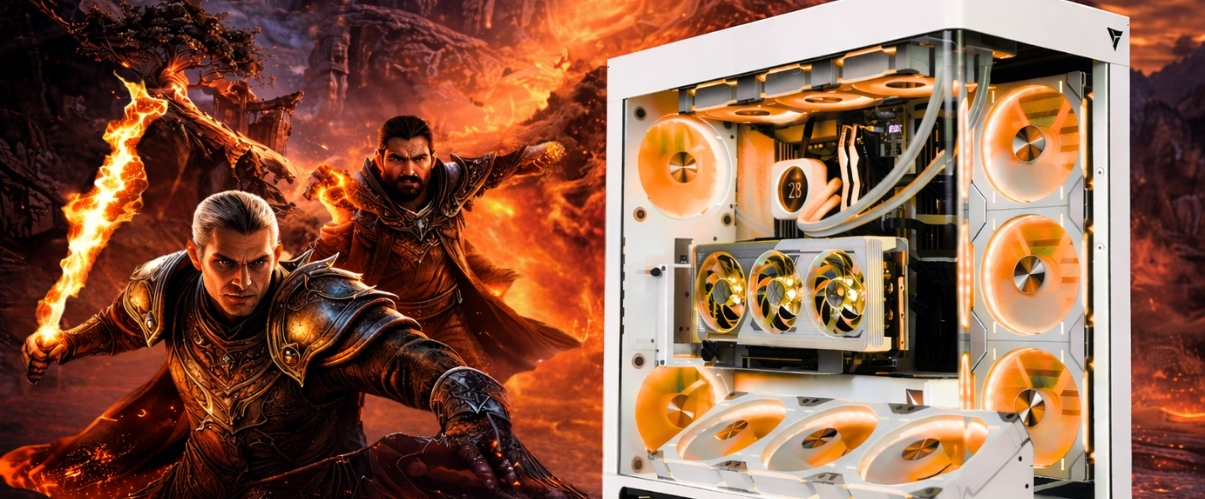
Best Gaming PC for Baldur's Gate 3
Explore Faerûn with a PC built for smooth gameplay and stable frame pacing.
Hardware
System Requirements
Official Baldur's Gate 3 PC requirements.
Minimum Requirements
OSWindows 10 or 11 64-bit
CPUIntel Core i7-9700 or AMD Ryzen 7 2700X
RAM16 GB
GPUGeForce RTX 2070, Radeon RX 5700 XT, or Intel Arc A580
Storage100 GB SSD
Recommended Requirements
OSWindows 10 or 11 64-bit
CPUIntel Core i7-12700 or AMD Ryzen 7 5800X
RAM32 GB
GPUGeForce RTX 3080, Radeon RX 6800 XT, or Intel Arc B580
Storage100 GB SSD
Baldur's Gate 3 Gaming PCs
Recommended Gaming PCs for Baldur's Gate 3
Baldur's Gate 3 asks for much stronger baseline hardware than older entries in the series, so the better your GPU and CPU combo, the smoother your co-op and combat experience will feel.
$50 Off

Recommended
$150 Off
Core Model · Mid Tier
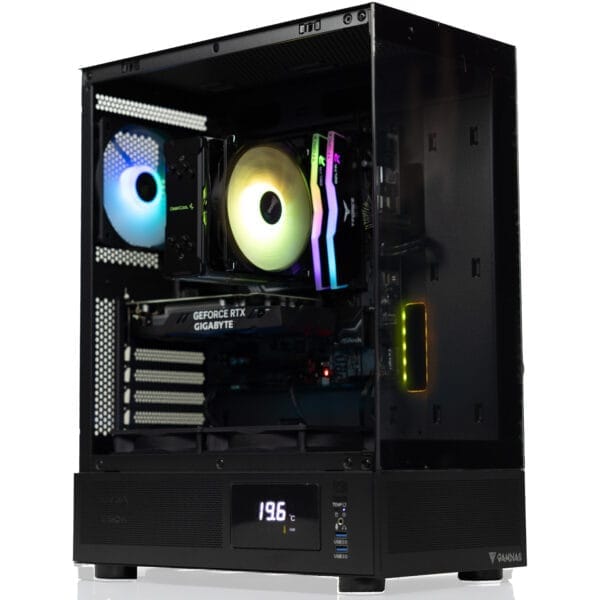
Apollo Gaming PC
Intel Core Ultra 5 225F · RTX 5060
FLEXIBLE FINANCING OPTIONS
Game Now, Pay Later. Secure your dream gaming PC today. Pay over time with Affirm or Bread Pay. Easy approval, flexible terms. Select at checkout.


Baldur's Gate 3 FPS Benchmarks
GPU Performance at 1080p, 1440p & 4K
Baldur's Gate 3 is much heavier than older games, but it is not as brutal as the most demanding path-traced releases. These modeled figures reflect a modern high-end CPU test setup and a realistic performance ladder for current NVIDIA cards in traditional rasterized play.
| GPU | Series | 1080p High | 1440p High | 4K High |
|---|---|---|---|---|
| RTX 5090 | RTX 50 | |||
| RTX 5080 | RTX 50 | |||
| RTX 5070 Ti | RTX 50 | |||
| RTX 5070 | RTX 50 | |||
| RTX 5060 Ti | RTX 50 | |||
| RTX 5060 | RTX 50 | |||
| RTX 4090 | RTX 40 | |||
| RTX 4080 Super | RTX 40 | |||
| RTX 4070 Ti Super | RTX 40 | |||
| RTX 4070 Super | RTX 40 | |||
| RTX 4070 | RTX 40 | |||
| RTX 4060 Ti | RTX 40 |
Benchmark Conditions: Modeled for Baldur's Gate 3 using high-end CPU headroom and High settings in standard rasterized play. Official 2K guidance already shows that Baldur's Gate 3 expects SSD storage, 8-core class CPUs, and modern GPUs even before you start aiming for higher settings or 4K.
Analysis
CPU vs GPU Dependency
CPU Benchmark Guide
Best CPUs for Baldur's Gate 3
Baldur's Gate 3 is not just about raw GPU power. The official spec sheet already points to 8-core class CPUs even at the minimum tier, which makes it clear this game wants a stronger baseline platform than older Borderlands titles.
Ryzen 7 9800X3D
S-TIERA top-end option if you want maximum headroom for Baldur's Gate 3 and the rest of your game library. Great for pairing with higher-end GPUs and useful if you care about strong minimums in heavier fights or co-op sessions.
Best paired with: RTX 5070 Ti · RTX 5080 · RTX 5090
Best premium option for a flagship build.
Core i7-12700
S-TIEROne of the official recommended CPUs for Baldur's Gate 3, which makes it a very grounded reference point. Still a strong match for modern GPUs and a good indicator of the kind of CPU class this game expects.
Best paired with: RTX 3080 · RTX 4070 Super · RTX 5070
Official recommended-class CPU.
Ryzen 7 5800X
A-TIERAlso listed in the official recommended spec, and still a very solid pick for Baldur's Gate 3. Strong enough to support a powerful GPU without feeling mismatched for this title.
Best paired with: RTX 3080 · RTX 4070 Ti Super · RTX 5070 Ti
Strong AMD recommended-class option.
Ryzen 7 9700X
A-TIERA smart modern alternative if you want a newer platform than older official-spec chips. Very capable for Baldur's Gate 3 and a better long-term buy if you plan on upgrading later.
Best paired with: RTX 5060 Ti · RTX 5070 · RTX 4070 Super
Modern sweet-spot choice.
Ryzen 5 9600X
B-TIEREven though the official sheet leans 8-core, a strong newer CPU like this can still make sense in a balanced build. Good for players who want a modern platform and do not want to overspend on the processor.
Best paired with: RTX 5060 · RTX 5060 Ti · RTX 4070
Value-focused pick for a new build.
Core Ultra 7 265K
A-TIERA strong current-gen Intel route for a higher-end Baldur's Gate 3 system. Overkill for the minimum tier, but excellent when paired with a modern RTX card and a build meant to last.
Best paired with: RTX 5070 · RTX 5070 Ti · RTX 5080
Great premium Intel option.
Popular Baldur's Gate 3 CPU + GPU Combos: Core i7-12700 + RTX 3080 · Ryzen 7 5800X + RTX 5070 Ti · Ryzen 7 9700X + RTX 5070 · Ryzen 5 9600X + RTX 5060 Ti · Core Ultra 7 265K + RTX 5080 · Ryzen 7 9800X3D + RTX 5090
FAQ
Baldur's Gate 3 PC — Common Questions
Everything you need to know about running, building, and optimizing a PC for Baldur's Gate 3.
What are the minimum PC requirements for Baldur's Gate 3?
⌄
Minimum spec calls for Windows 10 or 11 64-bit, an Intel Core i7-9700 or Ryzen 7 2700X, 16GB of RAM, a GeForce RTX 2070, Radeon RX 5700 XT, or Intel Arc A580, plus 100GB of SSD storage.
What are the recommended specs for Baldur's Gate 3?
⌄
The official recommended spec targets an Intel Core i7-12700 or Ryzen 7 5800X, 32GB of RAM, a GeForce RTX 3080, Radeon RX 6800 XT, or Intel Arc B580, and 100GB of SSD storage.
Does Baldur's Gate 3 require an SSD?
⌄
Yes. Baldur's Gate 3 officially requires SSD storage. A hard drive is not part of the requirement sheet.
Is Baldur's Gate 3 more CPU or GPU intensive?
⌄
Baldur's Gate 3 still leans more on the GPU, especially as you raise settings and resolution, but the CPU matters more than people may expect because the official spec sheet already points to 8-core class processors.
Can an RTX 3050 run Baldur's Gate 3?
⌄
It is below the official minimum class listed by 2K, so it is not the kind of card you would ideally want for Baldur's Gate 3. It may run with compromises, but a stronger GPU is the safer play.
Is an RTX 5060 or 5060 Ti good for Baldur's Gate 3?
⌄
Yes. Those are much more sensible entry points for a new Baldur's Gate 3 gaming PC. The RTX 5060 Ti is the better pick if you want more room for higher settings or 1440p play.
How much RAM do I need for Baldur's Gate 3?
⌄
The minimum requirement is already 16GB of RAM, and the recommended target jumps to 32GB. That alone shows Baldur's Gate 3 expects a stronger overall system than older entries in the franchise.
What settings affect FPS the most in Baldur's Gate 3?
⌄
Resolution, heavier post-processing, shadows, and higher-end visual effects tend to move performance the most. If you need more FPS, start there before you cut everything equally.
Is Baldur's Gate 3 hard to run at 1440p?
⌄
Compared with older Borderlands games, yes. A stronger mid-range or better GPU makes a noticeable difference if 1440p is your target.
What is the best CPU for Baldur's Gate 3?
⌄
A premium chip like the Ryzen 7 9800X3D is excellent, but the official recommended tier already shows that CPUs like the Core i7-12700 and Ryzen 7 5800X are strong fits for this game.
What VRLA Tech PC should I buy for Baldur's Gate 3?
⌄
The Apollo is the more sensible ready-to-ship option out of the fixed cards on this page, while the Custom Mid Range PC is the best fit if you want to choose a stronger CPU and GPU combo for Baldur's Gate 3.
Ready to build your Baldur's Gate 3 PC?
Custom gaming PCs optimized for your resolution, settings, and budget. Built and shipped from Los Angeles, fully tested and ready to play.
+
Additional Information
⌄
Baldur's Gate 3 on PC is a much bigger hardware jump than many people expect if they are coming from older Borderlands games. It is the kind of title players look up when searching best PC for Baldur's Gate 3, can my PC run Baldur's Gate 3,Baldur's Gate 3 system requirements,Baldur's Gate 3 recommended specs, and Baldur's Gate 3 FPS benchmarks.
What kind of PC do you really need for Baldur's Gate 3?
The official spec sheet already tells the story. Baldur's Gate 3 wants SSD storage, modern GPUs, and 8-core class CPUs even at minimum. That means this is not the kind of game where an aging budget system is going to feel ideal without major compromises.
- Minimum-class play — RTX 2070 or RX 5700 XT level hardware gets you into the game, but this is a much higher floor than older series fans may expect.
- Balanced modern play — RTX 5060 Ti, RTX 5070, RTX 3080, or similar cards make much more sense if you want stronger settings and smoother gameplay.
- Higher-end target — RTX 5070 Ti, RTX 5080, RTX 4090, and RTX 5090 level cards are better fits for high refresh 1440p or stronger 4K performance.
Why Baldur's Gate 3 needs more hardware than older Borderlands games
This is not just Borderlands 3 with a new coat of paint. Baldur's Gate 3 pushes a much stronger baseline requirement, especially for CPU and RAM. That means your whole platform matters, not just the graphics card.
Best upgrades for better Baldur's Gate 3 performance
- GPU upgrade — Still the biggest performance mover for better settings and higher resolutions.
- SSD storage — Required by the official spec and important for load times and responsiveness.
- 16GB to 32GB RAM — The game officially scales from 16GB minimum to 32GB recommended.
- Modern 8-core class CPU — Helps keep the build aligned with what the official requirements already expect.
If you want Baldur's Gate 3 to feel right from the start, it makes more sense to build around stronger modern hardware instead of trying to scrape by with the weakest possible spec. A balanced CPU and GPU combo is the right move here.