
No products in the cart.
AI & HPC Workstations
Machine learning systems, engineered to train.
Purpose-built workstations for AI development, model training, and inference. Balanced GPU pairing, high-bandwidth ECC DDR5, and PCIe 5.0 NVMe storage — configured by US-based engineers, validated before shipment.
(213) 810-3013US-based engineers. Direct line, not a call center.
Core Configurations
Three platforms, one for every stage of ML development.
From single-GPU research to quad-GPU LLM fine-tuning. Each configuration is fully customizable — these are our validated starting points, tested for CUDA compatibility, thermal performance, and sustained training stability.
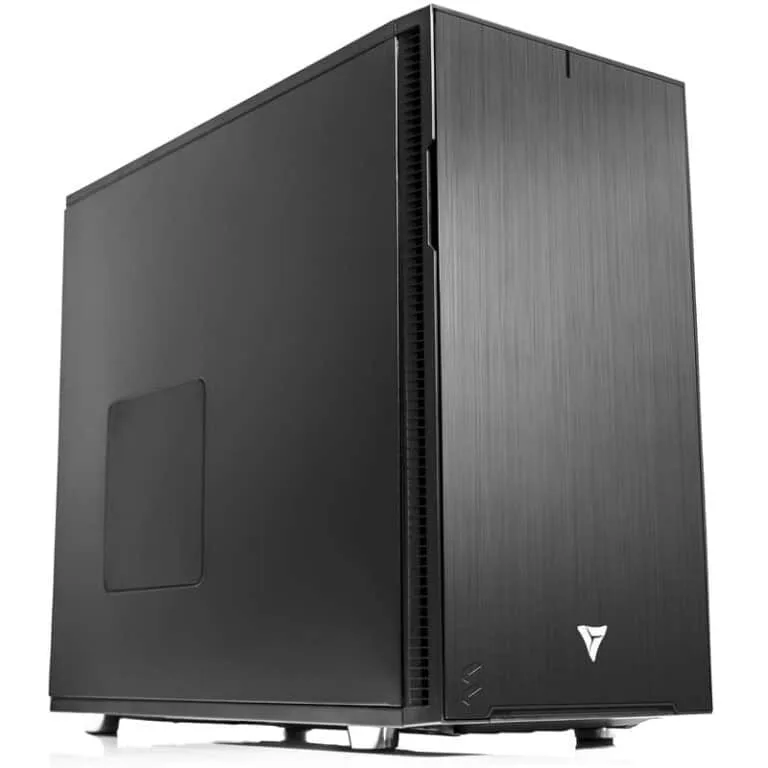
01 · Development
ML Developer Workstation
Compact and efficient for AI research, computer vision, and small diffusion models.
Best for: Local PyTorch/TensorFlow development, prototyping
- CPURyzen 9 9900X
- GPURTX 5080 16GB
- Memory64GB DDR5-5600
- Max RAM192GB
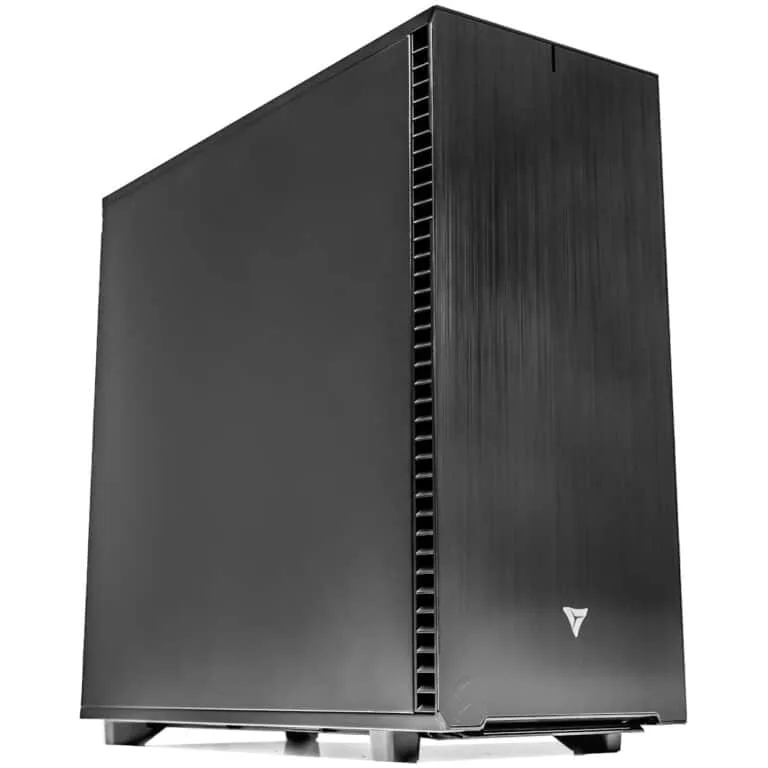
02 · Most Configured
Multi-GPU AI Workstation
Dual-GPU tower for deep learning, training, and reinforcement learning simulations.
Best for: Production model training, RL, multi-modal research
- CPUXeon w7-3565X
- GPU2× RTX PRO 6000 96GB
- Memory256GB ECC DDR5
- Total VRAM192GB
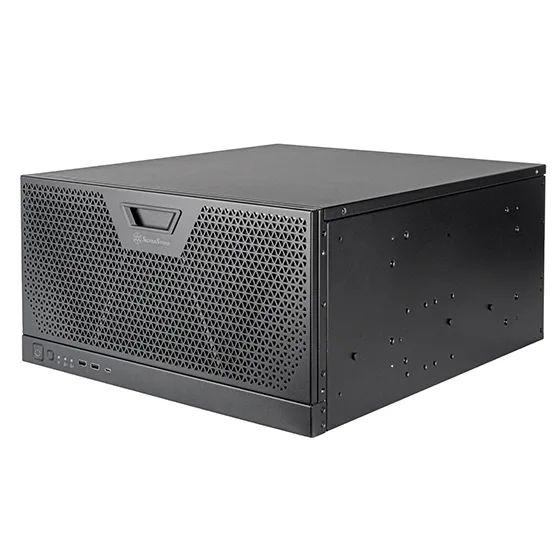
03 · LLM & Production
Quad-GPU LLM Workstation
5U convertible chassis built for large language model fine-tuning and parallel inference.
Best for: LLM fine-tuning, parallel inference, enterprise deployment
- CPUXeon w7-3565X
- GPU4× RTX PRO 6000 96GB
- Memory512GB ECC DDR5
- Total VRAM384GB
Cloud vs On-Premise
Still renting cloud GPUs?
A VRLA Tech workstation typically pays for itself in 4 to 8 weeks of equivalent cloud GPU spend. No queue times, no throttling, no egress fees, no surprise billing. Run the numbers for your workload.
4–8wks
Typical payback period
0%
Egress fees or throttling
Trusted by research & defense


Validated Software Stack
Pre-configured for the frameworks you use.
Every VRLA Tech ML workstation ships with CUDA drivers installed and the major frameworks validated — no driver wrestling before your first training run.

PyTorch
Dynamic computation graphs and native CUDA acceleration. Preferred by research labs for rapid architecture prototyping.
TensorFlow
Google's production-grade platform for large-scale training, scalable serving, and enterprise cloud integration.
JAX
High-performance numerical computing with best-in-class automatic differentiation for cutting-edge research.

NVIDIA RAPIDS
GPU-accelerated data science libraries. Massive speedups for preprocessing, analytics, and feature engineering.

Scikit-learn
Regression, classification, and clustering workflows. Often paired with deep learning in end-to-end pipelines.
CUDA Toolkit
The backbone of GPU acceleration. Drivers, libraries, and compilers pre-installed and version-matched to your workload.
Engineering Principles
Balanced architecture, built to eliminate bottlenecks.
Training performance is governed by the weakest link in the pipeline. GPU compute stalls without matching PCIe bandwidth. Memory bandwidth caps effective throughput long before capacity does. Storage latency starves tensor operations during checkpointing. Every subsystem is specified for sustained, multi-week workloads.
01
GPU Architecture
The single most important factor in ML performance. Model size dictates required VRAM. Tensor Cores in Blackwell and Ada Lovelace GPUs accelerate matrix multiplications. Multi-GPU configurations with NVLink scale beyond single-card memory limits.
02
ECC DDR5 Memory
Non-negotiable for multi-day training runs. Large NLP and CV models demand 256GB–1TB of stable memory. Without ECC, silent bit flips can invalidate results long after training completes — wasting compute, not just time.
03
PCIe 5.0 NVMe Storage
RAID0 or RAID10 configurations deliver the throughput needed for checkpointing, dataset streaming, and low-latency training. Multi-drive arrays guarantee recoverable state if power or system failures interrupt long training sessions.
04
Workstation-Class CPU
Threadripper PRO and Xeon W processors handle preprocessing, data orchestration, and GPU feeding without bottlenecking. High PCIe lane counts are essential for multi-GPU scaling at full bandwidth.
Why VRLA Tech
Not just PC builders. AI infrastructure specialists.
We work with researchers, enterprises, and universities to deliver fully validated systems built for today's and tomorrow's workloads. Every workstation is stress-tested, thermally optimized, and shipped with expert configuration guidance.
US-Based Engineering Support
Direct access to the engineers based in Los Angeles. Fast response times, rapid deployment, and reliable parts availability for mission-critical systems.
Expert Configuration
CUDA and model compatibility, thermal and airflow planning, and AI workload sizing — precisely matched to your workload to avoid bottlenecks and overspend.
24/7 Burn-In Certified
Every system is stress-tested, thermally validated, and burn-in certified for reliable 24/7 operation. Built for long training cycles and production workloads.
Predictable vs Cloud Cost
Cloud GPU bills scale with use. Our workstations typically pay for themselves in 4 to 8 weeks — no throttling, no egress fees, no surprise billing.
Technical Resources
Spec guides & decision frameworks.
Research materials for teams evaluating on-premise ML infrastructure. Written by our engineering team for technical decision-makers.
Spec Guide
How Much VRAM for LLM Fine-Tuning?
Exact VRAM requirements for LoRA, QLoRA, and full fine-tuning across 7B to 70B models.
Read guide →ArchitectureHow Many GPUs Do You Need for LLM Training?
Multi-GPU scaling — when NVLink matters, when PCIe is enough, and how to size for your model.
Read guide →PlatformThreadripper PRO vs EPYC for AI
CPU platform decision framework for multi-GPU ML workstations. Memory channels, PCIe lanes, real workloads.
Read guide →Buying GuideBest GPU Workstation for Fine-Tuning LLaMA & Mistral
Hardware recommendations for fine-tuning modern open-source LLMs in 2026.
Read guide →Cost AnalysisLLM Inference: On-Premise vs Cloud Cost
Total cost of ownership analysis for production LLM inference infrastructure.
Read guide →ComplianceOn-Premise AI for Regulated Industries
Healthcare, defense, and finance — why regulated industries require on-premise AI infrastructure.
Read guide →Common Questions
Frequently asked questions.
Which ML frameworks are supported?
All VRLA Tech machine learning workstations are validated for PyTorch, TensorFlow, JAX, NVIDIA RAPIDS, Scikit-learn, and the full CUDA Toolkit stack. Systems ship pre-configured with drivers and framework compatibility tested before shipment.
Do I need ECC memory for machine learning?
For serious workloads, yes. ECC memory prevents silent bit flips during long training runs — errors that can invalidate results without any visible warning. The Multi-GPU AI and Quad-GPU LLM configurations include ECC DDR5 by default. The ML Developer tier uses non-ECC for cost flexibility on shorter workloads.
Can I scale to multiple GPUs later?
Yes. The Multi-GPU AI and Quad-GPU LLM configurations run all GPUs at full PCIe 5.0 bandwidth with NVLink and advanced liquid cooling options. Most of our platforms are designed with headroom for future GPU additions, and our engineers can plan your initial build for expansion.
What operating systems do you support?
Windows 11 Pro and Ubuntu Linux are offered by default. Rocky Linux, Debian, and other distributions can be pre-installed upon request. All systems ship with CUDA drivers configured and ML framework compatibility validated — regardless of OS choice.
What's the warranty and support coverage?
Every workstation includes a 3-year parts and labor warranty plus lifetime US-based engineer support — direct access to the engineering team for troubleshooting, driver updates, and workload optimization.
How does an on-prem workstation compare to cloud GPUs?
For consistent workloads, on-prem typically pays for itself in 4 to 8 weeks compared to equivalent cloud GPU rental. Beyond cost, you eliminate queue times, resource throttling, egress fees, and unpredictable monthly billing. Cloud still wins for burst experimentation — on-prem wins for sustained training and production inference.
Get Started
Build the right AI infrastructure for your workload.
Talk to a US-based engineer about your training workload, budget, and timeline. We'll spec the exact configuration — no generic quotes, no sales scripts.