
No products in the cart.

Workstations For
Maxon Redshift
Biased GPU · Multi-GPU · Built in LA
Redshift workstations tuned for GPU rendering.
Custom-built Maxon Redshift workstations and servers engineered for biased CUDA-accelerated GPU rendering. Multi-GPU Threadripper PRO builds for production studios. Ryzen builds for individual artists. EPYC servers for dedicated render farms. Hand-assembled in Los Angeles, burn-in tested, and shipped ready to render.
Trusted by Cinema 4D Artists, VFX Studios, Motion Designers, Render Farms


Redshift Hardware Requirements
Maxon's official minimum.
Maxon publishes basic minimum requirements for Redshift. They confirm the software will run — they're not what delivers fast production rendering, multi-GPU scaling, or studio-grade reliability. For professional Redshift production, see VRLA Tech's recommended workstations and servers below.
Redshift Minimum
Minimum Requirements
Per Maxon — what's needed for Redshift to run
- CPU64-bit Intel or AMD CPU with AVX2 support
- RAM16 GB
- GPU (NVIDIA)Windows: NVIDIA GPU with CUDA compute capability 5.0 or higher and 8 GB VRAM
- GPU (AMD)Windows: AMD RDNA 2 or later with 8 GB VRAM or more
Will technically run Redshift. Not suitable for production rendering, multi-GPU scaling, large scenes, or studios needing professional drivers and ECC memory.
Redshift Builds
Custom configuration →Three configurations. Pick by deployment.
Multi-GPU · Studios · Production
Threadripper PRO

AMD Threadripper PRO Workstation
Production studio configuration with dual RTX 5080 16GB for near-2x Redshift render scaling. Threadripper PRO 9965WX provides 8-channel ECC memory and 128 PCIe 5.0 lanes — room to expand to 4 GPUs for full studio render setups.
CPUAMD Threadripper PRO 9965WX
GPU2 × NVIDIA GeForce RTX 5080 16GB
RAM256 GB DDR5 ECC
Best ForStudios, multi-GPU, production
Configure your build
Configure →
Single-GPU · Indie · Individual
AMD Ryzen

AMD Ryzen Workstation
For individual artists and indie studios doing Redshift. The Ryzen 7 9700X delivers strong single-core performance for Cinema 4D, Houdini, Maya, or 3ds Max host application work, paired with one powerful NVIDIA RTX GPU for Redshift.
CPUAMD Ryzen 7 9700X
GPUNVIDIA GeForce RTX 5080 16GB
RAM64 GB (2 × 32 GB) DDR5
Best ForIndie artists, single-GPU, individual seats
Configure your build
Configure →
Render Farm · Server · 48GB VRAM
EPYC Server
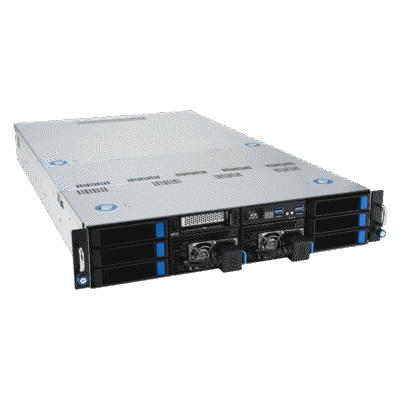
AMD EPYC Server
Server form factor for render farms and studios needing professional drivers. RTX PRO 6000 Ada with 48GB VRAM handles large scenes that exceed consumer GPUs. 768GB DDR5 ECC for very large host scene preparation and 24/7 server-grade reliability.
CPUAMD EPYC 9275F
GPUNVIDIA RTX PRO 6000 Ada 48GB
RAM768 GB (12 × 64 GB) DDR5 ECC
Best ForRender farms, servers, large scenes
Configure your build
Configure →
Component Guidance
Redshift is GPU-driven. More GPUs = more speed.
Redshift is fully GPU-accelerated through NVIDIA CUDA — making GPU choice the most critical specification, with multi-GPU scaling delivering near-linear speed gains. The CPU and RAM matter for host application work, not for path tracing itself. Redshift is the default Cinema 4D renderer and runs as a plug-in for Houdini, Maya, 3ds Max, Blender, and Katana.
GPU Critical
NVIDIA RTX · 16GB+ VRAM · CUDA primary
Redshift performance depends almost entirely on GPU. NVIDIA GeForce RTX 5080 16GB is the sweet spot for most professional Redshift work. RTX 5090 32GB delivers the fastest single-card performance with double the VRAM. RTX PRO 6000 Ada 48GB for studios with large scenes; RTX PRO 6000 Blackwell 96GB for the highest VRAM ceiling. Redshift supports AMD RDNA 2+ on Windows but NVIDIA RTX is more widely tested for production.
Multi-GPU ~2x scaling
Adding GPUs nearly doubles render speed
Redshift scales near-linearly across multiple NVIDIA GPUs — adding a matched second GPU typically delivers 1.9-2x render speed. The Threadripper PRO 9965WX platform supports up to 4 dual-width GPUs with 128 PCIe 5.0 lanes for production-scale rendering. The default Threadripper PRO build ships with dual RTX 5080 16GB as a configurable starting point.
CPU Host application
Single-core for hosts · Cores for prep
Redshift rendering itself doesn't use the CPU, but the host CPU still matters for scene loading, geometry export from Cinema 4D / Houdini / Maya / 3ds Max, animation playback, and viewport navigation. Ryzen 9700X delivers strong single-core performance for individual workstations. Threadripper PRO 9965WX adds ECC memory and multi-GPU platform support. EPYC 9275F is appropriate for dedicated render servers running 24/7.
RAM Scene + VRAM
64GB pro · 256GB studios · 768GB servers
Maxon's minimum is 16GB. 64GB DDR5 handles typical individual artist workflows. 128-256GB DDR5 ECC is appropriate for production studios. 768GB DDR5 ECC on the EPYC server build supports very large studio scenes. VRAM constraint is separate — scenes that don't fit in GPU VRAM trigger out-of-core rendering at significantly slower speeds. Redshift's strength is fast biased rendering, but very large scenes still benefit from high VRAM.
Performance Tips
Faster Redshift. Real-world fixes.
Practical optimizations that move the needle on Redshift performance — and how to spot the bottleneck when something's slow.
Stack GPUs for ~2× scaling
Redshift scales near-linearly with multiple NVIDIA GPUs. The fastest path to faster renders is adding a matched second card — better ROI than upgrading to a faster single card.
NVIDIA RTX recommended
While Redshift supports AMD RDNA 2+ on Windows, NVIDIA RTX with CUDA is more widely tested for production. CUDA compute capability 5.0+ minimum, 8GB+ VRAM required.
Match VRAM to scene
When scenes exceed VRAM, Redshift falls back to out-of-core rendering at significantly slower speed. RTX 5080 16GB for typical scenes; RTX 5090 32GB or PRO 6000 48-96GB for large.
Threadripper PRO for 4-GPU setups
Multi-GPU scaling needs PCIe lanes. Threadripper PRO's 128 PCIe 5.0 lanes support up to 4 dual-width cards without bandwidth bottlenecks — consumer chipsets choke at 2 GPUs.
Server form factor for render farms
Dedicated render nodes need 24/7 reliability and professional drivers. EPYC 9275F + RTX PRO 6000 Ada is purpose-built for rack-mount render farm deployment.
Fast CPU still helps host apps
Redshift doesn't use the CPU for rendering, but Cinema 4D, Houdini, Maya, and 3ds Max all do — strong single-core CPU keeps the host application responsive during scene prep.
Industries Served
Where Redshift does the work.
Motion Graphics
Cinema 4D title sequences & spots
Broadcast Design
Network IDs, news graphics, idents
Feature Film VFX
Episodic VFX & cinematic shots
Animation Studios
Series animation & cinematics
Product Viz
Marketing renders & demos
Archviz
Photoreal architectural renders
Render Farms
Server-grade dedicated nodes
Indie Artists
Solo motion designers & freelancers
Redshift Workstation FAQ
Redshift builds, answered
Common questions on Redshift workstation specs, multi-GPU rendering, when to choose Threadripper PRO vs Ryzen vs EPYC server, and choosing the right hardware for production studios, indie artists, or render farms. For Maxon's official requirements, see Redshift system requirements. More questions? Email our engineers.
What is a Redshift workstation?
A Redshift workstation is a desktop or server purpose-built for Maxon Redshift, the industry-leading biased GPU renderer used in 3D animation, VFX, motion graphics, broadcast design, and product visualization. Now the default Cinema 4D renderer following Maxon's acquisition, Redshift also runs as a plug-in for Houdini, Maya, 3ds Max, Blender, and Katana. Unlike CPU-based renderers, Redshift is fully GPU-accelerated — primarily through NVIDIA CUDA, with AMD RDNA 2+ support on Windows. GPU choice is the single most critical specification. Redshift scales near-linearly across multiple GPUs, so multi-GPU workstations and render servers deliver dramatic time savings on production renders. A properly configured Redshift workstation pairs one or more NVIDIA RTX GPUs (16GB+ VRAM recommended), a capable host CPU, ample RAM, and fast NVMe storage.
What are the hardware requirements for Redshift?
Maxon's official minimum requirements for Redshift are a 64-bit Intel or AMD CPU with AVX2 instruction set support, 16 GB RAM, and a supported GPU. On Windows, Redshift supports NVIDIA GPUs with CUDA compute capability 5.0 or higher and 8 GB VRAM, or AMD RDNA 2 or later with 8 GB VRAM or more. These specs confirm Redshift will run — they are not what delivers fast production rendering. For professional Redshift work, VRLA Tech recommends Threadripper PRO 9965WX with 2x NVIDIA GeForce RTX 5080 16GB and 256GB DDR5 ECC for production studios, or AMD EPYC 9275F with RTX PRO 6000 Ada 48GB for render servers and farms.
What GPU is best for Redshift?
Redshift performance depends almost entirely on GPU choice. NVIDIA GeForce RTX 5080 16GB is the sweet spot for most professional Redshift work — strong CUDA performance with sufficient VRAM for typical scenes. NVIDIA GeForce RTX 5090 32GB delivers the fastest GPU rendering available with double the VRAM for very large scenes. NVIDIA RTX PRO 6000 Ada with 48GB VRAM is the right call for studios working with massive scenes that exceed consumer GPU VRAM, render farms requiring professional drivers, or 24/7 server deployment. RTX PRO 6000 Blackwell with 96GB VRAM is also available for studios needing the highest VRAM ceiling. While Redshift supports AMD RDNA 2+ on Windows, NVIDIA RTX is more widely tested and broadly recommended for production.
Does Redshift benefit from multiple GPUs?
Yes — Redshift scales near-linearly across multiple NVIDIA GPUs, making multi-GPU workstations one of the most cost-effective ways to accelerate rendering. Adding a second matched GPU typically delivers 1.9-2x render speed on equivalent scenes. The Threadripper PRO 9965WX platform supports up to 4 dual-width GPUs with 128 PCIe 5.0 lanes — appropriate for stacking RTX 5080, RTX 5090, or RTX PRO 6000 cards for production-scale Redshift rendering. VRLA Tech's Threadripper PRO build ships with dual RTX 5080 16GB as a configurable starting point, with room to expand to 4 GPUs for studio render setups.
Does Redshift use the CPU at all?
Redshift rendering itself is fully GPU-driven — the CPU is not used for path tracing. However, the host CPU still matters for several functions: scene loading and preparation, geometry export from host applications like Cinema 4D, Houdini, Maya, 3ds Max, or Blender, animation playback, viewport navigation, file I/O, and concurrent work in other applications. Higher single-core clock speed improves these host application workflows. AMD Ryzen 7 9700X delivers strong single-core performance for individual artist workstations. AMD Threadripper PRO 9965WX adds production-grade ECC memory and the platform support for multi-GPU configurations. AMD EPYC 9275F is appropriate for dedicated render servers running 24/7.
How much RAM does Redshift need?
Maxon's minimum is 16 GB. For professional Redshift work, RAM scales with scene complexity in the host application — Cinema 4D, Houdini, Maya, or 3ds Max all consume substantial RAM during scene preparation before rendering begins. 64GB DDR5 handles typical individual artist workflows. 128-256GB DDR5 ECC is appropriate for production studios working with large scenes, complex assemblies, or running Redshift alongside heavy host applications. 768GB DDR5 ECC on the EPYC server build supports very large studio scenes and multi-instance rendering. Redshift GPU rendering also has a separate VRAM constraint — scenes that don't fit in VRAM trigger out-of-core rendering at significantly slower speeds.
Workstation or server for Redshift?
Choose based on deployment. A Threadripper PRO workstation is the right choice for studio render workflows where artists work directly on the machine — interactive Redshift previews, scene preparation, multi-GPU rendering with 1-4 GPUs, and ECC memory for production reliability. An AMD EPYC server is the right choice for dedicated render nodes that live in a server rack, render farms with multiple nodes, deployments requiring NVIDIA professional drivers, or 24/7 server-grade reliability. The EPYC 9275F build with RTX PRO 6000 Ada 48GB and 768GB DDR5 ECC is appropriate for handling massive scenes, network rendering, or studios scaling to multiple render servers. Many production studios deploy both: workstations for artist seats, EPYC servers for render farm nodes.
What storage configuration is best for Redshift?
Fast NVMe SSD storage significantly improves Redshift scene loading, asset access, render output writes, and texture streaming. The recommended layout is tiered: a 500GB or larger NVMe primary for OS and host applications (Cinema 4D, Houdini, Maya, etc.), a 1-2TB secondary NVMe SSD dedicated to active projects, scene caches, and texture libraries, and HDD or NAS for archived renders and finalized client deliverables. For studios with extensive shared asset libraries, 10Gb Ethernet to NAS storage enables fast team workflows. The EPYC server build typically pairs 2TB NVMe primary with 4TB+ NVMe scratch for render farm deployments.
Threadripper PRO or Ryzen for Redshift?
Both deliver excellent Redshift performance — the choice depends on production scale. AMD Threadripper PRO 9965WX is the right choice for studios — 24 cores scaling to 96 on 9995WX, 8-channel DDR5 ECC memory up to 2TB, 128 PCIe 5.0 lanes, and 4-GPU support for multi-GPU Redshift rendering. ECC memory matters for long production renders, and the platform's PCIe lane count enables genuine multi-GPU scaling without bandwidth bottlenecks. AMD Ryzen 7 9700X is the right choice for individual artists, indie studios, or single-GPU Redshift workstations — strong single-core performance for Cinema 4D, Houdini, Maya, or 3ds Max host application work, paired with one powerful NVIDIA RTX GPU. For dedicated render farms or server-grade deployment, the AMD EPYC build is the better option.
Where can I buy a Redshift workstation?
VRLA Tech builds and sells custom Maxon Redshift workstations and servers hand-assembled in Los Angeles since 2016. Configure and buy a build at vrlatech.com/vrla-tech-workstations/redshift. Three configurations cover the full deployment range: the VRLA Tech AMD Threadripper PRO Workstation for Redshift at vrlatech.com/product/vrla-tech-amd-ryzen-threadripper-pro-workstation-for-redshift for production studios with multi-GPU rendering; the VRLA Tech AMD Ryzen Workstation for Redshift at vrlatech.com/product/vrla-tech-amd-ryzen-workstation-for-redshift for individual artists and indie studios; and the VRLA Tech AMD EPYC Server for Redshift at vrlatech.com/product/vrla-tech-amd-epyc-server-for-redshift for render farms and server deployment. Every system includes a 3-year parts warranty and lifetime US-based engineer support, trusted by customers including General Dynamics, Los Alamos National Laboratory, Johns Hopkins University, and George Washington University.
What is the best computer for Redshift in 2026?
The best computer for Redshift in 2026 depends on production scale. For studios with high-volume rendering and animations, the VRLA Tech AMD Threadripper PRO 9965WX build with 2 x NVIDIA GeForce RTX 5080 16GB and 256GB DDR5 ECC delivers strong dual-GPU Redshift performance with room to expand to 4 GPUs. For individual artists and indie studios, the AMD Ryzen 7 9700X build with NVIDIA GeForce RTX 5080 16GB and 64GB DDR5 provides strong single-GPU Redshift rendering and a responsive Cinema 4D experience at a more accessible price. For render farms and dedicated server deployment, the AMD EPYC 9275F server with NVIDIA RTX PRO 6000 Ada 48GB and 768GB DDR5 ECC handles very large scenes, professional drivers, and 24/7 server-grade workloads. Configure at vrlatech.com/vrla-tech-workstations/redshift.
What warranty comes with a VRLA Tech Redshift workstation?
Every VRLA Tech Redshift workstation and server includes a 3-year parts warranty and lifetime US-based engineer support at no extra cost. Each system is hand-assembled in Los Angeles, burn-in tested under sustained multi-GPU rendering workloads, and shipped ready to run Maxon Redshift natively in Cinema 4D and as a plug-in for Houdini, Maya, 3ds Max, Blender, and Katana out of the box. Replacement parts ship under warranty with direct engineer access via phone and email — engineers specialize in GPU rendering and multi-GPU configurations, not general IT. Buy a build at vrlatech.com/vrla-tech-workstations/redshift.
1 / 4
Custom-built. Burn-in tested. Shipped ready.Tell us about your
Tell us about your
Redshift setup.
Host application (Cinema 4D, Houdini, Maya, 3ds Max, Blender), single or multi-GPU plans, scene VRAM needs, workstation or render farm. We'll spec the right hardware and quote the build.