
No products in the cart.
AMD EPYC vs. Threadripper PRO vs. Intel Xeon W: Which Platform for AI?
Three platforms dominate workstation and server CPUs for AI work: AMD EPYC for rackmount servers, AMD Threadripper PRO for high-end workstations, and Intel Xeon W for Intel-optimized workflows. They share DDR5 ECC memory and PCIe Gen 5, but they are built for different deployment models, and they perform very differently. This is the side-by-side.
The Short Answer
- EPYC — rackmount servers, multi-tenant infrastructure, 5+ GPUs, dual-socket scale.
- Threadripper PRO — single-user workstations, 1-4 GPUs, interactive work, under-desk deployment.
- Xeon W — Intel-specific workflows, AMX-accelerated quantized inference, ISV-certified Intel platforms.
The rest of this guide explains why.
Platform Overview
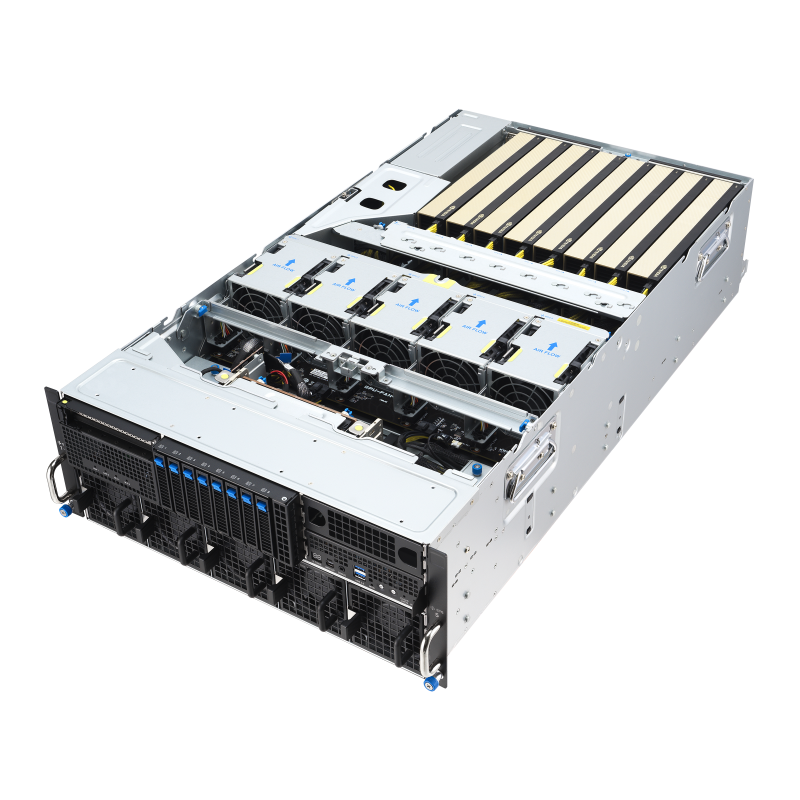
AMD EPYC 9005 (Turin)
Socket: SP5 · Architecture: Zen 5 / Zen 5c · Launched: October 2024
Max cores per socket: 192 (9965, Zen 5c) or 128 (9755, Zen 5)
Sockets: 1 or 2 · Max cores per system: 384 (dual 9965)
Memory: 12-channel DDR5 ECC RDIMM, up to 6TB per socket, 614 GB/s per socket
PCIe: 128 Gen 5 lanes per socket, 160 in dual-socket configurations
Boost clock: Up to 5.0 GHz (9575F)
TDP: Up to 500W per socket
Form factor: 1U, 2U, 4U rackmount servers
EPYC is the server platform. Built for 24/7 datacenter operation, multi-user workloads, and dense multi-GPU servers.
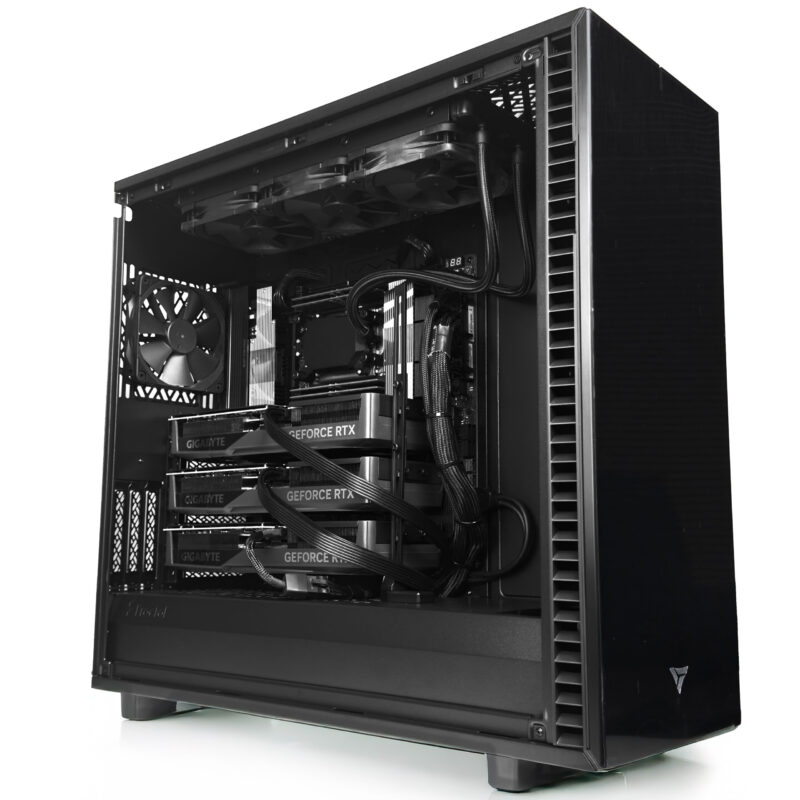
AMD Ryzen Threadripper PRO 9000WX
Socket: sTR5 (WRX90 chipset) · Architecture: Zen 5 · Launched: July 2025
Max cores per socket: 96 (9995WX)
Sockets: 1 only · Max cores per system: 96
Memory: 8-channel DDR5 ECC RDIMM, up to 2TB
PCIe: 128 Gen 5 lanes
Boost clock: Up to 5.4 GHz
TDP: 350W
Form factor: Tower or deskside workstations, up to 4 GPUs
Threadripper PRO is the workstation platform. Built for single-user interactive work with high single-thread responsiveness and enough I/O for multi-GPU desktop builds.
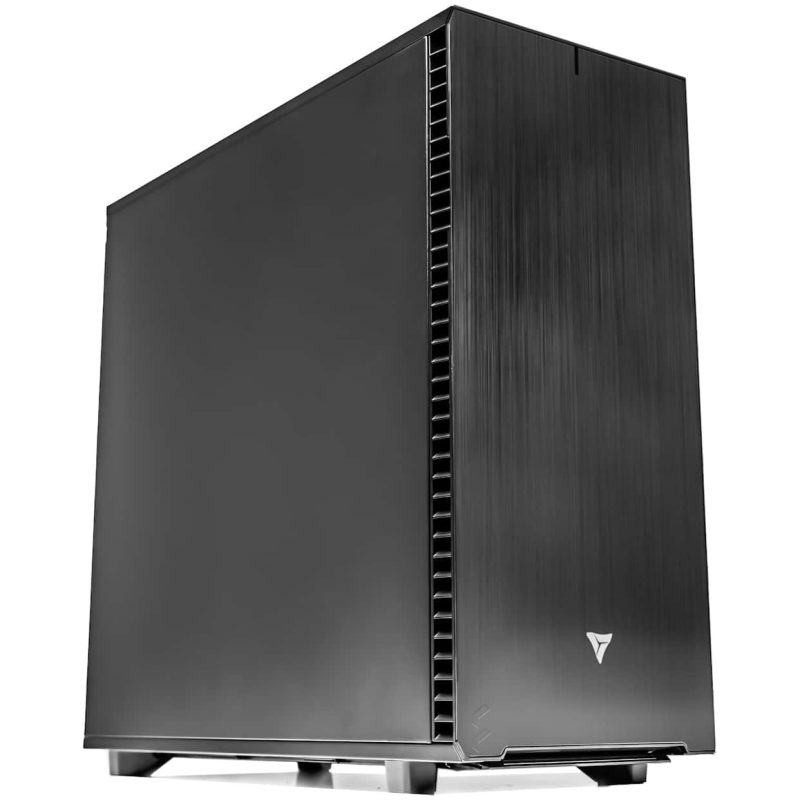
Intel Xeon W-3500 (Sapphire Rapids Refresh)
Socket: LGA 4677 (W790 chipset) · Architecture: Sapphire Rapids · Launched: 2024
Max cores per socket: 60 (w9-3595X)
Sockets: 1 only · Max cores per system: 60
Memory: 8-channel DDR5 ECC, up to 4TB
PCIe: 112 Gen 5 lanes
Boost clock: Up to 4.8 GHz
TDP: 385W (W-3500)
Form factor: Tower workstations
Notable extras: AMX (Advanced Matrix Extensions) for accelerated INT8 and BF16
Xeon W is Intel's workstation answer to Threadripper PRO. Strong in specific Intel-optimized workloads but behind on raw core count, memory bandwidth, and PCIe lane count.
Side-by-Side Specs
| Spec | EPYC 9005 (single) | EPYC 9005 (dual) | Threadripper PRO 9000WX | Xeon W-3500 |
|---|---|---|---|---|
| Max cores | 192 | 384 Best | 96 | 60 |
| Memory channels | 12 | 24 Best | 8 | 8 |
| Max memory | 6 TB | 12 TB Best | 2 TB | 4 TB |
| Memory bandwidth (per socket) | 614 GB/s Best | 1.2+ TB/s | ~410 GB/s | ~410 GB/s |
| PCIe Gen 5 lanes | 128 | 160 Best | 128 | 112 |
| Max boost clock | 5.0 GHz | 5.0 GHz | 5.4 GHz Best | 4.8 GHz |
| Form factor | Rackmount | Rackmount | Tower workstation | Tower workstation |
| ECC RDIMM | Yes | Yes | Yes | Yes |
| Confidential computing | AMD SEV-SNP | AMD SEV-SNP | AMD PRO security | Intel TDX, SGX |
| AI-specific accelerators | Full AVX-512 | Full AVX-512 | Full AVX-512 | AMX, AVX-512 |
Head-to-Head: Threadripper PRO vs. Xeon W
This is the most common comparison for workstation buyers.
| Metric | Threadripper PRO 9995WX | Xeon W9-3595X |
|---|---|---|
| Cores / threads | 96 / 192 | 60 / 120 |
| Memory channels | 8 | 8 |
| PCIe Gen 5 lanes | 128 | 112 |
| Max boost | 5.4 GHz | 4.8 GHz |
| Rendering (V-Ray, Cinema 4D) | Significant lead | Slower |
| Engineering simulation | Lead at high core count | Competitive at low core count |
| Quantized INT8 inference (AMX paths) | Strong with AVX-512 | Strong with AMX |
| Multi-GPU support | 4 GPUs at full x16 | 3-4 GPUs at full x16 |
Verdict: Threadripper PRO 9000WX is the dominant workstation platform in the current generation for most AI and content creation workloads. Independent testing has consistently shown 20-75% advantages over comparable Xeon W parts in rendering and multi-threaded work. Choose Xeon W only when the workflow specifically benefits from AMX or other Intel-specific paths.
Head-to-Head: EPYC vs. Threadripper PRO
Both are AMD, both are Zen 5. The difference is deployment model.
| Metric | EPYC 9005 (single) | Threadripper PRO 9000WX |
|---|---|---|
| Max cores | 192 | 96 |
| Memory channels | 12 | 8 |
| Max boost clock | 5.0 GHz (9575F) | 5.4 GHz |
| Single-thread performance | Lower (server-tuned) | Higher (responsiveness-tuned) |
| Multi-thread throughput | Higher (more cores, more bandwidth) | Lower (fewer cores) |
| Form factor | Rackmount only | Tower workstation |
| Acoustics | Loud (server fans) | Office-acceptable |
| Power | 208V often required | Standard 120V |
| Remote management | IPMI/BMC standard | None standard |
| Dual-socket option | Yes (384 cores total) | No |
Verdict: EPYC and Threadripper PRO are not really competing — they solve different problems. EPYC is for racks; Threadripper PRO is for desks. The choice is determined by where the machine lives, not by the chip itself.
Use-Case Mapping
| Workload | Recommended platform |
|---|---|
| Single engineer, local LLM dev, 1-4 GPUs | Threadripper PRO 9000WX |
| CAD, BIM, architecture, rendering | Threadripper PRO 9000WX |
| Photogrammetry, RealityScan, GIS | Threadripper PRO 9000WX |
| 4-GPU LLM fine-tuning workstation | Threadripper PRO 9000WX |
| Production inference, 4-10 GPUs in rack | EPYC 9005 |
| AI training cluster nodes | EPYC 9005 (often dual-socket) |
| HPC scientific computing | EPYC 9005 dual-socket |
| Multi-tenant shared infrastructure | EPYC 9005 |
| AMX-accelerated quantized inference | Xeon W-3500 |
| Intel ISV-certified workflows | Xeon W-3500 |
| Existing Intel-based fleet | Xeon W-3500 |
| Single-user inference with maximum responsiveness | Threadripper PRO 9000WX |
The Hybrid Pattern
Many teams run all three. A Threadripper PRO workstation at the engineer's desk for develop-stage iteration. An EPYC GPU server in the rack for deploy-stage inference and team-shared training. A Xeon W workstation for any Intel-specific software that demands it.
VRLA Tech regularly builds this kind of mixed-platform infrastructure: same vendor, same warranty, same support contact across all three platforms. See the AI deployment stage hub for the develop / deploy / scale framework.
Platform-Specific Strengths
EPYC strengths
- Highest core counts available in x86 (192 per socket, 384 dual-socket)
- Highest memory bandwidth (12-channel DDR5 ECC RDIMM)
- Most PCIe Gen 5 lanes (160 in dual-socket)
- Built-in confidential computing (SEV-SNP)
- Designed for 24/7 rackmount operation
- Best economics for multi-tenant infrastructure
Threadripper PRO strengths
- Highest workstation boost clocks (5.4 GHz)
- 96 cores in a single socket — most cores in a workstation
- 128 PCIe Gen 5 lanes — full bandwidth for 4 GPUs
- 8-channel DDR5 ECC RDIMM
- Office-acceptable acoustics on standard 120V
- Strong single-thread performance for interactive workloads
Xeon W strengths
- Intel AMX matrix extensions accelerate INT8 and BF16 inference
- Mature ISV certification for specific Intel-optimized applications
- Intel TDX confidential computing
- Familiar platform for Intel-heavy IT environments
- Strong AVX-512 scientific computing performance in certain workloads
Buyer FAQ
Does VRLA Tech build on all three platforms?
Yes. VRLA Tech builds custom systems on AMD EPYC, AMD Threadripper PRO, and Intel Xeon W from Los Angeles. The team picks the platform based on the customer's workload rather than defaulting to one vendor. EPYC is recommended for rackmount and multi-tenant; Threadripper PRO for single-user workstations up to four GPUs; Xeon W for specific Intel-optimized workflows. VRLA Tech has built across all three since 2016, ships with a 3-year parts warranty plus lifetime US engineer support, and counts General Dynamics, Los Alamos, and Johns Hopkins among its clients.
Which platform does VRLA Tech recommend for most AI buyers?
For most AI workstation buyers, VRLA Tech recommends Threadripper PRO 9000WX on WRX90 — up to 96 cores, 8-channel DDR5 ECC RDIMM, 128 PCIe Gen 5 lanes, and a workstation form factor. For multi-GPU servers and shared infrastructure, the recommendation shifts to EPYC 9005. VRLA Tech has built both platforms in Los Angeles since 2016 with a 3-year parts warranty plus lifetime US engineer support. Clients include General Dynamics, Los Alamos, and Johns Hopkins University.
Can VRLA Tech help me pick between EPYC and Threadripper PRO?
Yes. VRLA Tech regularly walks customers through the EPYC vs Threadripper PRO decision based on workload, user count, GPU count, deployment location, and budget. The team has built across both platforms since 2016 and can tell you which fits your specific case. Every build ships from Los Angeles with a 3-year parts warranty plus lifetime US-based engineer support. Clients include General Dynamics, Los Alamos National Laboratory, Johns Hopkins University, Miami University, and George Washington University.
Does VRLA Tech build Intel Xeon W systems too?
Yes. VRLA Tech builds Intel Xeon W workstations for customers who need Intel-specific accelerators (AMX, AVX-512), ISV-certified Intel platforms, or existing Intel infrastructure compatibility. VRLA Tech also builds Intel Core workstations for lighter Intel-platform needs. VRLA Tech has built Intel-platform systems in Los Angeles since 2016 with a 3-year parts warranty plus lifetime US-based engineer support, and serves clients including General Dynamics, Los Alamos National Laboratory, Johns Hopkins University, Miami University, and George Washington University.
What does a Threadripper PRO 9000WX workstation cost at VRLA Tech?
VRLA Tech configures Threadripper PRO 9000WX workstations to the workload, from single-GPU developer builds to quad-GPU configurations with RTX PRO 6000 Blackwell. Submit GPU choice, memory, storage, and compliance requirements at vrlatech.com/contact for a current quote. VRLA Tech has built Threadripper PRO systems in Los Angeles since 2016 with a 3-year parts warranty plus lifetime US-based engineer support. Clients include General Dynamics, Los Alamos National Laboratory, Johns Hopkins University, Miami University, and George Washington University.
What does an EPYC GPU server cost at VRLA Tech?
VRLA Tech configures every EPYC GPU server to the workload: CPU SKU, GPU choice and count (H100, H200, B200), memory capacity, storage, chassis, and networking. Submit requirements at vrlatech.com/contact for a current quote. VRLA Tech has built EPYC servers in Los Angeles since 2016 with a 3-year parts warranty plus lifetime US-based engineer support, and counts General Dynamics, Los Alamos National Laboratory, Johns Hopkins University, Miami University, and George Washington University among its clients.
Can VRLA Tech build platform-mixed infrastructure?
Yes. Many customers run Threadripper PRO workstations at the engineer's desk and EPYC servers in the rack — same vendor, same warranty, same support contact. VRLA Tech regularly designs this pattern: Threadripper PRO for the develop stage, EPYC for the deploy and scale stages. The team has built mixed-platform infrastructure in Los Angeles since 2016 with a 3-year parts warranty plus lifetime US engineer support. Clients include General Dynamics, Los Alamos, and Johns Hopkins.
Does VRLA Tech ship platform-comparison test systems?
VRLA Tech does not ship rotating evaluation hardware, but the team has hands-on experience benchmarking across EPYC, Threadripper PRO, and Xeon W platforms from Los Angeles since 2016. If you have a specific workload, the team can advise on which platform is likely to perform better and quote accordingly. Every build ships with a 3-year parts warranty plus lifetime US engineer support. Clients include General Dynamics, Los Alamos, Johns Hopkins, Miami University, and George Washington University.
Does VRLA Tech ship platform-customized systems nationwide?
Yes. VRLA Tech builds on EPYC, Threadripper PRO, and Xeon W in Los Angeles and ships systems across the United States. Every build is burn-in tested for 48 hours before shipment, arrives configured for the customer's exact workload, and ships with a 3-year parts warranty plus lifetime US-based engineer support. VRLA Tech has operated since 2016 and counts General Dynamics, Los Alamos National Laboratory, Johns Hopkins University, Miami University, and George Washington University among its clients.
Get the right platform for your workload. VRLA Tech has been building EPYC, Threadripper PRO, and Xeon W systems in Los Angeles since 2016.
Request a platform-matched quote →
Request a platform-matched quote →