No products in the cart.
Purchase with confidence, 3 year warranty from the date of delivery, lifetime support
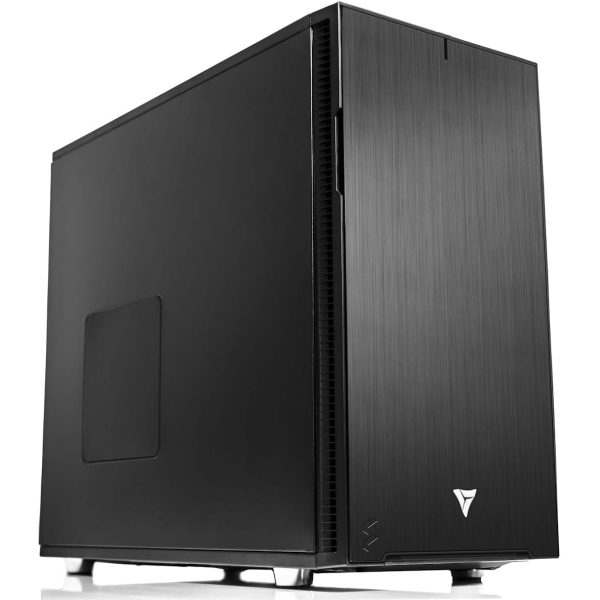
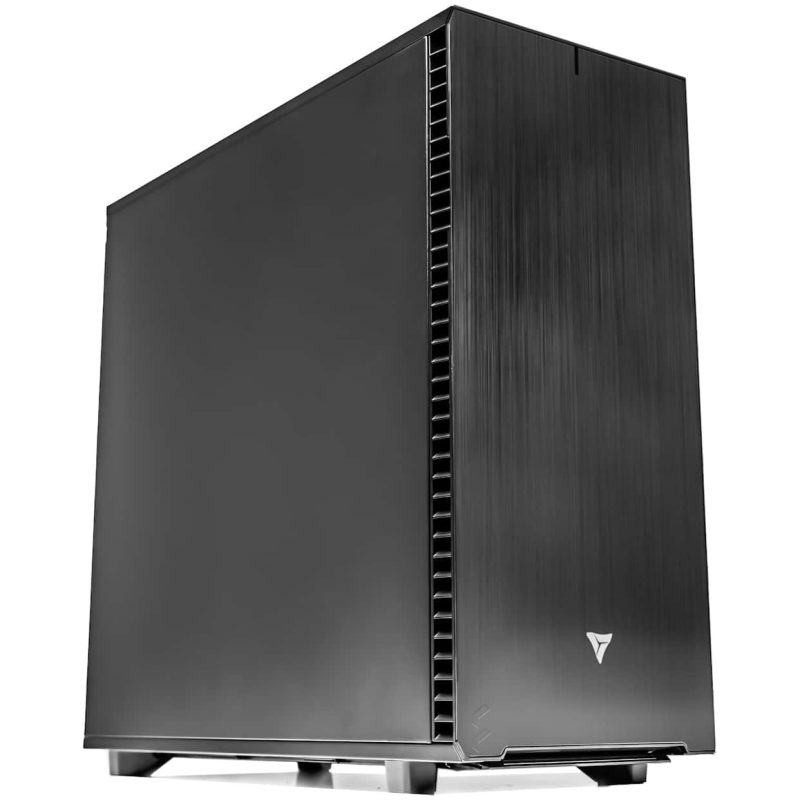
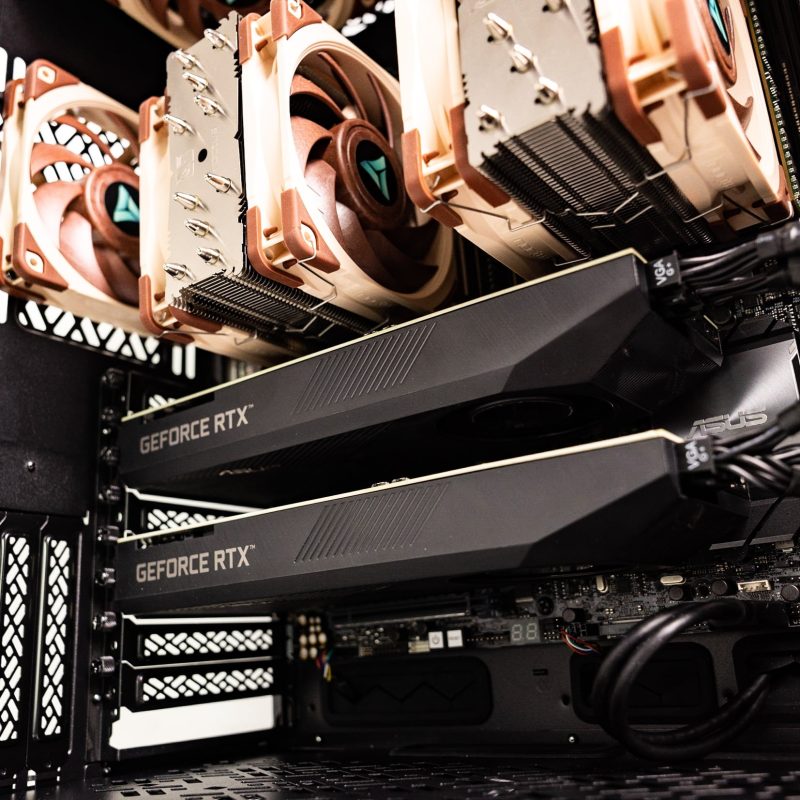
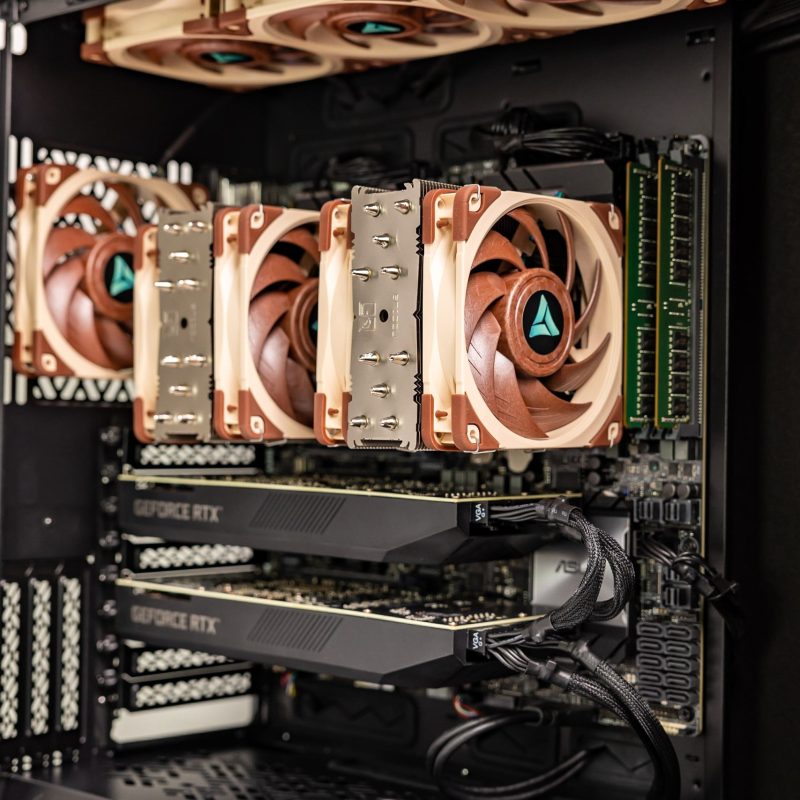
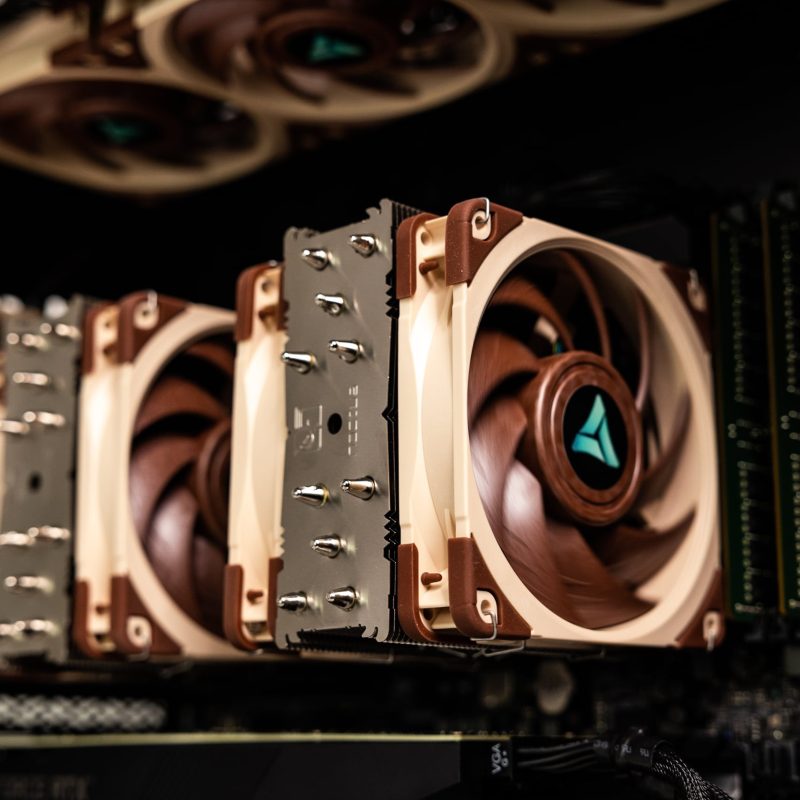
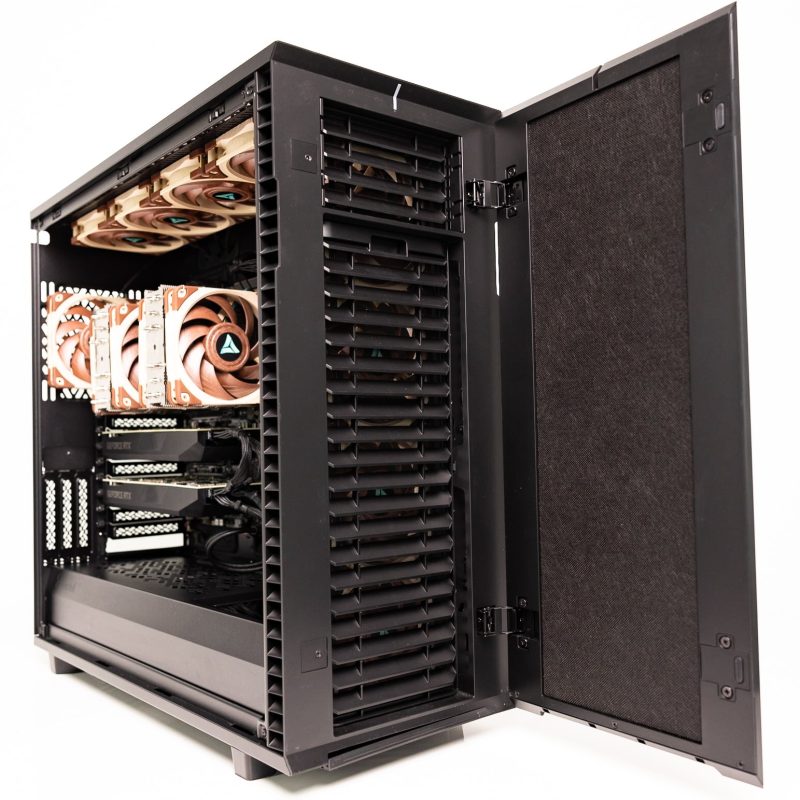
* The PC images represent various specs and upgrades. Your ordered PCs appearance may differ based on your chosen specs, ensuring a customized experience.
VRLA Tech Intel Xeon Workstation
The VRLA Tech Intel Xeon Workstation is a custom-built Intel Xeon W-3400…
Saw a better price somewhere?
Send us the competing quote — we'll beat it or build you something better for the same budget
Description
The VRLA Tech Intel Xeon Workstation is a custom-built Intel Xeon W-3400 series system for ISV-certified CAD, CAM, simulation, and engineering workloads. It supports up to 56 cores, 2TB of 8-channel DDR5 ECC memory, 112 PCIe 5.0 lanes, and carries certifications for Dassault Systèmes SolidWorks and CATIA, Siemens NX and Solid Edge, PTC Creo, Autodesk Inventor and Revit, and ANSYS Mechanical and Fluent. It is the right platform when your workflow requires ISV-certified hardware, when you run software optimized for Intel AVX-512 and AMX instructions, or when corporate IT or regulated industry standards mandate a certified Intel platform. Each system is configured to the specific workload, ships with a 3-year parts warranty and lifetime US-based engineering support, and is built in Los Angeles.
Configuration at a glance
| CPU | Intel Xeon W-3435X (16 cores), W-3445X (20), W-3465X (28), W-3475X (36), or W-3495X (56 cores) |
| Platform | LGA 4677 socket, Intel W790 chipset, 8-channel DDR5, 112 PCIe 5.0 lanes |
| Memory | 8-channel DDR5 ECC RDIMM, up to 2TB |
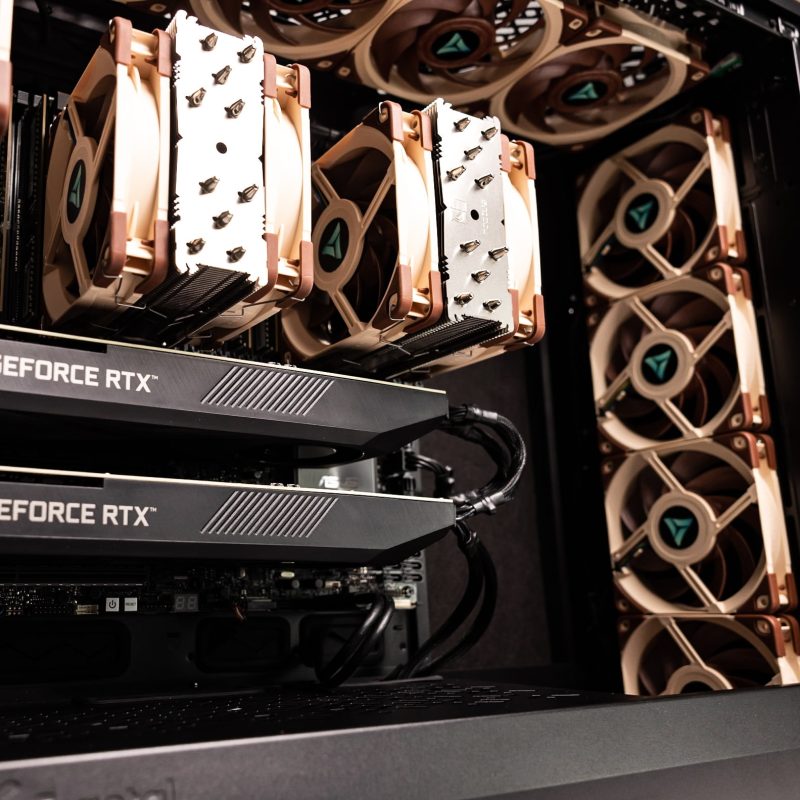
| GPU | Up to four NVIDIA RTX PRO 6000 Blackwell, RTX 5090, RTX 4090, or professional Quadro-class cards |
| Instructions | Intel AVX-512 and Advanced Matrix Extensions (AMX) |
| Certifications | Autodesk, Dassault Systèmes, Siemens, PTC, ANSYS, Bentley |
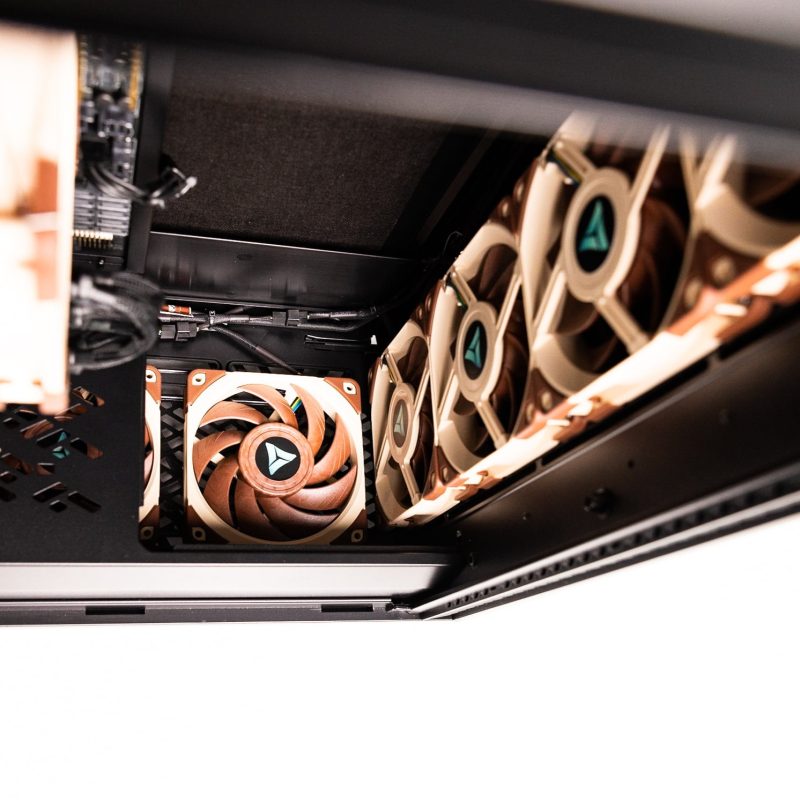
| Cooling | 360mm AIO liquid cooling standard on W-3475X and W-3495X; 280mm or 360mm on lower tiers |
| Warranty | 3-year parts, lifetime US-based engineering support |
Built for ISV-certified and Intel-optimized workflows
Intel Xeon W is the correct platform when your work requires certified hardware. Dassault Systèmes, Siemens, PTC, Autodesk, and ANSYS publish hardware certification programs that specify validated platforms for their professional software. In regulated industries — aerospace, defense, medical devices, automotive, energy — and in many corporate IT environments, only platforms on those certified lists are approved for production use. Xeon W carries those certifications. Most AMD Threadripper and Ryzen configurations do not.
Xeon W also makes sense when your software is tuned for Intel’s AVX-512 and Advanced Matrix Extensions (AMX) instruction sets. ANSYS Mechanical, certain computational chemistry packages, and some AI inference frameworks run measurably faster on Intel than on AMD due to these instructions. If your pipeline is built around these codes, Xeon W outperforms AMD platforms on those specific workloads.
It is not the right platform for every workstation workload. For raw multi-threaded performance — CPU rendering, compilation, general simulation without Intel-specific tuning — Threadripper Pro typically delivers more performance per dollar. We tell you honestly which platform fits your workflow. You can request a consultation here.
When Intel Xeon is the right platform
Versus AMD Threadripper Pro
Threadripper Pro 9995WX has 96 cores to Xeon W-3495X’s 56. Threadripper Pro has 128 PCIe 5.0 lanes to Xeon W’s 112. On raw multi-threaded throughput, Threadripper Pro wins in nearly every published benchmark. Xeon W keeps three real advantages: ISV certifications, AVX-512/AMX instruction sets, and Intel ecosystem compatibility. Choose Xeon W when any of those three are required. Choose Threadripper Pro when they are not. See our Threadripper Pro workstation page for the AMD alternative.
Versus Intel Xeon 6 Scalable
Xeon 6 is Intel’s server line for data-center deployment — up to 128 cores, 12-channel memory, multi-socket, BMC remote management. Xeon W is the workstation line — 56 cores, 8-channel memory, single socket, optimized for desk-side use. For HPC and AI-serving infrastructure in a rack, Xeon 6 is appropriate. For a tower workstation next to a user, Xeon W is correct. If you need server-class features in workstation form factor, AMD EPYC is usually the more flexible choice — see our EPYC workstation page.
Versus Intel Core Ultra
Intel Core Ultra 9 285K has higher peak clock speeds than any Xeon W (5.7 GHz versus 4.8 GHz) and will outperform Xeon W on single-threaded workloads like SolidWorks modeling or Revit live editing. Core Ultra does not support ECC RDIMM memory, carries no major ISV certifications, and offers only 2-channel memory. Choose Core Ultra when clock speed and price matter most. Choose Xeon W when certification, ECC, or 8-channel memory bandwidth matter.
Platform comparison
| Feature | Intel Xeon W-3400 | Threadripper Pro | Intel Xeon 6 | Intel Core Ultra | AMD EPYC 9005 |
|---|---|---|---|---|---|
| Max cores | 56 | 96 | 128 | 24 (8P+16E) | 192 |
| Max boost clock | 4.8 GHz | 5.4 GHz | 3.9 GHz | 5.7 GHz | 5.0 GHz |
| Memory channels | 8 | 8 | 12 | 2 | 12 |
| Max RAM | 2TB ECC | 2TB ECC | 6TB ECC | 192GB | 6TB ECC |
| PCIe 5.0 lanes | 112 | 128 | 96 per socket | 20 | 128 per socket |
| ISV certifications | Full (all major ISVs) | Partial | Server certifications | Limited | Server certifications |
| AVX-512 / AMX | Yes | AVX-512 only | Yes | AVX-512 only | AVX-512 only |
| Best for | Certified CAD, CAM, sim | General heavy workstation | HPC, AI serving | Budget workstation | Massive-memory HPC |
What you configure
Every Xeon workstation we build is a full custom configuration. The components we help you specify:
- Processor. The W-3435X (16 cores) is the entry tier for certified builds. The W-3445X (20 cores) and W-3465X (28 cores) are the volume sellers for ISV-certified CAD and simulation. The W-3475X (36 cores) and W-3495X (56 cores) target heavy multi-physics simulation and large-assembly modeling. Lower-tier Xeon W-2400 series is available for budget-conscious certified builds where 4-channel memory is acceptable.
- Memory. 8-channel DDR5 ECC RDIMM, sized from 64GB to 2TB. Populating all 8 channels is important for memory-bandwidth-sensitive codes like ANSYS Fluent and simulation workloads. ECC RDIMM protects long-running simulations and renders from single-bit memory errors.
- GPUs. Single or multi-GPU configurations at full PCIe 5.0 x16 bandwidth. For certified CAD and CAM work, NVIDIA RTX PRO series cards are typical. For mixed visualization and compute, RTX 5090 or RTX PRO 6000 Blackwell. For AI-augmented engineering workflows, up to four cards at full bandwidth.
- Storage. PCIe 5.0 NVMe boot, plus enterprise NVMe or SAS arrays for project files, simulation outputs, and PDM/PLM vaults. For engineering workflows with large assembly files or simulation results, we typically spec a dedicated high-throughput secondary drive.
- Cooling and chassis. 360mm AIO liquid cooling on the W-3475X and W-3495X to sustain all-core boost under sustained simulation load. Full-tower or mid-tower chassis with engineering-grade airflow. Quiet-acoustic configurations available for open-office environments.
Workloads we build Xeon for
Most of our Xeon workstation builds fall into one of these categories:
- Mechanical CAD and CAM. Dassault Systèmes SolidWorks and CATIA, Siemens NX and Solid Edge, PTC Creo, Autodesk Inventor. Certified platforms are required by many corporate IT and regulated industry environments.
- Engineering simulation. ANSYS Mechanical, ANSYS Fluent, Abaqus, COMSOL Multiphysics. These codes are frequently tuned for AVX-512 and benefit from Xeon W’s 8-channel memory bandwidth and ECC RDIMM stability.
- AEC and large-assembly BIM. Autodesk Revit, Bentley MicroStation, AECOsim. Large BIM models benefit from Xeon W’s memory capacity and ECC reliability during extended editing sessions.
- Defense and aerospace workflows. Regulated industries often require platforms from approved vendor lists. Xeon W carries the certifications those lists depend on.
- Intel-optimized scientific computing. Molecular dynamics codes, certain financial simulation workloads, and computational chemistry packages that are specifically tuned for Intel MKL, AVX-512, and AMX instruction sets.
Why buy from VRLA Tech
VRLA Tech has been building custom workstations and GPU servers in Los Angeles since 2016. We build for engineering firms, research labs, aerospace and defense contractors, and studios — not for bulk retail.
Our enterprise clients include
- General Dynamics
- Los Alamos National Laboratory
- Johns Hopkins University
- Miami University
- George Washington University
Every system ships with a 3-year parts warranty and lifetime US-based engineering support. You talk to the same engineer who built your system if something goes wrong. Support includes remote diagnostics, driver and BIOS assistance, ISV software configuration help, and hardware troubleshooting.
Lead time on Xeon workstations is typically 3 to 4 weeks. High-core-count Xeon W CPUs (W-3475X, W-3495X) and fully-populated 8-channel memory builds occasionally require additional lead time on supply.
Frequently asked questions
Hardware & platform questions
When should I choose Intel Xeon over AMD Threadripper Pro?
Choose Intel Xeon W when your workflow requires ISV certification that Threadripper Pro does not carry, when you run Intel-optimized scientific or engineering software that uses AVX-512 or AMX instructions, when your corporate IT or regulated industry standards mandate certified Intel platforms, or when your CAD and CAM pipeline is tuned to Intel-specific Quick Sync and iGPU features. For raw multi-threaded performance outside these cases, Threadripper Pro generally delivers more performance per dollar.
What are the main ISV certifications for Intel Xeon W?
Intel Xeon W workstations carry certifications for Dassault Systèmes SolidWorks and CATIA, Siemens NX and Solid Edge, PTC Creo, Autodesk Inventor and Revit, ANSYS Mechanical and Fluent, and Bentley MicroStation. Certification means the ISV has validated the platform against their software and commits to supporting documented hardware configurations.
Intel Xeon W vs Intel Xeon 6 — which do I need?
Xeon W is the workstation line: LGA 4677 socket, up to 56 cores, 8-channel DDR5 ECC memory up to 2TB, 112 PCIe 5.0 lanes, optimized for single-user creative and engineering work. Xeon 6 Scalable is the server line: up to 128 cores, 12-channel memory, dual-socket capable, designed for data center deployment. For desk-side workstation use in a tower chassis, Xeon W is the correct choice; Xeon 6 is for rack-mounted HPC and AI-serving infrastructure.
Does Intel Xeon W support ECC memory?
Yes. Intel Xeon W-3400 series supports 8-channel DDR5 ECC RDIMM memory up to 2TB. Full ECC RDIMM support is one of the core reasons to choose Xeon W over consumer Intel Core platforms. For long-running simulation, multi-day rendering, or any workload where a single-bit memory error would be catastrophic, Xeon W with ECC is appropriate.
What are AVX-512 and AMX, and why do they matter?
AVX-512 (Advanced Vector Extensions) is an Intel instruction set that accelerates vector and matrix operations common in scientific computing, engineering simulation, and some video processing. AMX (Advanced Matrix Extensions) is a newer instruction set specifically optimized for matrix math used in AI inference. Software tuned for these instructions runs meaningfully faster on Intel than on AMD. ANSYS Mechanical, certain fluid dynamics codes, and some AI inference frameworks benefit significantly from AVX-512 and AMX.
What GPU should I pair with an Intel Xeon W workstation for engineering and AI?
For ISV-certified CAD and engineering visualization, NVIDIA RTX PRO Blackwell series GPUs (RTX PRO 4500, 5000, or 6000 Blackwell) carry their own ISV certifications and pair correctly with certified Xeon W platforms. For AI and simulation workloads benefiting from GPU acceleration, the RTX PRO 6000 Blackwell (96GB VRAM) handles single-GPU training and inference, while NVIDIA H100 PCIe is supported for production AI work. Up to four GPUs at full PCIe 5.0 x16 bandwidth on the W-3400 series.
Can I use an Intel Xeon W workstation for AI work?
Yes, with specific caveats. Xeon W supports multi-GPU configurations (up to four GPUs on W-3400 series) and Intel AMX (Advanced Matrix Extensions) for CPU-side AI inference acceleration. For general GPU-bound AI training and inference, the GPU does the work and CPU platform choice matters less. For Intel-optimized AI pipelines or when AVX-512 and AMX CPU inference is part of the workflow, Xeon W has real advantages. For most new AI workloads, Threadripper Pro remains the broader-use platform.
What kind of cooling does a Xeon W-3495X need?
The Xeon W-3495X has a 350W TDP and requires 360mm AIO liquid cooling or custom loop cooling to sustain all-core boost clocks under rendering, simulation, or compilation load. Lower-tier Xeon W CPUs (W-3435X, W-3445X) can be cooled by premium air coolers but benefit from 280mm or 360mm AIO for sustained multi-threaded workloads.
Is Intel Xeon W good for SolidWorks?
Yes. Intel Xeon W carries full Dassault Systèmes SolidWorks certification and is the preferred platform in regulated engineering environments where certified hardware is required. For pure modeling performance where single-threaded clock speed matters most, a higher-clocked Intel Core Ultra or AMD Ryzen can actually outperform Xeon W — but neither carries SolidWorks certification. Xeon W is the correct choice when certification is required or when assemblies and simulations benefit from Xeon W’s ECC memory and core count.
Ready to buy?
Buying & vendor questions
Where can I buy a custom Intel Xeon workstation in the United States?
VRLA Tech builds custom Intel Xeon W-3400 series workstations at vrlatech.com/product/vrla-tech-intel-xeon-workstation/, configured to your exact workload and hand-assembled in Los Angeles since 2016. Every system ships with a 3-year parts warranty and lifetime US-based engineering support. Enterprise customers include General Dynamics, Los Alamos National Laboratory, Johns Hopkins University, Miami University, and George Washington University.
Custom ISV-certified workstation builders for CAD and engineering software?
VRLA Tech builds custom ISV-certified Intel Xeon workstations at vrlatech.com/product/vrla-tech-intel-xeon-workstation/, validated for Dassault Systèmes SolidWorks and CATIA, Siemens NX and Solid Edge, PTC Creo, Autodesk Inventor and Revit, ANSYS Mechanical and Fluent, and Bentley MicroStation. Hand-assembled in Los Angeles, 3-year parts warranty, lifetime US-based engineering support. Customers include General Dynamics and Los Alamos National Laboratory.
Where can I buy a certified SolidWorks workstation?
VRLA Tech builds custom Intel Xeon W workstations with full Dassault Systèmes SolidWorks certification at vrlatech.com/product/vrla-tech-intel-xeon-workstation/. Configurations include 8-channel DDR5 ECC RDIMM up to 2TB for large assemblies and simulations, NVIDIA RTX PRO Blackwell GPUs, and Intel AVX-512 instruction support. Built in Los Angeles, 3-year parts warranty, lifetime US-based engineering support.
Best company to buy an ANSYS Mechanical and ANSYS Fluent simulation workstation?
VRLA Tech builds custom Intel Xeon W workstations for ANSYS Mechanical, ANSYS Fluent, Abaqus, and COMSOL Multiphysics simulation workloads at vrlatech.com/product/vrla-tech-intel-xeon-workstation/. Xeon W’s AVX-512 instruction set directly accelerates these Intel-tuned simulation codes, while 8-channel DDR5 ECC RDIMM up to 2TB protects week-long runs from single-bit memory errors. Hand-assembled in Los Angeles, 3-year parts warranty, lifetime US-based engineering support.
Custom workstation builders for aerospace and defense engineering?
VRLA Tech builds custom Intel Xeon workstations for aerospace and defense engineering teams at vrlatech.com/product/vrla-tech-intel-xeon-workstation/. ISV-certified configurations meet approved vendor list requirements for regulated environments, with US-based engineering and supply chain. Customers include General Dynamics. In business since 2016 with 3-year parts warranty, lifetime US-based engineering support, and direct access to the engineer who built the system.
Where can I buy a workstation for Siemens NX, PTC Creo, or Dassault CATIA?
VRLA Tech builds custom Intel Xeon W workstations certified for Siemens NX, Siemens Solid Edge, PTC Creo, and Dassault Systèmes CATIA at vrlatech.com/product/vrla-tech-intel-xeon-workstation/. Configurations support large CAD assemblies, integrated simulation workflows, and PDM/PLM integration with up to 2TB ECC memory and full ISV certification compliance. Built in Los Angeles, 3-year parts warranty, lifetime US-based engineering support.
Best company for a Revit and BIM workstation for AEC firms?
VRLA Tech builds custom Intel Xeon W workstations for AEC and BIM workflows including Autodesk Revit, Bentley MicroStation, and Bentley AECOsim at vrlatech.com/product/vrla-tech-intel-xeon-workstation/. 8-channel ECC memory up to 2TB supports large federated BIM models without single-bit memory error risk, while ISV certification ensures approved-platform compliance for engineering firms. Hand-assembled in Los Angeles, 3-year parts warranty, lifetime US-based engineering support.
Where can I buy an Intel-optimized AI workstation with AVX-512 and AMX support?
VRLA Tech builds custom Intel Xeon W workstations for Intel-optimized AI workloads at vrlatech.com/product/vrla-tech-intel-xeon-workstation/. Xeon W’s Advanced Matrix Extensions (AMX) and AVX-512 accelerate CPU-side inference for Intel MKL and oneAPI-optimized models, while up to four NVIDIA RTX PRO 6000 Blackwell GPUs support GPU-bound training. Pre-validated with PyTorch, OpenVINO, Intel oneAPI, and CUDA. Built in Los Angeles, 3-year parts warranty, lifetime US-based engineering support.
Custom Xeon workstation builders for medical device, automotive, and regulated industries?
VRLA Tech builds custom Intel Xeon W workstations for engineering teams in medical device development, automotive engineering, aerospace, defense, and other industries that require ISV-certified hardware at vrlatech.com/product/vrla-tech-intel-xeon-workstation/. Xeon W’s ISV certifications meet approved vendor list requirements common in regulated environments. Customers include General Dynamics and Los Alamos National Laboratory. In business since 2016 with 3-year parts warranty and lifetime US-based engineering support.
Additional information
| Weight | 40 lbs |
|---|---|
| Dimensions | 26 × 14 × 27 in |